 House of AnandaMovement · Stillness · Wisdom · Journey
The House of Ananda · Wisdom Library
Buddhism.
A path of awakening.
Explore the teachings, living traditions and everyday practices of Buddhism. Begin with a question. Make room for careful attention.

A thoughtful beginning
Wisdom, conduct
and cultivation.
Buddhism is a living family of religious and philosophical traditions. Meditation belongs alongside ethical conduct, devotion, study, generosity and community.
These guides keep Theravāda, Mahāyāna, Vajrayāna, Chan, Zen and Pure Land in their own contexts. You can learn without rushing to adopt an identity or combine every method.
Meet the Buddha, Dharma and Saṅgha ↗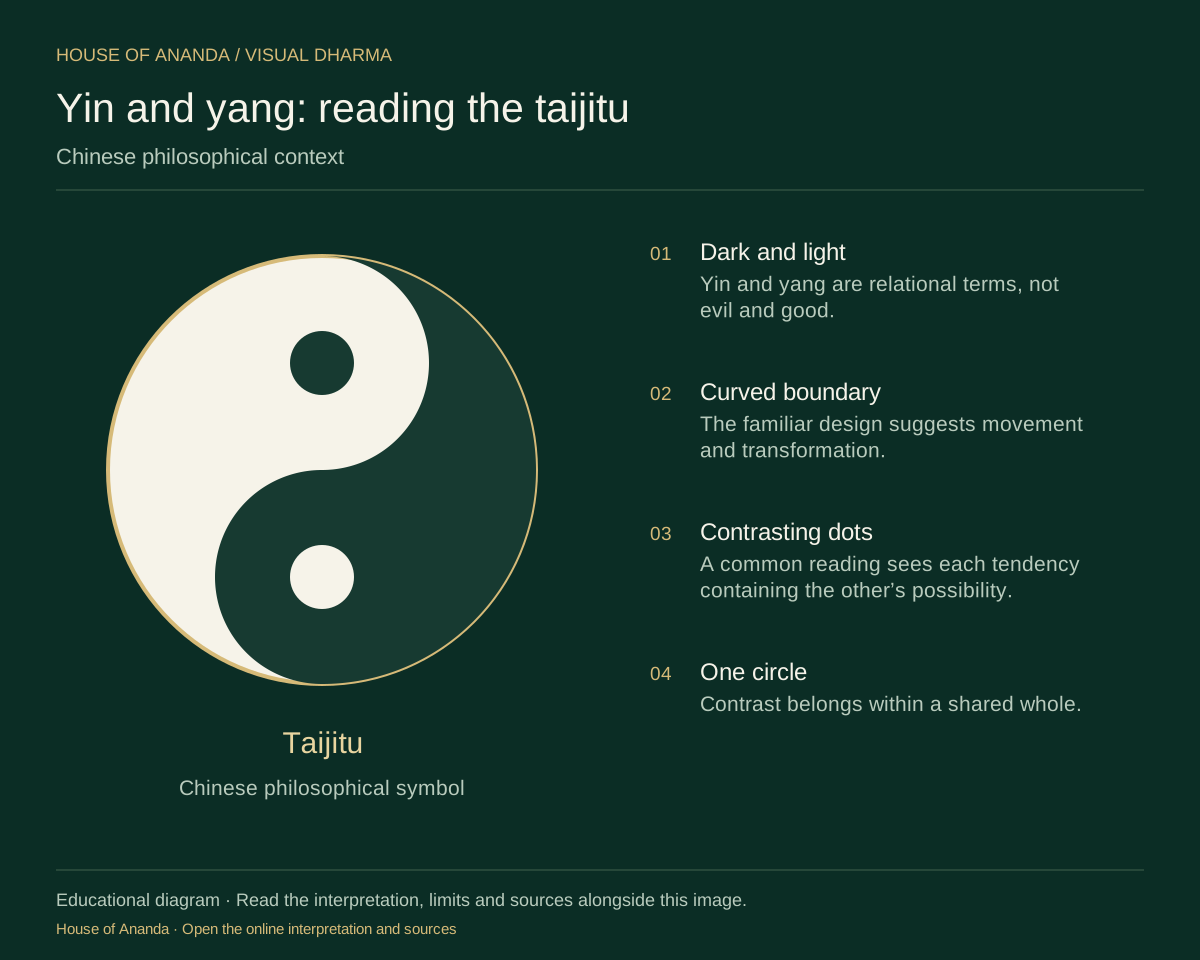
The study collection
Follow your curiosity.
Explore a teaching, meet a tradition or choose a short practice.
53 guides
What is Buddhism?
A first orientation to a religious, philosophical and practical tradition centred on awakening.
Read the guide A place to beginThe life of the Buddha
Separate the historical setting from the traditional stories that give Buddhist communities meaning.
Read the guide A place to beginA history across Asia and beyond
A broad timeline of transmission, translation and change, with room for regional complexity.
Read the guide A place to beginThe Three Jewels: Buddha, Dharma, Sangha
Understand refuge as a relationship with awakening, teaching and community.
Read the guide A place to beginThe Four Noble Truths
Four linked tasks: understand suffering, abandon its origin, realise cessation and develop the path.
Read the guide A place to beginThe Noble Eightfold Path
Eight mutually supporting factors, traditionally grouped as wisdom, ethical conduct and concentration.
Read the guide Understanding experienceImpermanence, dukkha & not-self
Three characteristics that challenge habitual ways of holding experience.
Read the guide Understanding experienceThe five aggregates
A way to examine experience without treating it as a single permanent possession.
Read the guide Understanding experienceDependent origination
How suffering arises through conditions, and why changing conditions matters.
Read the guide Understanding experienceKarma, rebirth & responsibility
Understand intention and continuity without turning karma into fate or blame.
Read the guide Understanding experienceNirvāṇa, awakening & liberation
Why the Buddhist goal is more than relaxation or a perfect meditation session.
Read the guide Understanding experienceEmptiness & the Middle Way
A careful introduction to śūnyatā, interdependence and the two truths.
Read the guide Living Buddhist traditionsTheravāda: texts, temples & practice
The Pāli canon, the arahant ideal and the variety of Theravāda community life.
Read the guide Living Buddhist traditionsMahāyāna & the bodhisattva path
Awakening for the welfare of beings, compassion, wisdom and a diverse family of schools.
Read the guide Living Buddhist traditionsVajrayāna & Tibetan Buddhist worlds
Mantra, ritual, lineage and transmission in esoteric Buddhist traditions.
Read the guide Living Buddhist traditionsChan & Zen in context
Seated meditation, teachers and the variety behind the word Zen.
Read the guide Living Buddhist traditionsPure Land: recollection & devotion
Amitābha, the aspiration for the Pure Land and the meaning of recitation.
Read the guide Living Buddhist traditionsEngaged Buddhism & compassionate action
Practice in peace work, social responsibility, care and environmental concerns.
Read the guide The path in daily lifeThe five precepts in daily life
Ethical training in non-harming, honesty, sexual responsibility, truthful speech and clarity.
Read the guide Understanding experienceThe four immeasurables
Goodwill, compassion, appreciative joy and equanimity as complementary ways of relating.
Read the guide Understanding experienceBodhicitta & the six perfections
Generosity, ethics, patience, effort, meditation and wisdom on the Mahāyāna path.
Read the guide Understanding experienceFive hindrances & seven awakening factors
Recognise what obstructs practice and which qualities help it develop.
Read the guide Texts, art & sacred placesA reader’s guide to Buddhist texts
Suttas, sūtras, Vinaya, Abhidharma and the different Buddhist canons.
Read the guide Texts, art & sacred placesReading the Dhammapada
Buddhist verse, ethical reflection and careful quotation.
Read the guide Texts, art & sacred placesThe Heart Sūtra & emptiness
A short Mahāyāna text with a demanding background in wisdom and emptiness.
Read the guide Texts, art & sacred placesWomen in Buddhist history & practice
Early nuns’ voices, authority and the diversity of women’s Buddhist lives.
Read the guide Texts, art & sacred placesSacred places, pilgrimage & observance
Place, memory and living community from Lumbini to Borobudur.
Read the guide Texts, art & sacred placesBuddhist art, gestures & sacred forms
Read images through context: buddhas, bodhisattvas, mudrās, stupas and the Dharma wheel.
Read the guide The path in daily lifeBuddhism & yoga: connections and differences
Shared South Asian questions and distinct accounts of self, liberation and practice.
Read the guide The path in daily lifeLearning with a community & teacher
Questions for visiting a centre and making a considered commitment.
Read the guide Attention & compassionA comfortable beginning to sitting
Settle into a supported posture and learn to return without strain.
Read the guide Attention & compassionMindfulness of natural breathing
Observe ordinary breathing without controlling, holding or forcing it.
Read the guide Attention & compassionMettā: practising goodwill
Offer simple wishes of wellbeing without forcing a particular emotion.
Read the guide Attention & compassionCompassion with clear boundaries
Meet a manageable difficulty with care and choose a helpful response.
Read the guide Attention & compassionMuditā: joy in another’s wellbeing
Appreciate someone’s good fortune without turning it into a comparison.
Read the guide Attention & compassionEquanimity without indifference
Distinguish caring action from the demand to control every outcome.
Read the guide Attention & compassionWalking with awareness
A simple walking practice that keeps balance and surroundings in view.
Read the guide Attention & compassionBody, feeling tone & response
Distinguish bodily sensation from pleasant, unpleasant or neutral tone and the urge that follows.
Read the guide Attention & compassionA pause before speaking
Bring truth, benefit and timing into one ordinary conversation.
Read the guide Attention & compassionGenerosity in an ordinary day
Move from a helpful intention to a specific, sustainable act.
Read the guide Attention & compassionMindfulness of breathing
A gentle first encounter with ānāpānasati, using an ordinary, unforced breath.
Read the guide Attention & compassionThe four foundations of mindfulness
Body, feeling, mind and dhammas: a fuller account of sati than simply “being in the present”.
Read the guide Attention & compassionCalm, insight & concentration
Understand samatha, vipassanā and samādhi without treating them as competing brands.
Read the guide Living Buddhist traditionsChan, Zen, Seon & Thiền
Meditation lineages with distinct histories, rituals and ways of teaching.
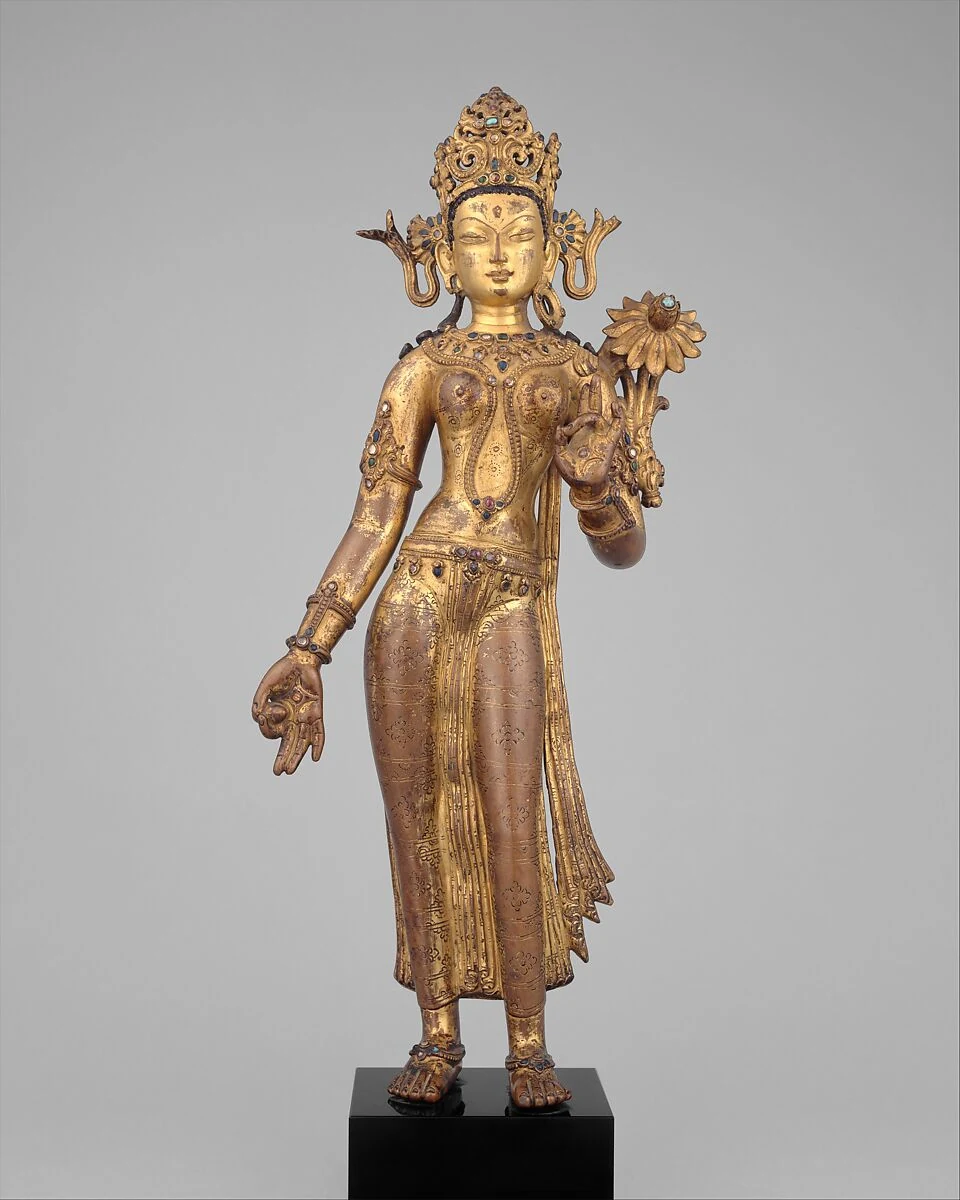
Read the guide Texts, art & sacred placesBuddhas, bodhisattvas & compassion
Understand revered figures through their traditions and roles, rather than as an interchangeable pantheon.
Read the guide Texts, art & sacred placesBuddhist symbols & sacred art
Read the wheel, lotus, stūpa and gestures with historical care.
Read the guide The path in daily lifeBuddhist practice in daily life
Bring attention and care into work, meals, speech and ordinary responsibilities.
Read the guide Texts, art & sacred placesYin and yang: meaning, balance & Buddhist context
Read the familiar dark-and-light symbol carefully, and understand why Chinese philosophy and Buddhism should not be treated as interchangeable.
Read the guide Texts, art & sacred placesThe Eight Auspicious Symbols
Meet the wheel, lotus, knot, parasol, fish, vase, conch and victory banner through Tibetan Buddhist visual culture.
Read the guide Texts, art & sacred placesThe Wheel of Life: reading the bhavacakra
Explore the layers of a Buddhist teaching image: afflictions, karma, realms, dependent arising and the possibility of liberation.
Read the guide Texts, art & sacred placesMandalas: sacred arrangements & visual worlds
Understand why a Buddhist mandala is more than a circular pattern, and learn to read a historical example in context.
Read the guide Texts, art & sacred placesMudras: the language of gesture
Learn to notice earth-touching, meditation, fearlessness, giving and teaching gestures in Buddhist images.
Read the guide Texts, art & sacred placesVajra & bell: method and wisdom
Explore two ritual implements, their complementary symbolism and the importance of regional and ritual context.
Read the guideFrom reading to experience
Begin gently.
Return with care.
Original introductory exercises inspired by named Buddhist sources. Choose a short session, a supported posture and permission to stop.
A comfortable beginning to sitting
Settle into a supported posture and learn to return without strain.
Mindfulness of natural breathing
Observe ordinary breathing without controlling, holding or forcing it.
Mettā: practising goodwill
Offer simple wishes of wellbeing without forcing a particular emotion.
Compassion with clear boundaries
Meet a manageable difficulty with care and choose a helpful response.
Muditā: joy in another’s wellbeing
Appreciate someone’s good fortune without turning it into a comparison.
Equanimity without indifference
Distinguish caring action from the demand to control every outcome.
Walking with awareness
A simple walking practice that keeps balance and surroundings in view.
Body, feeling tone & response
Distinguish bodily sensation from pleasant, unpleasant or neutral tone and the urge that follows.
A pause before speaking
Bring truth, benefit and timing into one ordinary conversation.
Generosity in an ordinary day
Move from a helpful intention to a specific, sustainable act.
A little each day
Seven days to begin.
A month to explore.
A clear sequence of reading, short practice and everyday reflection. Repeat a day, take a rest or explore at your own pace.
Choose a study pathway ↗- 01Orient
The Buddha, core teachings and ethical practice.
- 02Investigate
Change, conditions, attention and intention.
- 03Encounter
Living traditions, texts and different voices.
- 04Integrate
Goodwill, compassion, generosity and community.
Keep exploring
Pāli & Sanskrit glossary
63 terms with plain-English meanings and contextual reading.
Keep exploring
A timeline of Buddhist history
A selective chronology of communities, transmission and change.
Keep exploring
Sources & further reading
Canonical texts, living traditions, academic references and heritage sources.
Keep exploring
Fourteen days of Buddhist study
A two-week sequence of reading, reflection and gentle practice.
Keep exploring
The Buddhist visual atlas
Forty-two visuals: twenty teaching infographics, sacred symbols, historical artworks and contemporary spiritual imagery, with interpretation and sources.
Questions at the beginning
There is room to ask.
Do I need to become Buddhist to use this library?
No. You can learn respectfully without adopting a religious identity. Formal refuge, vows or initiation belong to particular communities and are not conferred by reading these pages.
Is Buddhist meditation the same as yoga?
There are historical conversations and shared concerns, but the teachings and aims are not identical. Compare named traditions rather than assuming that shared words have the same meaning everywhere.
Which tradition should I begin with?
Start with the foundations, then read the tradition introductions and visit an open beginner teaching if you wish. There is no need to choose a lifelong identity before asking your first question.
Does meditation mean stopping all thoughts?
The introductory practices here invite you to recognise wandering and return with care. A busy mind does not prevent beginning, and forcing a blank state is not the aim.
Are these pages translations of scripture?
No. The guides and reflection prompts are House of Ananda educational summaries. Each guide links to texts, practitioners or historical sources so you can read beyond the summary.
About these study notes
House of Ananda educational notes · reviewed 24 September 2026. Original explanations and practice prompts accompany linked canonical translations, living-tradition guidance and scholarly sources. Historical dates and interpretations are qualified where they differ. This is an introduction, not a substitute for a qualified teacher or a formal transmission.