
Hands carry part of the story
Mudrā can mean a gesture or seal. In Buddhist art, the direction of a palm and the relationship between the hands can convey a narrative or quality. Gestures work together with posture, dress, attributes, inscriptions and setting. They are clues within an image, not a code that can identify every figure on its own.
Visual study
A teaching you can explore
Identify the whole image
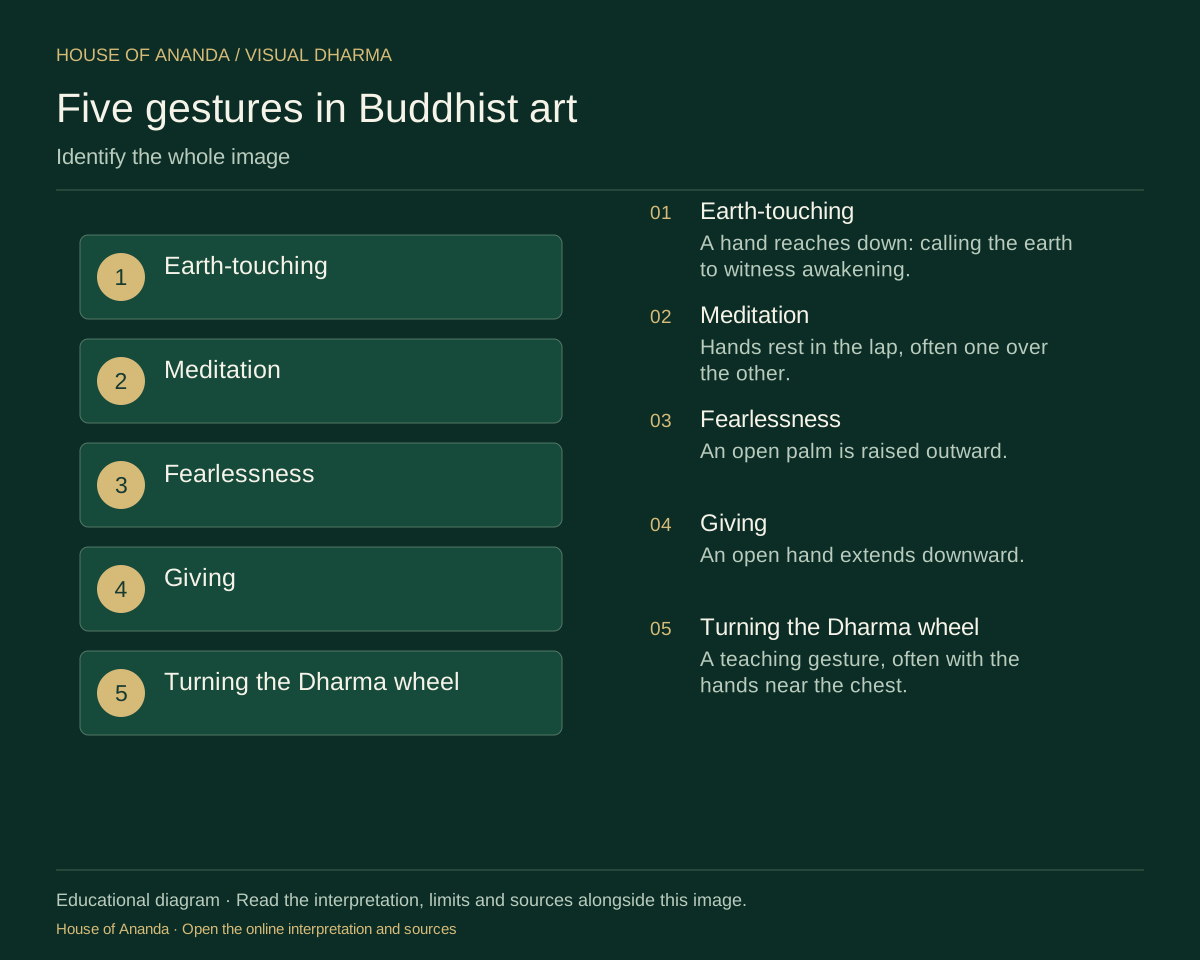
Five gestures in Buddhist art
Common hand gestures offer clues to what an image expresses.
Read the diagram & interpretation
- Earth-touchingA hand reaches down: calling the earth to witness awakening.
- MeditationHands rest in the lap, often one over the other.
- FearlessnessAn open palm is raised outward.
- GivingAn open hand extends downward.
- Turning the Dharma wheelA teaching gesture, often with the hands near the chest.
Look at palm direction, hand position and the surrounding story. Similar gestures can differ across regions and periods. A catalogue identification should take precedence over guessing from one feature. The historical sculptures below provide real examples to examine.
Keep in mind A hand position alone cannot reliably identify every figure. This guide describes art and does not teach esoteric ritual hand sequences.
Sources: The Met · Recognizing the Gods ↗ · BuddhaNet · Mudras of the Great Buddha ↗
Awakening and earth-touching
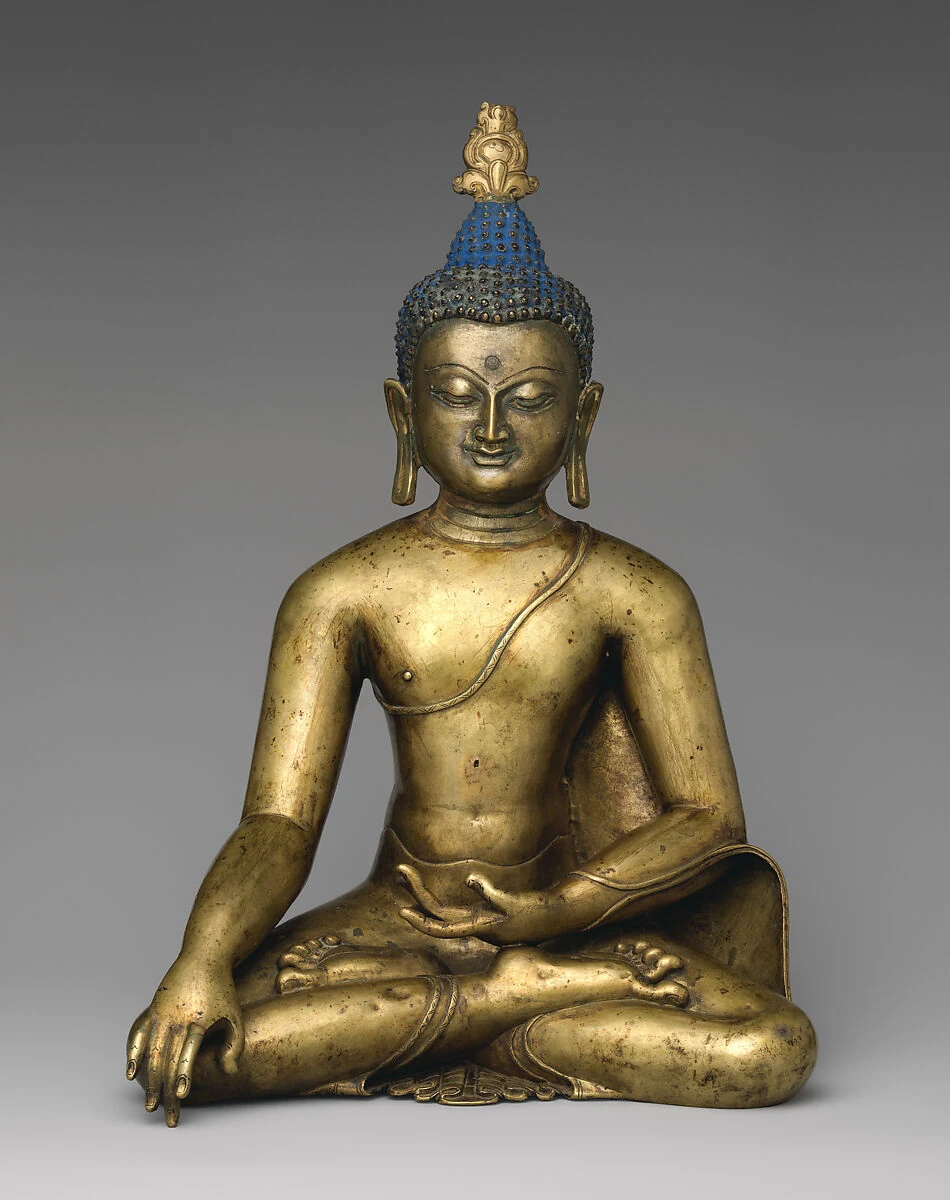
In a common depiction of Śākyamuni’s awakening, the right hand reaches down toward the ground. This bhūmisparśa gesture recalls the traditional account of calling the earth to witness in the confrontation with Māra. The Central Tibetan Buddha in the atlas offers a historical example: compare its downward hand with the hand resting in the lap.
Meditation, protection, giving and teaching
Meditation gestures commonly place the hands in the lap. An outward-facing raised palm can express fearlessness; a lowered open hand can express giving. The turning-of-the-wheel gesture is associated with teaching. Forms vary, and the same figure may appear with different gestures. Consult the catalogue and notice the full arrangement rather than matching one finger position.
Observe before imitating
Try describing a sculpture’s hands in plain language before naming the gesture. Then compare your observation with the museum’s description. For example, what is raised, lowered, open or holding an object? This is an art-study exercise. It does not teach the sequences of ritual mudras used in particular esoteric Buddhist practices.
Art & contemplation
Look, learn, reflect
Buddha & gesture
Śākyamuni: the earth as witness
The downward right hand is the earth-touching gesture, associated with the traditional story of awakening. The robe and seated posture help establish the figure’s contemplative setting. This is a twelfth-century Central Tibetan sculpture, rather than a portrait made during the Buddha’s lifetime.
Look closelyCompare the lowered right hand with the left hand in the lap. What story does this difference tell?
Continue studying ↗Artist unknown · The Metropolitan Museum of Art · 2012.458. Object / image record ↗ · Public domain / CC0. Resized and converted to WebP; image content unchanged.
Sacred figure
Tārā: responsive care
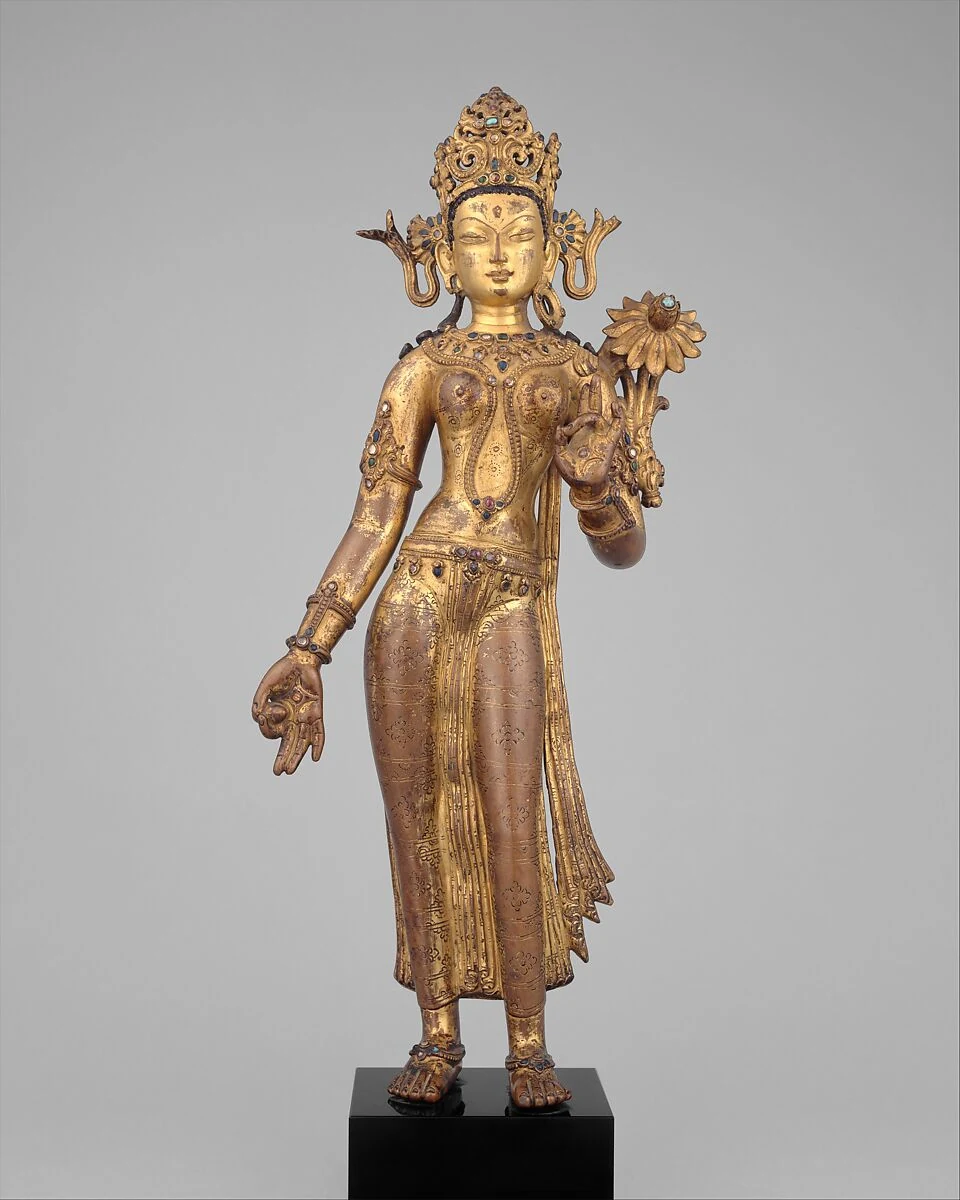
The Met identifies this Nepalese figure as probably White Tārā. The lowered hand expresses giving, and the lotus is an important attribute. Tārā has multiple forms, so this example should not be renamed Green Tārā merely because that form is widely familiar.
Look closelyFollow the line from the lower hand to the upper body and the flower. How does the standing posture affect your response?
Continue studying ↗Artist unknown · The Metropolitan Museum of Art · 66.179. Object / image record ↗ · Public domain / CC0. Resized and converted to WebP; image content unchanged.
A question to carry with you
Pause and reflect.
How much can a posture or open hand communicate before a word is spoken?
Sources & further reading
Study notes and examples are original explanations. Follow the links for the source texts and their own contexts.