
Context and intention
An introductory observation inspired by satipaṭṭhāna. The traditional four domains include body, feeling, mind and dhammas; this samples only part.
Visual study
A teaching you can explore
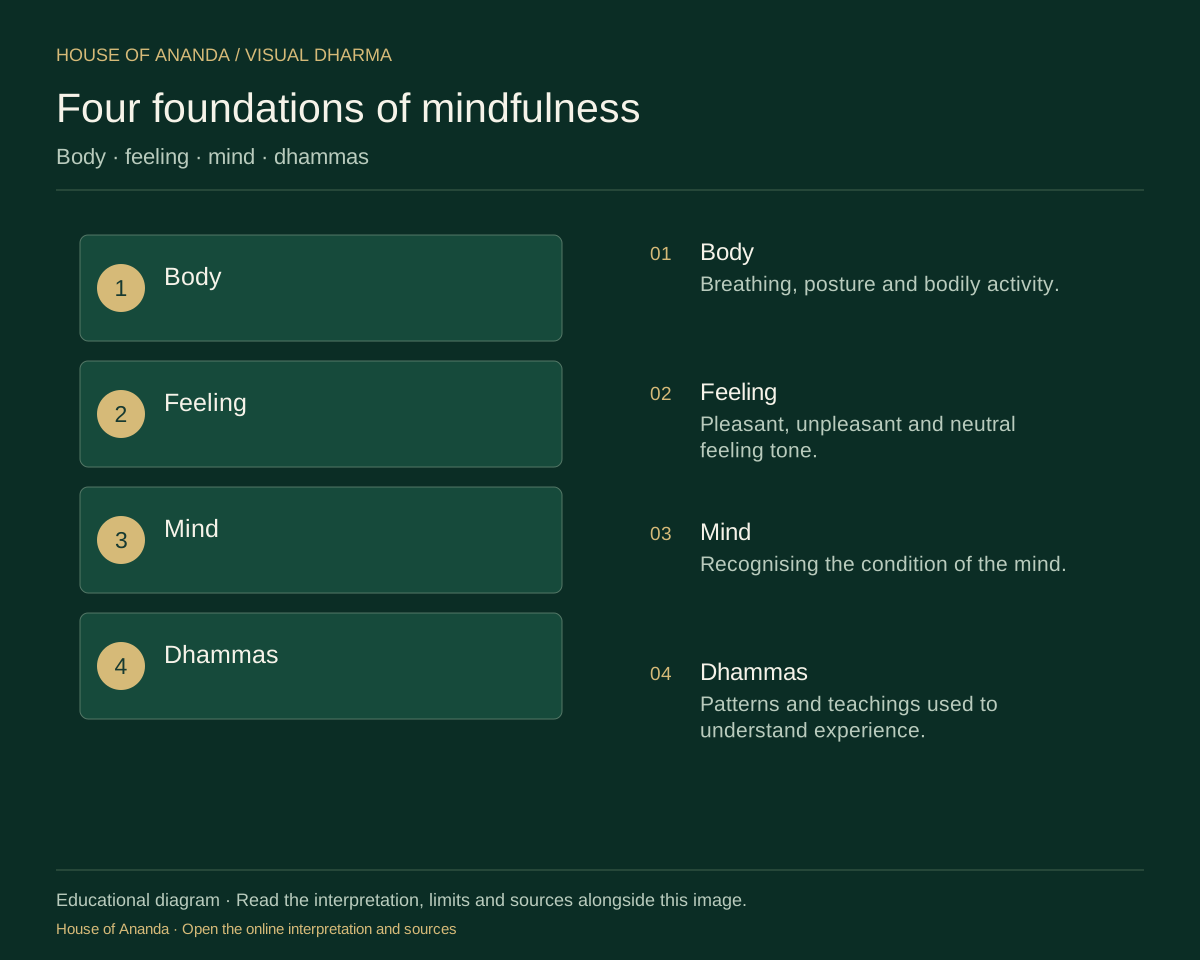
Body · feeling · mind · dhammas
Four foundations of mindfulness
Four fields of contemplation within the wider Buddhist path.
Read the diagram & interpretation
- BodyBreathing, posture and bodily activity.
- FeelingPleasant, unpleasant and neutral feeling tone.
- MindRecognising the condition of the mind.
- DhammasPatterns and teachings used to understand experience.
The four panels organise domains of attention; they are not four locations in the body. Mindfulness includes recognising what is present and remembering the purpose and framework of practice. Dhammas has several translation choices; the discourse includes hindrances and other teaching frameworks.
Keep in mind Mindfulness is not only non-judgmental awareness: these texts also concern understanding and cultivating a path away from suffering.
Sources: MN 10 · Establishing Mindfulness ↗
Before you begin
Choose a short, comfortable session. You can keep your eyes open, use a chair, adjust position or stop. If inward attention becomes unsettling, orient to the room and ordinary activity. These educational exercises do not promise treatment, attainment or a particular emotional result.
Find support · 2 minutes
Sit comfortably and look around. Start with a neutral contact point such as hands on the lap.
Notice sensation · 2 minutes
Observe warmth, pressure or movement without searching for hidden meaning. You may move or adjust whenever needed.
Notice tone · 2 minutes
Is the experience pleasant, unpleasant or neither? Then notice any urge to keep it, remove it or ignore it. Feeling tone is not the whole emotion.
Widen · 2 minutes
Include ordinary sounds and the room. Let the analysis end. If inward attention is uncomfortable, use an external object instead.
After the practice
Could you distinguish a sensation, its tone and a response, even briefly? Do not force a neat sequence.
Art & contemplation
Look, learn, reflect

A place to return
A quiet bench evokes an accessible moment of attention. The setting is imagined and the person is not a named teacher. Meditation can also happen amid ordinary household sounds, without a remote retreat or a perfectly quiet mind.
A moment to reflectWhat is one manageable pause you can make in your day?
Follow this theme ↗A question to carry with you
Pause and reflect.
Could you distinguish a sensation, its tone and a response, even briefly? Do not force a neat sequence.
Sources & further reading
Study notes and examples are original explanations. Follow the links for the source texts and their own contexts.