
The traditional setting
Mindfulness of breathing appears in early Buddhist texts as part of a comprehensive path. MN 118 presents sixteen aspects extending through body, feeling, mind and contemplation. The brief practice below is a House of Ananda introduction, not a replacement for that full teaching.
Visual study
A teaching you can explore
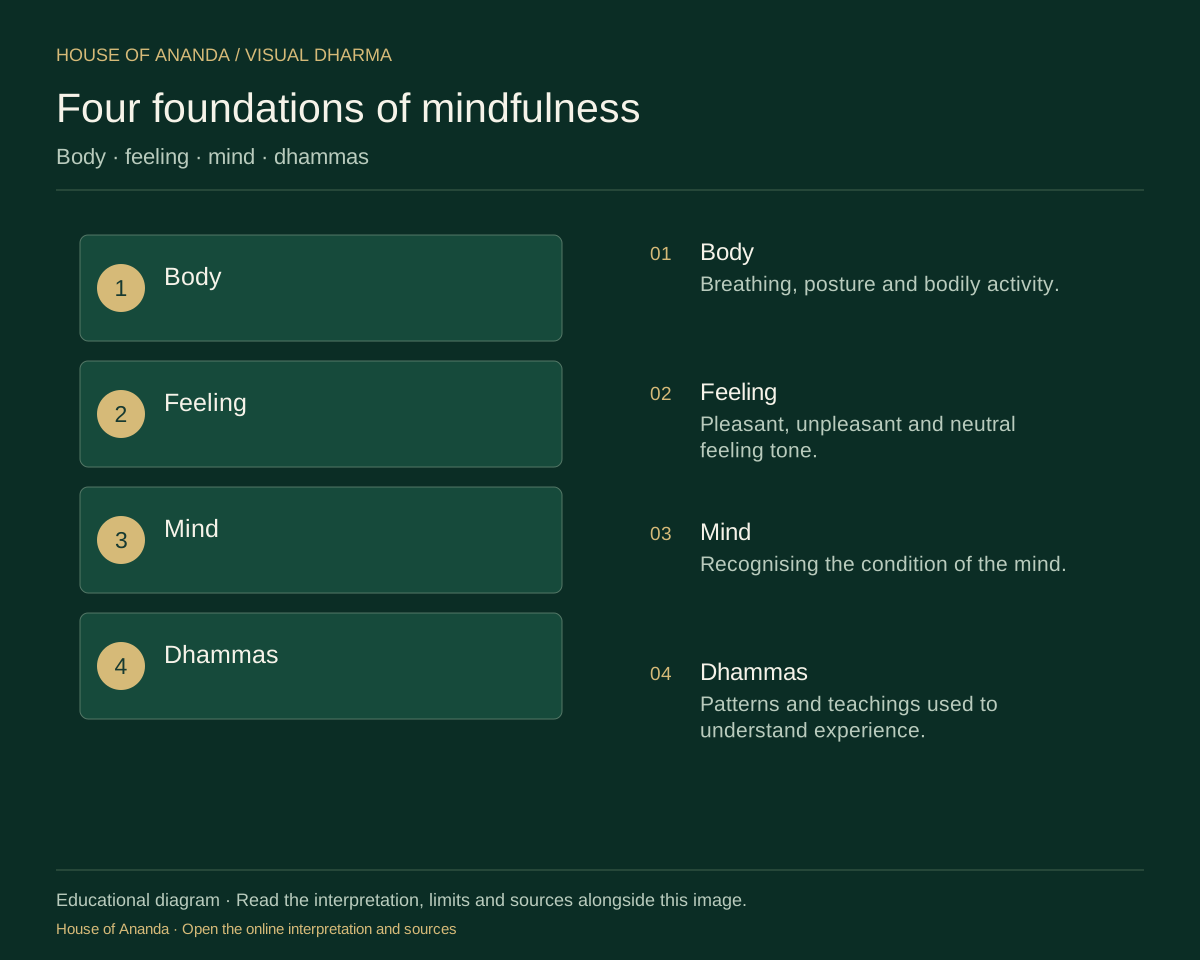
Body · feeling · mind · dhammas
Four foundations of mindfulness
Four fields of contemplation within the wider Buddhist path.
Read the diagram & interpretation
- BodyBreathing, posture and bodily activity.
- FeelingPleasant, unpleasant and neutral feeling tone.
- MindRecognising the condition of the mind.
- DhammasPatterns and teachings used to understand experience.
The four panels organise domains of attention; they are not four locations in the body. Mindfulness includes recognising what is present and remembering the purpose and framework of practice. Dhammas has several translation choices; the discourse includes hindrances and other teaching frameworks.
Keep in mind Mindfulness is not only non-judgmental awareness: these texts also concern understanding and cultivating a path away from suffering.
Sources: MN 10 · Establishing Mindfulness ↗
Before you begin
Choose a chair or a comfortable supported seat. Let the hands rest. Eyes can remain open with a soft gaze. There is no need to sit in lotus, hold the breath, count a prescribed ratio or make breathing deeper. If breath attention is uncomfortable, feel the feet or listen to ordinary sounds instead.
Five minutes of simple attention
Keep the exercise light. You are learning to notice and return, not trying to produce an empty mind.
- First minute: notice the seat, feet and sounds around you.
- Next two minutes: feel one comfortable place where breathing is noticeable. Allow the breath to happen naturally.
- When attention wanders: recognise it without criticism and return. This return is part of the practice.
- Final two minutes: include the whole body, then look around and move gently before continuing your day.
What counts as practice?
A busy session is not necessarily a failed session. The question is whether you recognise wandering and return with care. Stop or shorten the exercise if it increases distress; forcing attention through discomfort is not a requirement. More intensive practice is best learned with appropriate guidance.
Art & contemplation
Look, learn, reflect

A place to return
A quiet bench evokes an accessible moment of attention. The setting is imagined and the person is not a named teacher. Meditation can also happen amid ordinary household sounds, without a remote retreat or a perfectly quiet mind.
A moment to reflectWhat is one manageable pause you can make in your day?
Follow this theme ↗A question to carry with you
Pause and reflect.
Was your attitude towards distraction more important than the number of distractions?
Sources & further reading
Study notes and examples are original explanations. Follow the links for the source texts and their own contexts.