
A small beginning
A practice can start before the phone is opened: sit for a minute, notice the body and choose an intention for the day. Keep it realistic. A short practice you can repeat may be more useful than a demanding routine that becomes another source of pressure.
Visual study
A teaching you can explore
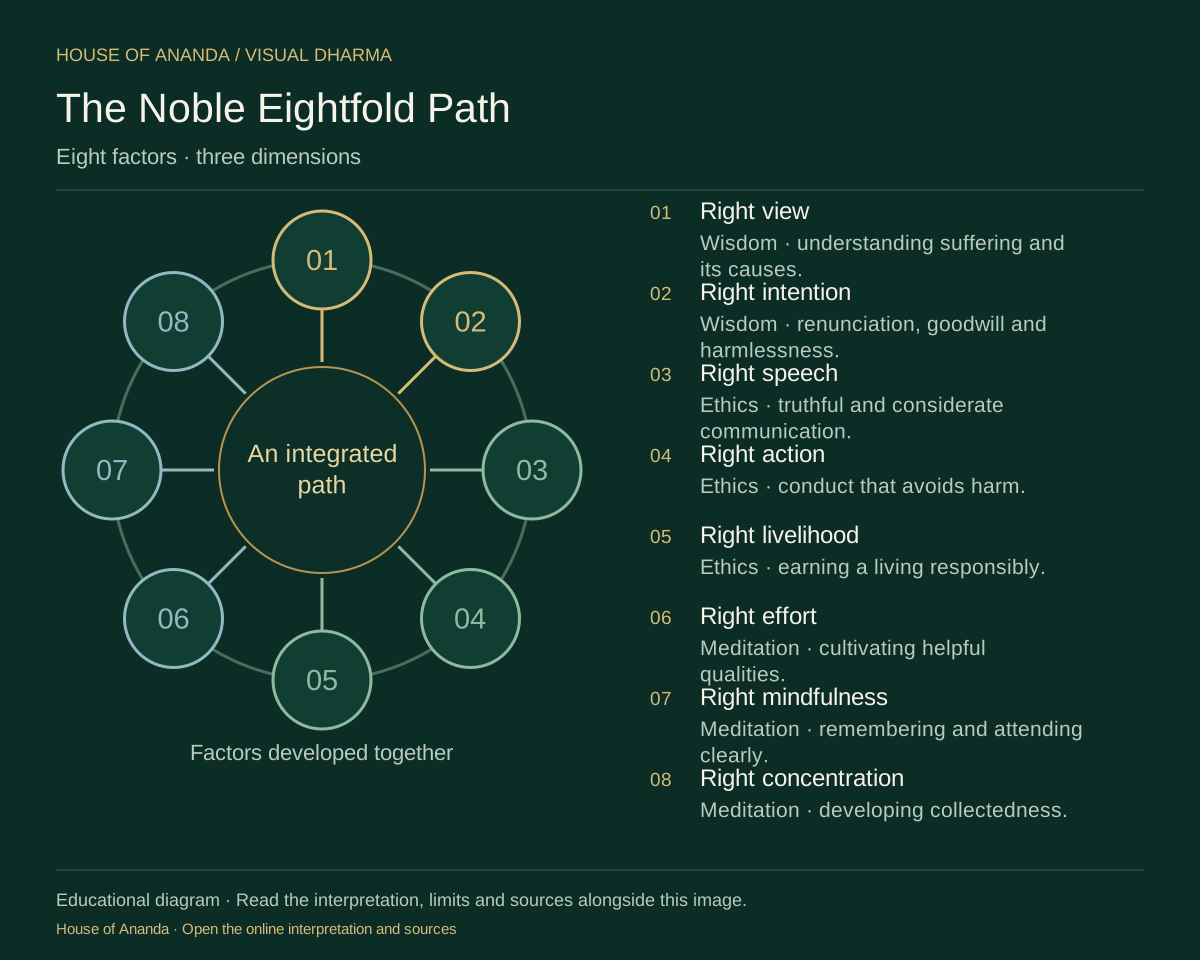
Eight factors · three dimensions
The Noble Eightfold Path
Eight mutually supporting factors develop understanding, ethical conduct and the mind.
Read the diagram & interpretation
- Right viewWisdom · understanding suffering and its causes.
- Right intentionWisdom · renunciation, goodwill and harmlessness.
- Right speechEthics · truthful and considerate communication.
- Right actionEthics · conduct that avoids harm.
- Right livelihoodEthics · earning a living responsibly.
- Right effortMeditation · cultivating helpful qualities.
- Right mindfulnessMeditation · remembering and attending clearly.
- Right concentrationMeditation · developing collectedness.
The gold, green and slate segments mark wisdom, ethics and meditation. Begin anywhere your life gives you an opportunity, while returning to the whole path. “Right” refers to what supports awakening, rather than a demand for personal perfection.
Keep in mind These are eight factors to develop together, not eight levels that must each be finished before the next.
Sources: SN 45:8 · An Analysis of the Path ↗ · Bhikkhu Bodhi · The Noble Eightfold Path ↗
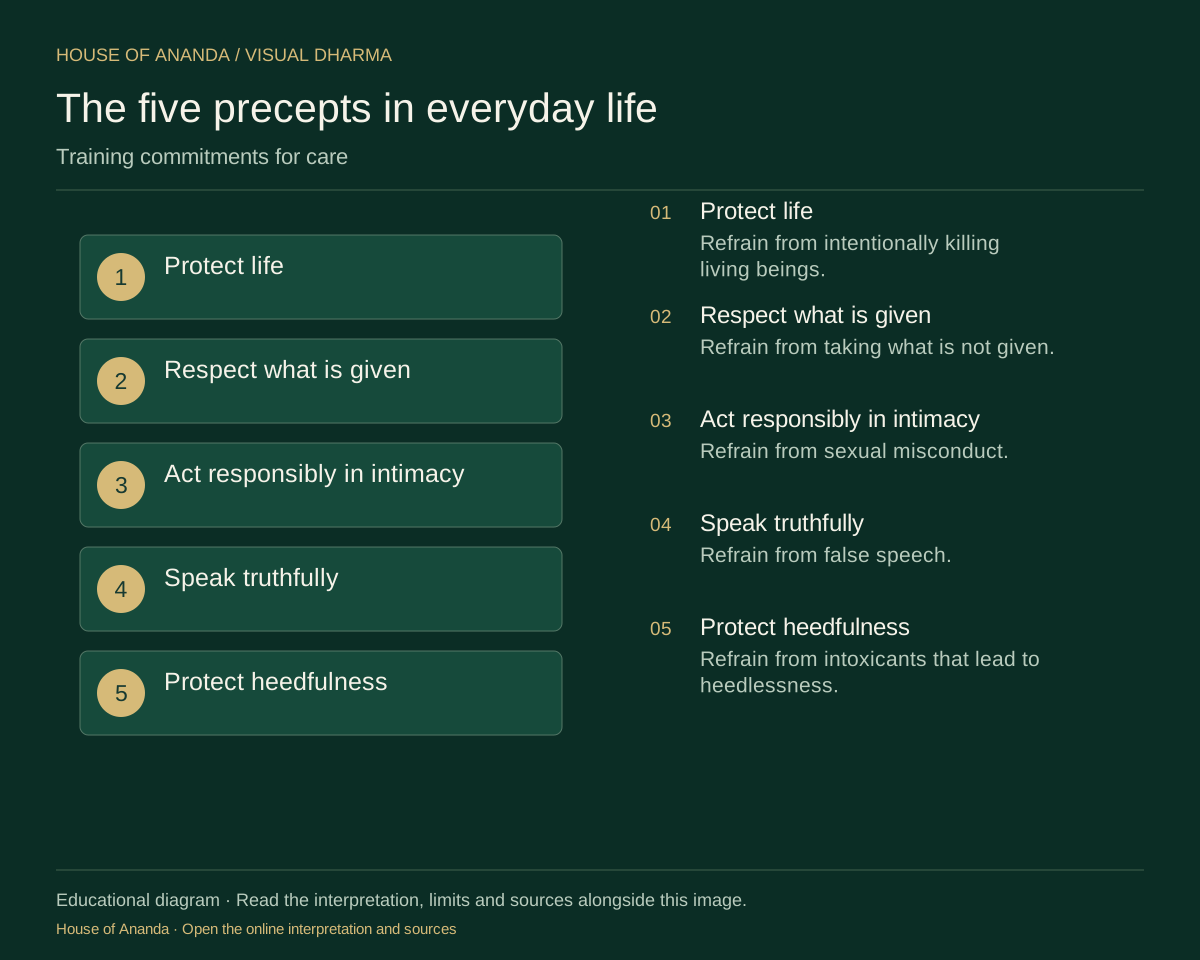
Training commitments for care
The five precepts in everyday life
A common lay ethical framework, paired here with everyday reflection prompts.
Read the diagram & interpretation
- Protect lifeRefrain from intentionally killing living beings.
- Respect what is givenRefrain from taking what is not given.
- Act responsibly in intimacyRefrain from sexual misconduct.
- Speak truthfullyRefrain from false speech.
- Protect heedfulnessRefrain from intoxicants that lead to heedlessness.
Ask how a commitment can become concrete today: a truthful correction, a respectful boundary, care for an animal, returning an item or reconsidering a habit that clouds attention. These examples are reflections, not a replacement for a community’s formulation or explanation of its precepts.
Keep in mind A precept is a training commitment. Compassionate accountability includes recognising harm, making repair where possible and practising again.
Sources: Ṭhānissaro Bhikkhu · The Healing Power of the Precepts ↗ · Plum Village · Five Mindfulness Trainings ↗
During work
Before a difficult task, clarify what you are trying to do and whom it affects. Work with one manageable step. Right livelihood also invites larger questions about harm, honesty and the conditions of work; it is not only a productivity method.
At a meal
Pause long enough to notice hunger, the food and the people or processes that made it available. Mindful eating is not a rigid diet or a rule that conversation must stop. Different Buddhist communities have different food practices and monastic disciplines.
In a difficult conversation
Notice bodily tension and the urge to win, withdraw or retaliate. Ask whether you can be both truthful and proportionate. You may need to pause or set a firm boundary. A calm voice is not a substitute for addressing what happened.
At the end of the day
Review one moment of care and one moment you would handle differently. Make a practical plan for repair if needed. Then stop reviewing. The intention is learning, not turning the evening into a trial against yourself.
Art & contemplation
Look, learn, reflect

The helping hand
The scene interprets compassion as practical responsiveness. Neither figure represents a named bodhisattva or a recorded Buddhist story. Help becomes meaningful through attention to what another person actually needs.
A moment to reflectWhat would useful help look like today?
Follow this theme ↗A question to carry with you
Pause and reflect.
Choose one daily transition—waking, eating, arriving home or going to bed—as a cue for one minute of attention.
Sources & further reading
Study notes and examples are original explanations. Follow the links for the source texts and their own contexts.