
Context and intention
An original introductory exercise related to appreciative joy. It does not require suppressing envy or your own difficulties.
Visual study
A teaching you can explore
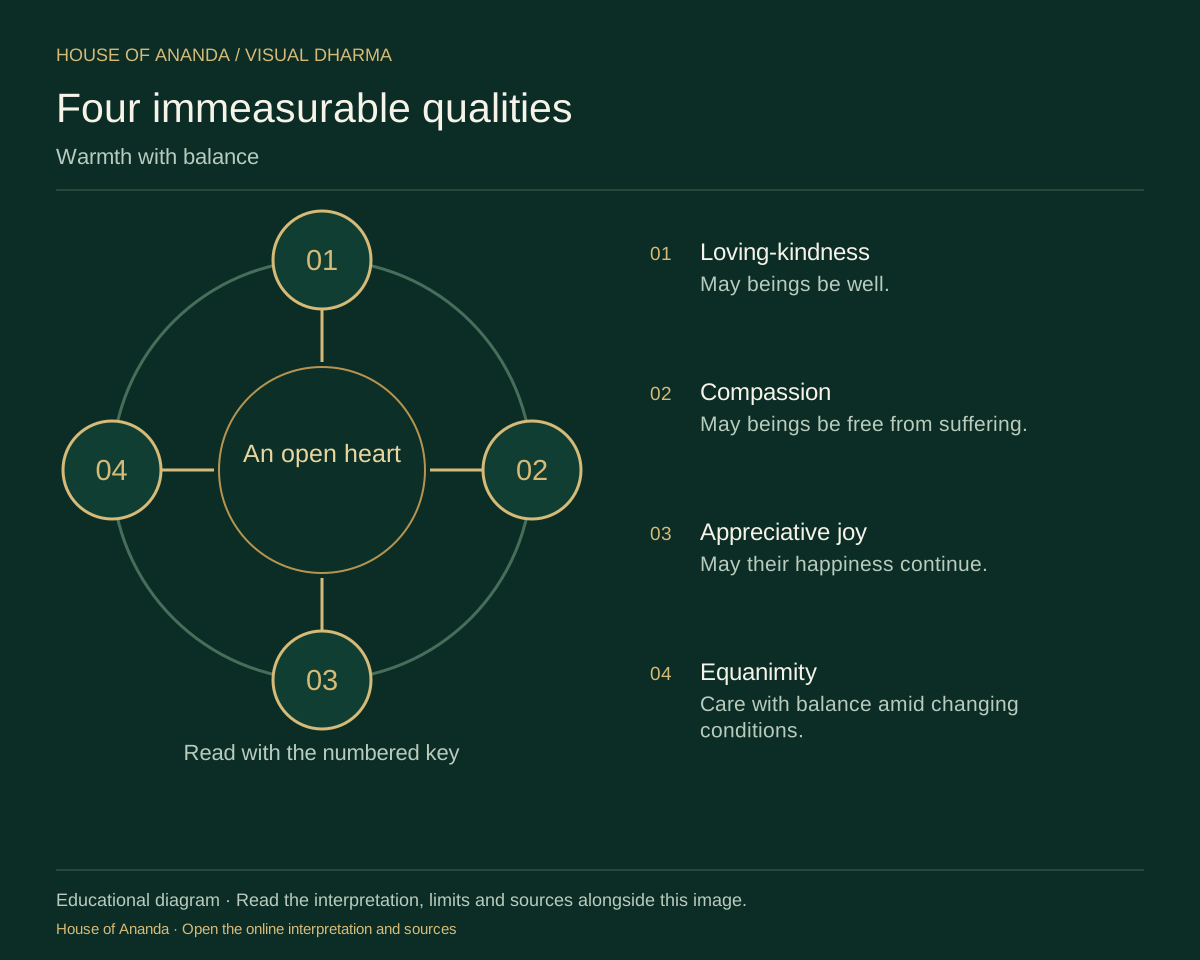
Warmth with balance
Four immeasurable qualities
Four qualities extend care beyond narrow preference.
Read the diagram & interpretation
- Loving-kindnessMay beings be well.
- CompassionMay beings be free from suffering.
- Appreciative joyMay their happiness continue.
- EquanimityCare with balance amid changing conditions.
The wording in the panels is an introductory House of Ananda adaptation. The qualities support each other: compassion can be steadied by equanimity, and joy can loosen the habit of comparing ourselves with others. Begin with an accessible person or situation rather than forcing a difficult emotional state.
Keep in mind Equanimity is not indifference, compassion need not become overwhelm, and kindness can coexist with firm boundaries.
Sources: Nyanaponika Thera · The Four Sublime States ↗ · Sutta Nipāta 1:8 · Goodwill ↗
Before you begin
Choose a short, comfortable session. You can keep your eyes open, use a chair, adjust position or stop. If inward attention becomes unsettling, orient to the room and ordinary activity. These educational exercises do not promise treatment, attainment or a particular emotional result.
Settle · 1 minute
Sit or stand comfortably and let the shoulders relax.
Recall something modest · 2 minutes
Remember a friend learning a skill, a neighbour receiving help or a colleague enjoying good news. Choose a situation that feels accessible.
Appreciate · 2 minutes
Acknowledge what is good for them. Try: I am glad this is going well for you. If comparison appears, name it gently and return to their experience.
Express it · 1 minute
Consider a sincere congratulation or word of appreciation. It need not mention yourself.
After the practice
Can another person’s wellbeing be meaningful without telling a story about your own success or failure?
Art & contemplation
Look, learn, reflect
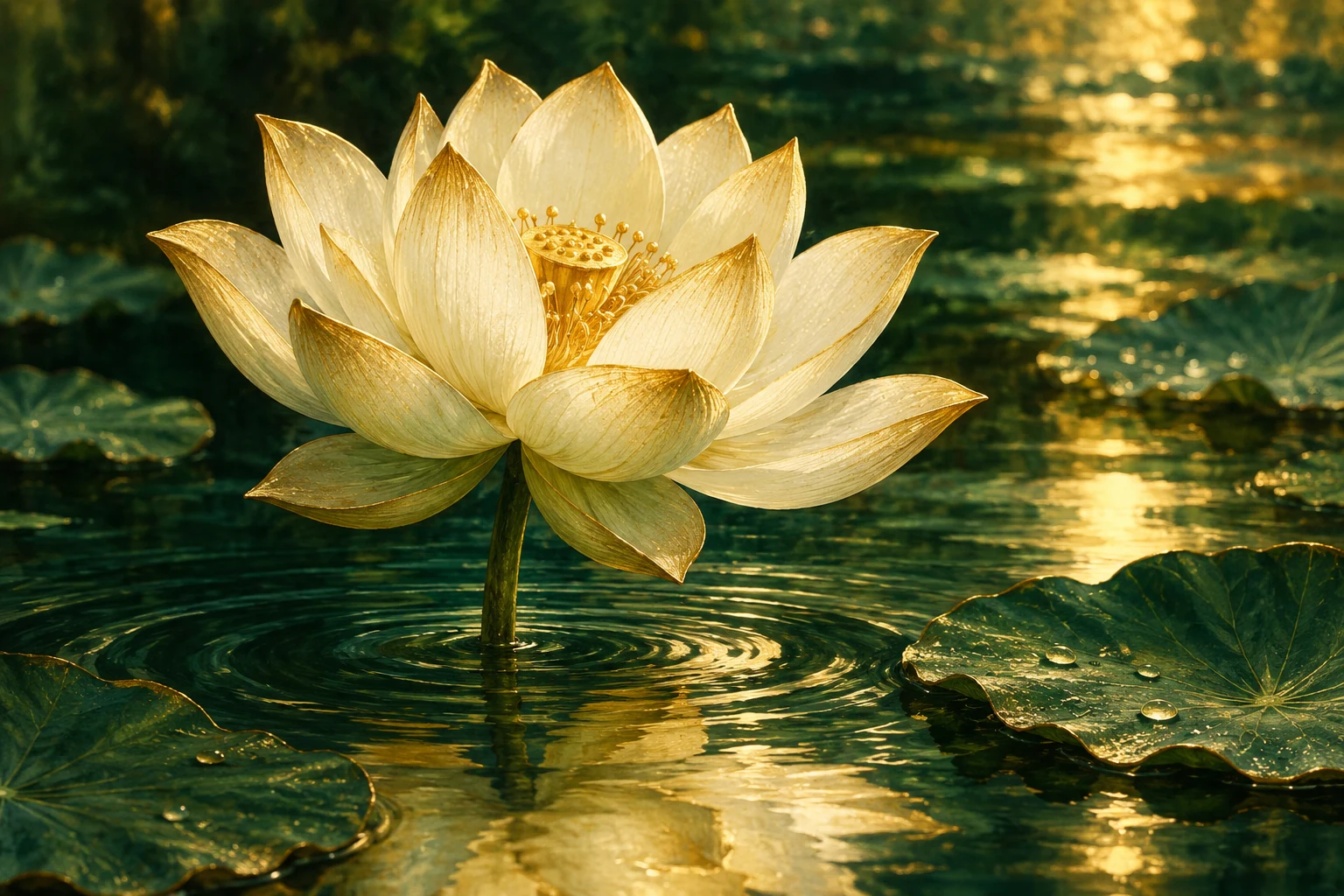
A lotus above the water
The lotus is widely associated with purity and awakening. Here the contrast between bloom and water invites a reflection on developing wisdom amid ordinary conditions. The picture is contemporary artwork, not a traditional icon with a fixed colour code.
A moment to reflectWhere might care grow within an imperfect situation?
Follow this theme ↗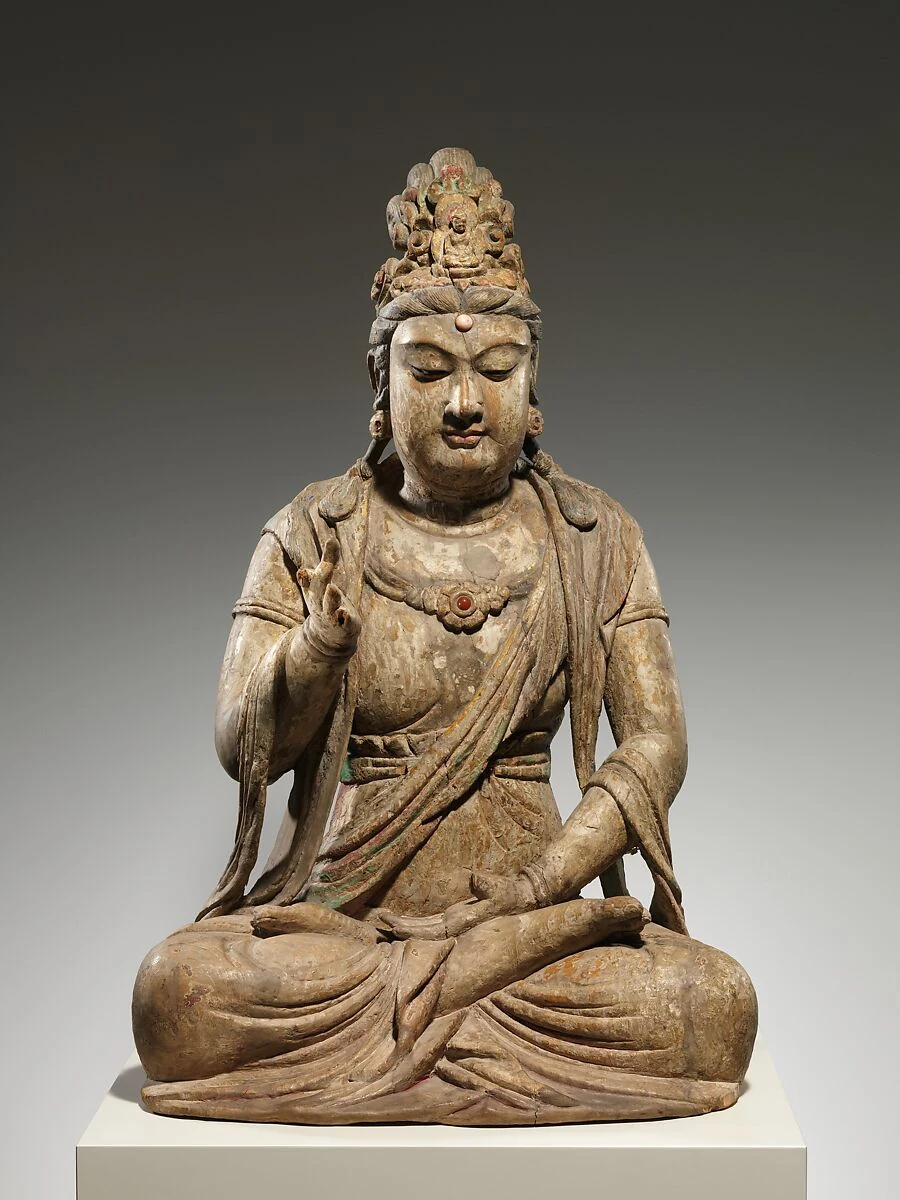
Bodhisattva
Avalokiteśvara / Guanyin: compassion
Avalokiteśvara is associated with compassion; Guanyin is the Chinese name. This Chinese sculpture belongs to a long and varied history of the figure’s representation. Its particular posture should be studied through the object record rather than assumed to be the standard form everywhere.
Look closelyNotice the ornament and headdress. Compare them with the plain robe of the Śākyamuni sculpture.
Continue studying ↗Artist unknown · The Metropolitan Museum of Art · 33.116. Object / image record ↗ · Public domain / CC0. Resized and converted to WebP; image content unchanged.
A question to carry with you
Pause and reflect.
Can another person’s wellbeing be meaningful without telling a story about your own success or failure?
Sources & further reading
Study notes and examples are original explanations. Follow the links for the source texts and their own contexts.