






FLOW 01 OF 18
ॐ
Beginner · 45 min
Ground & Breathe
A steady first step into yogaListen & practiseOpen written PDF guide
 House of AnandaMovement · Stillness · Wisdom · Journey
House of Ananda
Movement · Stillness · Wisdom · Journey
Explore yoga, meditation and Tai Chi, illustrated practice guides and proposed festival retreats. A sanctuary for sacred learning, music and reflection, honouring yoga’s South Asian roots.
Enter the houseEST. 2026 · ANANTA · THE INFINITE JOURNEY
atha yogānuśāsanam · now, the teaching of yoga
Your way into the House
Answer four simple questions and receive a starting pathway shaped around your intention, experience, available time and energy today.
Find my starting pathA continuing relationship
Plan, practise, listen, learn and reflect through six connected experiences. Personal notes and progress remain private in your browser.
The House
Enter through what you need today. Every original page remains in its place; the new structure simply makes the House easier to inhabit.

Daily Peace · 2 October 2026 · 05:55
“Not every feeling needs an immediate answer; pause, breathe, and let the quiet within you choose the next kind step.”Enter today’s reflection
A little of the House, in your inbox
Join us for daily images, Daily Peace or the House Letter. Choose the inspiration you would like to hear from us about.
Explore the subscriptions →Browse all 18 flows with spoken guidance →
01 · Practice
A progressive 45-minute library from first foundations to specialised advanced practice, each with movement guidance, video space, history and spiritual reflection.
Beginner
Six welcoming practices for learning breath, alignment, mobility, strength and rest without pressure.
Beginner · 45 min
Beginner · 45 min
Beginner · 45 min
Beginner · 45 min
Beginner · 45 min
Beginner · 45 min
Intermediate
Six layered flows that add rhythm, longer standing work, deeper mobility and more demanding balance.
Intermediate · 45 min
Intermediate · 45 min
Intermediate · 45 min
Intermediate · 45 min
Intermediate · 45 min
Intermediate · 45 min
Advanced
Six specialised practices with prerequisites, intelligent alternatives and an emphasis on discernment over display.
Advanced · 45 min
Advanced · 45 min
Advanced · 45 min
Advanced · 45 min
Advanced · 45 min
Advanced · 45 min
Beyond the mat
Personal practice, morning ritual, guided programmes, movement, meditation, nourishment, wisdom, sound, sacred place, visual storytelling, community and the continuing story behind the project.
Your signed-in space for saved practices, learning progress, weekly plans and private reflection.
Enter section 02९Compare three numerology systems and create a grounded birth-number and graha introduction.
Enter section 0310Ten structured programmes combining movement, stillness, sound, reading and journal prompts.
Enter section 0405:55Daily Peace expanded into breath, movement, mantra, music and a private morning question.
Enter section 05नादFilter meditation, yoga nidrā, breath, mantra, sound baths and listening journeys.
Enter section 06∞Turn today’s energy, available time and need into a simple adaptable session.
Enter section 07शान्तिA new morning reflection and peaceful image, preserved as a dated living diary.
Enter section 08ध्यानEight practices, a four-week pathway and nine sourced traditions of contemplative practice.
Enter section 09आहारFour goal programmes, 26 meals, dietary pathways and ten shakes.
Enter section 10पोषणEvidence-led food guidance for liver, heart, bone and muscle health, connected with movement, breath and meditation.
Enter section 11आFive elements, three doshas, treatment families, twelve therapy definitions, history, evidence and safety.
Enter section 12शरीरBreath, joints, load, nervous-system awareness and safer choices.
Enter section 13太極A complete beginner room for principles, foundational movements, styles and progressive practice.
Enter section 14道Buddhism, Daoism, qi, yin–yang and the careful connections—and differences—between traditions.
Enter section 15इतिहासA careful timeline from early Indian traditions to global modernity.
Enter section 16गङ्गाSacred geography, ashram culture, teacher training and responsible travel.
Enter section 17यात्राA living photographic journal of travel, practice, people and sacred place.
Enter section 18दर्शनFull practices, movement studies and films from the journey.
Enter section 19ॐThe social channels through which the library will grow and gather community.
Enter section 20DFHospitality, reinvention and a new chapter built around yoga and service.
Enter section 21◎Register interest in the early membership community helping shape the House.
Enter section 22ॐA connected library of deities, sacred stories, scriptures, history, yoga, temples, sacred art, symbols and Sanskrit.
Enter section 23ज्योJyotiṣa foundations, grahas, nakṣatras, planetary periods and grounded chart study.
Enter section 24९Indian, Pythagorean and Chaldean systems compared with clear methods and historical care.
Enter section 25गुरुSearch a growing global directory by place, yoga tradition, teaching skill and online availability.
Enter section 26☽History, chart foundations, global traditions, reflective practice and grounded discernment.
Enter section03 · Sacred language
Most traditional yoga vocabulary is Sanskrit. Meanings shift across texts, eras and lineages, so these are careful introductions—not final definitions.
Union, discipline or a practical path. In the Yoga Sutra it is the settling of mental activity, not simply physical exercise.
A seat or posture. Its meaning broadened across history; modern classes use the word for physical yoga poses.
Vital breath or life force, cultivated and directed through breathing, attention and subtle-body practices.
The disciplined expansion or regulation of breath and vital energy; traditionally a preparation for inward attention.
Meditative absorption: an unbroken flow of attention toward its object.
Concentration—placing and repeatedly returning attention to one point.
Deep integration or absorption in which the separation between observer and object becomes profoundly quiet.
Ethical restraints: non-harming, truthfulness, non-stealing, wise use of energy and non-grasping.
Personal observances: purity, contentment, disciplined effort, self-study and dedication to the sacred.
Non-harming in action, speech and thought. On the mat it begins with refusing to force the body.
Truthfulness—honest perception and speech held together with compassion.
Transformative heat, discipline or committed effort. It means steady practice, not self-punishment.
Self-study and study of sacred teachings; observing the patterns through which we meet life.
Dedication or surrender to Īśvara, the divine or a reality greater than the isolated ego.
A sacred sound, word or phrase used to steady attention, invoke a quality, or support ritual and meditation.
A seal or gesture—often made with the hands—used in ritual, meditation, dance and subtle-body practice.
An energetic ‘lock’ used in some haṭha practices to guide breath and attention. Best learned from a qualified teacher.
A ‘wheel’ or subtle centre. Chakra systems vary by text and lineage; the familiar seven-centre map is only one model.
The coiled spiritual power described in tantric and haṭha traditions, associated with awakening through the central channel.
A subtle channel through which prāṇa is said to move; iḍā, piṅgalā and suṣumṇā are especially prominent.
A sacred syllable associated with the totality of sound, consciousness and ultimate reality in several Indian traditions.
A respectful greeting: ‘I bow to you.’ Spiritual interpretations are beautiful, but the everyday greeting is equally authentic.
Peace, tranquillity or cessation of disturbance; often repeated three times in a closing invocation.
A teacher or spiritual guide—literally ‘weighty’ or venerable—within a relationship carrying serious ethical responsibility.
That which sustains: duty, teaching, moral order or a path appropriate to one’s life and tradition.
Action and its consequences, not fate or punishment. Traditions differ in how karmic causation is understood.
The repeated cycle of conditioned existence, change and rebirth from which Indian liberation traditions seek freedom.
Liberation from saṁsāra, ignorance and bondage; its precise meaning differs across philosophical schools.
Self or inner principle. Some traditions identify it with ultimate reality; others maintain important distinctions.
Ultimate reality in the Upaniṣadic and Vedānta traditions—not to be confused with Brahmā, the creator deity.
Devotion and loving participation in relationship with the divine.
Ritual worship through offerings, light, sound, gesture and reverent attention.
A sustained spiritual practice or path of cultivation undertaken toward transformation or liberation.
‘Corpse pose’: deliberate rest that invites release, integration and the temporary surrender of striving.
04 · Paths & forms
Some yogas are spiritual paths, some are historical practice families, and others are modern class styles. Keeping those categories visible helps honour their differences.
Meditative discipline associated with Patañjali’s eight limbs: ethics, posture, breath, inwardness, concentration, meditation and absorption.
A broad family using posture, breath, seals, locks and subtle-body methods. Modern pose-based yoga grew partly from haṭha traditions but is not identical to them.
Loving devotion expressed through prayer, chanting, ritual, remembrance and surrender to a chosen form of the divine.
Acting skilfully without clinging to personal reward; service becomes a way of loosening ego and practising freedom.
Inquiry into self, consciousness and reality through study, reasoning, contemplation and direct discernment.
The disciplined repetition and contemplation of sacred sound, often received within a lineage or ritual setting.
Traditions using mantra, deity practice, visualisation, subtle-body maps and initiation. Tantra is far broader than its modern sexualised stereotype.
Methods concerned with awakening and integrating subtle energy. Historical systems and modern branded classes are not the same thing.
A term with several meanings, from Patañjali’s discipline of effort, self-study and dedication to later lineages of breath and meditation techniques.
Contemplative listening and sacred music practices that approach inner stillness through audible and subtle sound.
‘Yogic sleep’: systematic relaxation and awareness practices. Ancient uses of the term differ from several modern methods.
A set sequence system popularised by K. Pattabhi Jois, linking breath, gaze and movement in progressively demanding series.
Alignment-focused practice associated with B. K. S. Iyengar, known for precision, sequencing and intelligent use of props.
Creative breath-linked sequencing. Classes vary widely because vinyāsa describes an approach rather than one fixed series.
Long, relatively passive floor shapes influenced by modern postural yoga and Chinese-derived energetic ideas; distinct from historical Indian yin terminology.
Long, comfortable, highly supported shapes designed to reduce effort and create conditions for rest.
05 · Deities & devotion
Hindu traditions are wonderfully diverse. Deities may be understood as distinct divine persons, manifestations of ultimate reality, members of sacred families, or an iṣṭa-devatā—a personally cherished form of God.
This is an introduction to principal deities encountered in yoga, Hindu philosophy and devotional culture—not a claim to catalogue every regional and living tradition.
Enter the complete illustrated deity libraryThe creator within the trimūrti. Brahmā is distinct from Brahman, ultimate reality, and has comparatively few major temples today.
Protector of cosmic order, worshipped directly and through avatāras including Rāma and Kṛṣṇa.
Ascetic, householder, dancer and lord of yoga. Śiva gathers paradoxes: destruction and renewal, silence and ecstatic movement.
The Goddess as supreme power and reality, appearing in many forms from nurturing to fierce.
Śiva’s consort and mother of Gaṇeśa and Skanda; associated with devotion, strength and family life.
A warrior form of the Goddess who defeats forces that the gods cannot overcome, embodying protective power.
A fierce form of Devī associated with time, death, freedom and the destruction of egoic illusion.
Goddess of abundance, beauty, good fortune and auspicious wellbeing; often associated with Viṣṇu.
Goddess of knowledge, language, music and refined understanding, often shown with the vīṇā.
The elephant-headed deity invoked at beginnings, known as remover—and sometimes placer—of obstacles.
An avatāra of Viṣṇu, beloved as child, cowherd, flute-player and teacher of the Bhagavad Gītā.
An avatāra of Viṣṇu and central figure of the Rāmāyaṇa, revered for commitment to dharma.
The devoted ally of Rāma, embodying strength, humility, loyalty and selfless service.
Warrior son of Śiva and Pārvatī, especially beloved in South India as Murugan.
Solar deity associated with light, health, vision and life-giving energy; honoured in older ritual and later yoga culture.
Śiva as Lord of Dance: creation, preservation, dissolution, concealment and grace held within one dynamic image.
06 · Sacred symbols
Sacred signs are not decoration alone. They carry theology, memory, ritual practice and community identity.
Sacred sound and visual sign of the totality of consciousness. It belongs to living religious traditions, not merely yoga branding.
Purity, spiritual unfolding and awakened potential: rooted in mud yet opening toward light.
Interlocking triangles representing the dynamic union of consciousness and energy; a sacred diagram used in Śrīvidyā worship.
Sacred forehead markings expressing lineage, devotion and identity. Designs and meanings vary across Vaiṣṇava, Śaiva and Śākta communities.
Śiva’s trident, often interpreted through triads such as creation, preservation and dissolution or the three guṇas.
An aniconic emblem of Śiva and generative cosmic presence, commonly worshipped with its base, the yoni.
More centrally Buddhist, but part of India’s shared sacred visual world; it signifies teaching, order and the path.
The conch associated especially with Viṣṇu and Kṛṣṇa; its sound announces ritual presence and sacred order.
The wheel and Viṣṇu’s Sudarśana discus evoke cosmic order, protective power and clear vision.
Śiva’s small hourglass drum, symbolising primordial sound, rhythm, creation and dissolution.
Seeds sacred to Śiva, worn as mālā beads for prayer, mantra counting and remembrance.
An ancient Indian sign of wellbeing and auspiciousness. Its sacred meaning long predates—and must be distinguished from—the Nazi emblem and its hateful modern associations.
07 · Journal
Thoughts on learning, beginning again, and what practice teaches beyond the mat.
“The beginning of a new chapter: not chasing perfection, just learning to be present for my own life.”
Read the entry08 · Reading room
Yoga history, philosophy, spirituality and practical guides—collected with respect for living traditions.
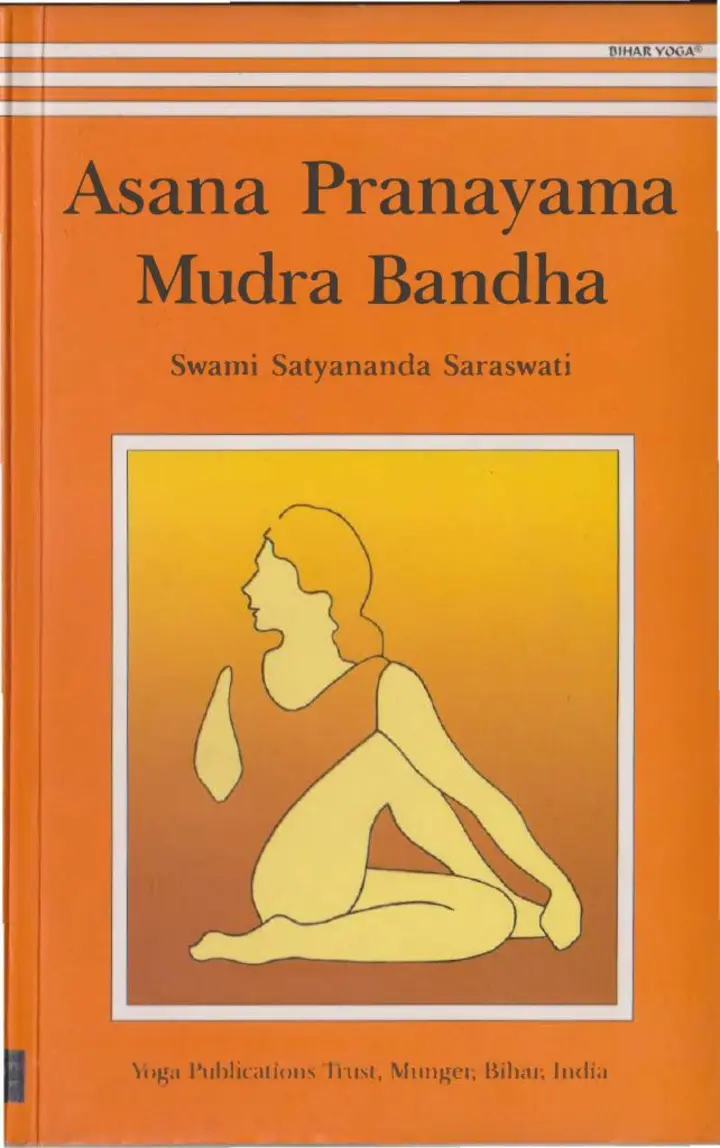
Featured practice manual
A systematic reference spanning beginner, intermediate and advanced āsana; prāṇāyāma; mudrā; bandha; ṣaṭkarma; relaxation, meditation and an introduction to yogic subtle physiology.