
History and remembered life
Siddhārtha Gautama, known as Śākyamuni, lived in the ancient northern Indian subcontinent. His exact dates are debated; a life around the fifth century BCE is a useful broad orientation. Traditional biographies were shaped and expanded over time. They communicate spiritual meaning as well as remembered events.
Visual study
A teaching you can explore
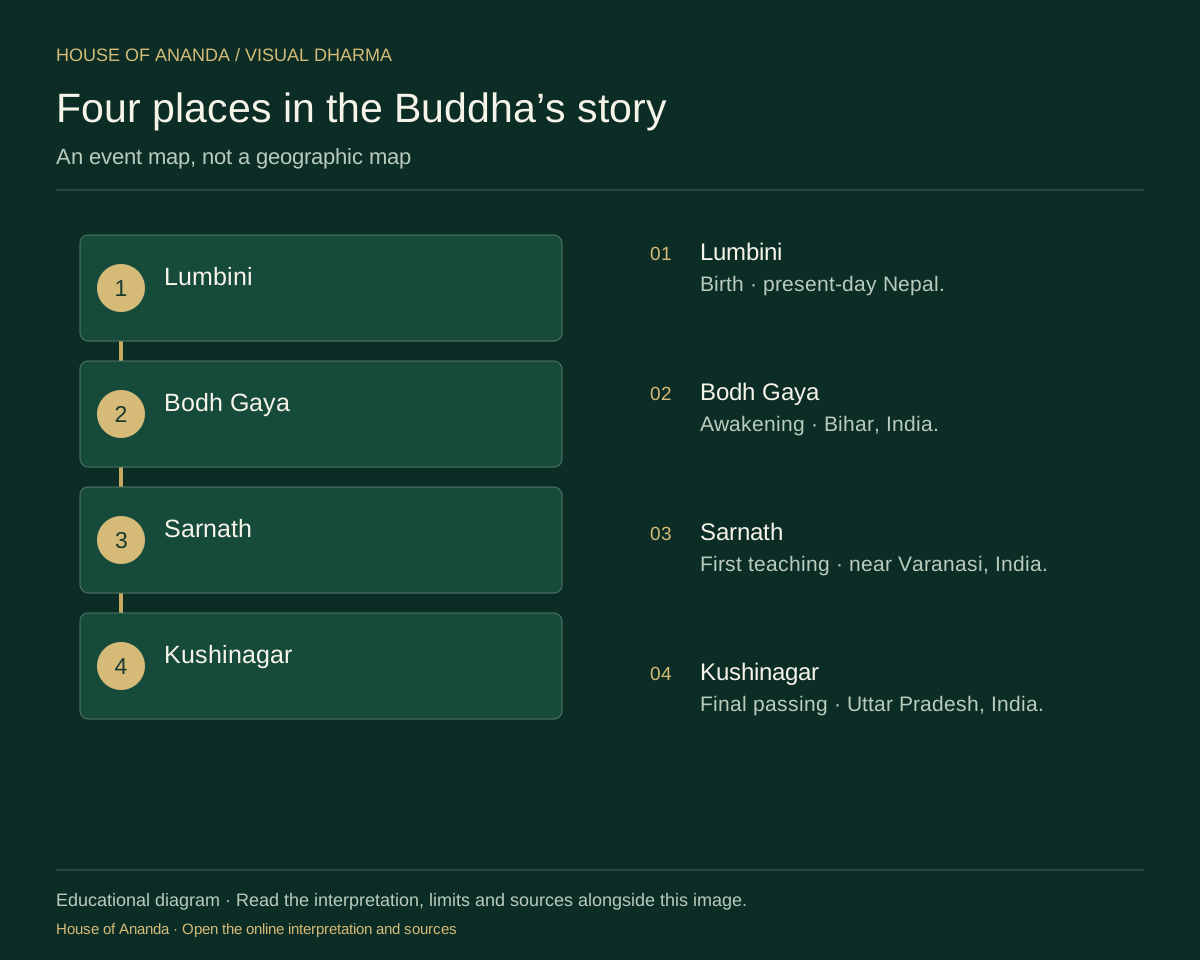
An event map, not a geographic map
Four places in the Buddha’s story
Four pilgrimage associations connect a traditional biography to places in Nepal and India.
Read the diagram & interpretation
- LumbiniBirth · present-day Nepal.
- Bodh GayaAwakening · Bihar, India.
- SarnathFirst teaching · near Varanasi, India.
- KushinagarFinal passing · Uttar Pradesh, India.
Read from birth to final passing. These places matter as centres of memory, devotion, archaeology and living community. The diagram arranges them by narrative order; distances and compass directions are intentionally not represented.
Keep in mind Traditional biography and archaeological evidence answer different kinds of question. The Buddha’s precise lifetime remains debated.
Sources: UNESCO · Lumbini ↗ · UNESCO · Mahabodhi Temple Complex ↗ · DN 16 · The Great Total Unbinding ↗
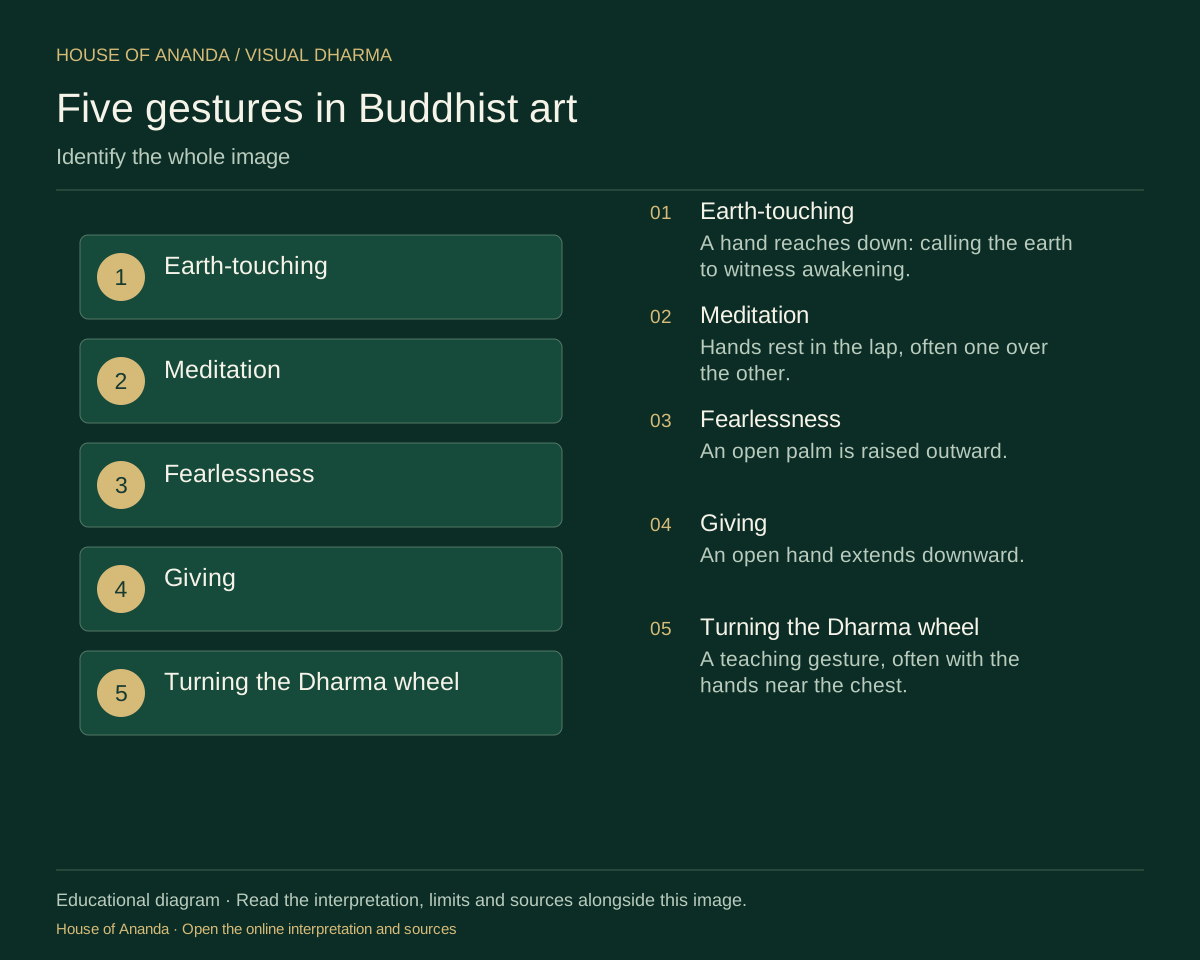
Identify the whole image
Five gestures in Buddhist art
Common hand gestures offer clues to what an image expresses.
Read the diagram & interpretation
- Earth-touchingA hand reaches down: calling the earth to witness awakening.
- MeditationHands rest in the lap, often one over the other.
- FearlessnessAn open palm is raised outward.
- GivingAn open hand extends downward.
- Turning the Dharma wheelA teaching gesture, often with the hands near the chest.
Look at palm direction, hand position and the surrounding story. Similar gestures can differ across regions and periods. A catalogue identification should take precedence over guessing from one feature. The historical sculptures below provide real examples to examine.
Keep in mind A hand position alone cannot reliably identify every figure. This guide describes art and does not teach esoteric ritual hand sequences.
Sources: The Met · Recognizing the Gods ↗ · BuddhaNet · Mudras of the Great Buddha ↗
From protected life to the search
Traditional accounts describe a privileged upbringing and encounters with ageing, illness, death and a renunciant. These “four sights” dramatise the question of whether security and pleasure can answer the vulnerability of human life. The renunciation story leads through teachers, meditation and severe asceticism towards the rejection of self-mortification.
Awakening and teaching
Bodh Gaya is associated with awakening beneath the Bodhi tree. The teaching at the Deer Park near Sarnath is remembered as setting the wheel of Dharma in motion. Thereafter, the Buddha is portrayed teaching people of many backgrounds and establishing a monastic community supported by lay followers.
Four places in the story
Lumbini, in present-day Nepal, is associated with birth; Bodh Gaya, India, with awakening; Sarnath with the first teaching; and Kushinagar with final passing, or parinirvāṇa. These are living places of pilgrimage. Their significance is larger than a modern tourist itinerary.
Art & contemplation
Look, learn, reflect
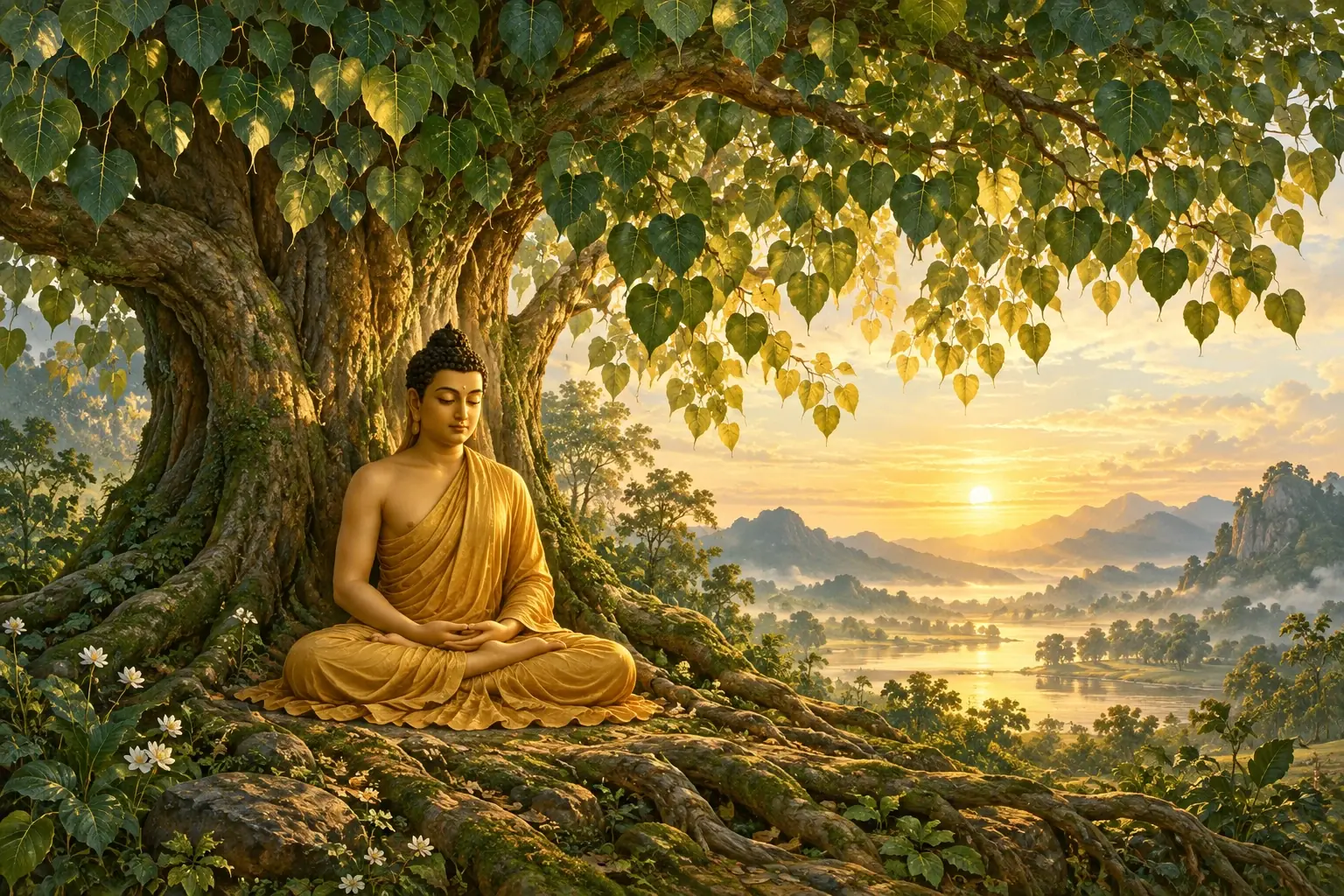
Beneath the awakening tree
The spreading tree recalls the traditional story of awakening at Bodh Gaya. The composition places steadiness within a living landscape; its imagined setting should not be treated as a reconstruction of ancient India.
A moment to reflectWhat conditions make patient attention possible for you?
Follow this theme ↗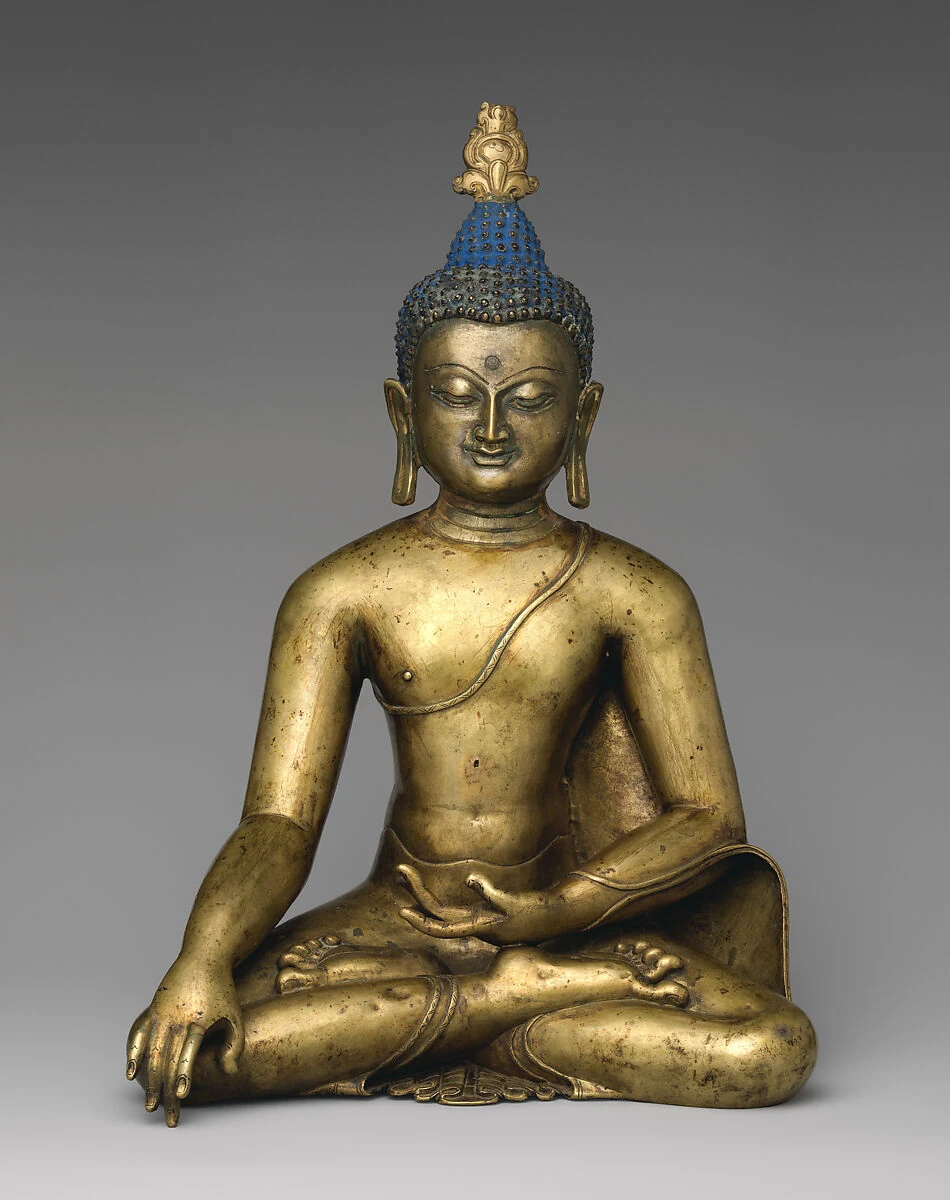
Buddha & gesture
Śākyamuni: the earth as witness
The downward right hand is the earth-touching gesture, associated with the traditional story of awakening. The robe and seated posture help establish the figure’s contemplative setting. This is a twelfth-century Central Tibetan sculpture, rather than a portrait made during the Buddha’s lifetime.
Look closelyCompare the lowered right hand with the left hand in the lap. What story does this difference tell?
Continue studying ↗Artist unknown · The Metropolitan Museum of Art · 2012.458. Object / image record ↗ · Public domain / CC0. Resized and converted to WebP; image content unchanged.
Nature & sacred memory
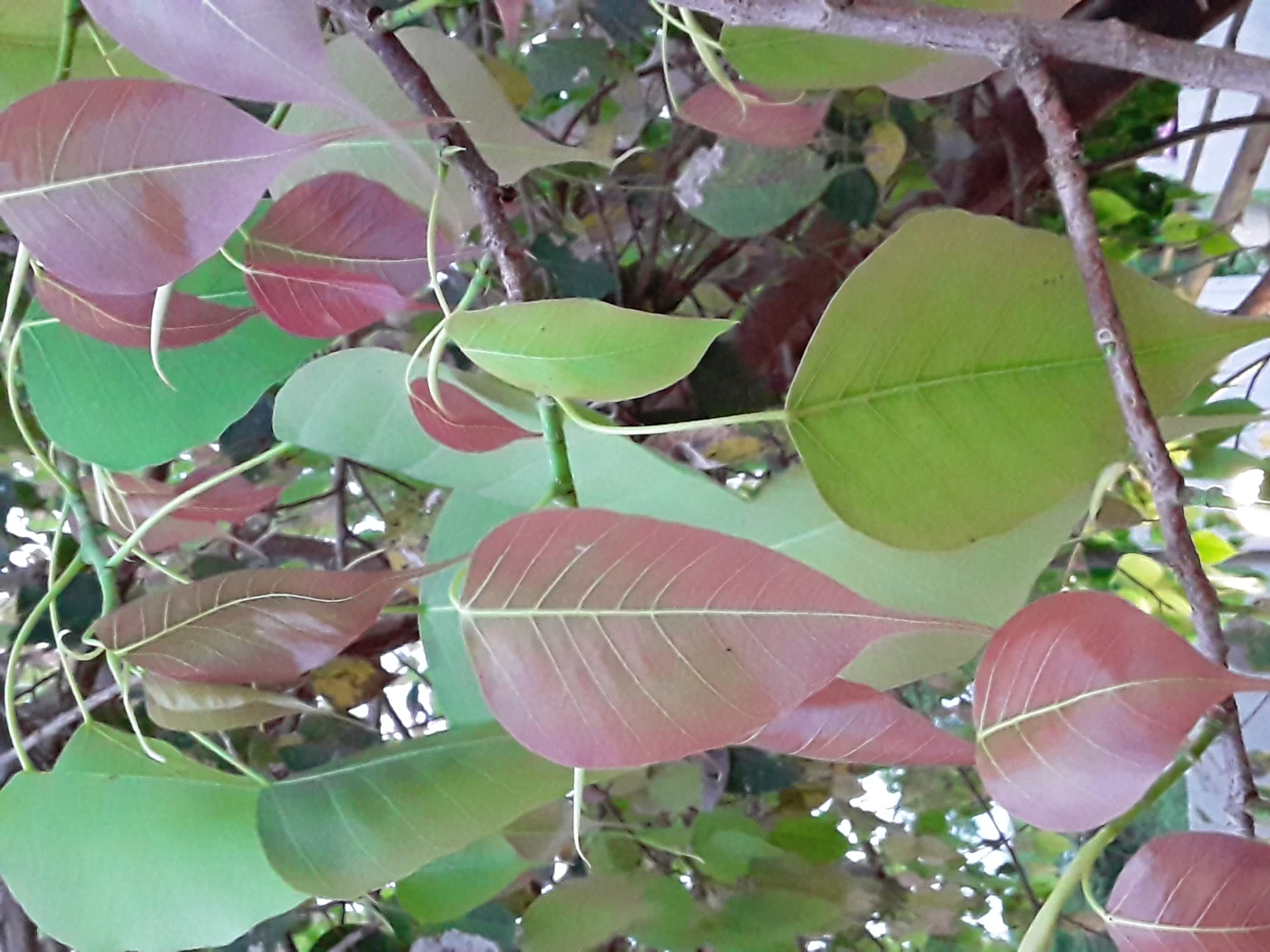
The Bodhi leaf: remembering awakening
The Bodhi tree is associated with the Buddha’s awakening. A leaf’s recognisable shape can become a reminder of that story, while the living tree continues to grow and change. This is a modern botanical photograph, not a claim to show a leaf from the ancient tree.
Look closelyObserve the tapering tip, veins and variation between leaves. How does a living form carry a remembered story?
Continue studying ↗Kamindamanuraj. Object / image record ↗ · CC BY-SA 4.0. Resized and converted to WebP; image content unchanged.
A question to carry with you
Pause and reflect.
Which part of the story asks a question that still matters to you? Treat the story as an invitation to inquiry, not a demand to copy someone else’s life.
Sources & further reading
Study notes and examples are original explanations. Follow the links for the source texts and their own contexts.