
Context and intention
Inspired by early Buddhist breath awareness. MN 118 gives a much fuller sixteenfold framework; this is a short beginner adaptation.
Visual study
A teaching you can explore
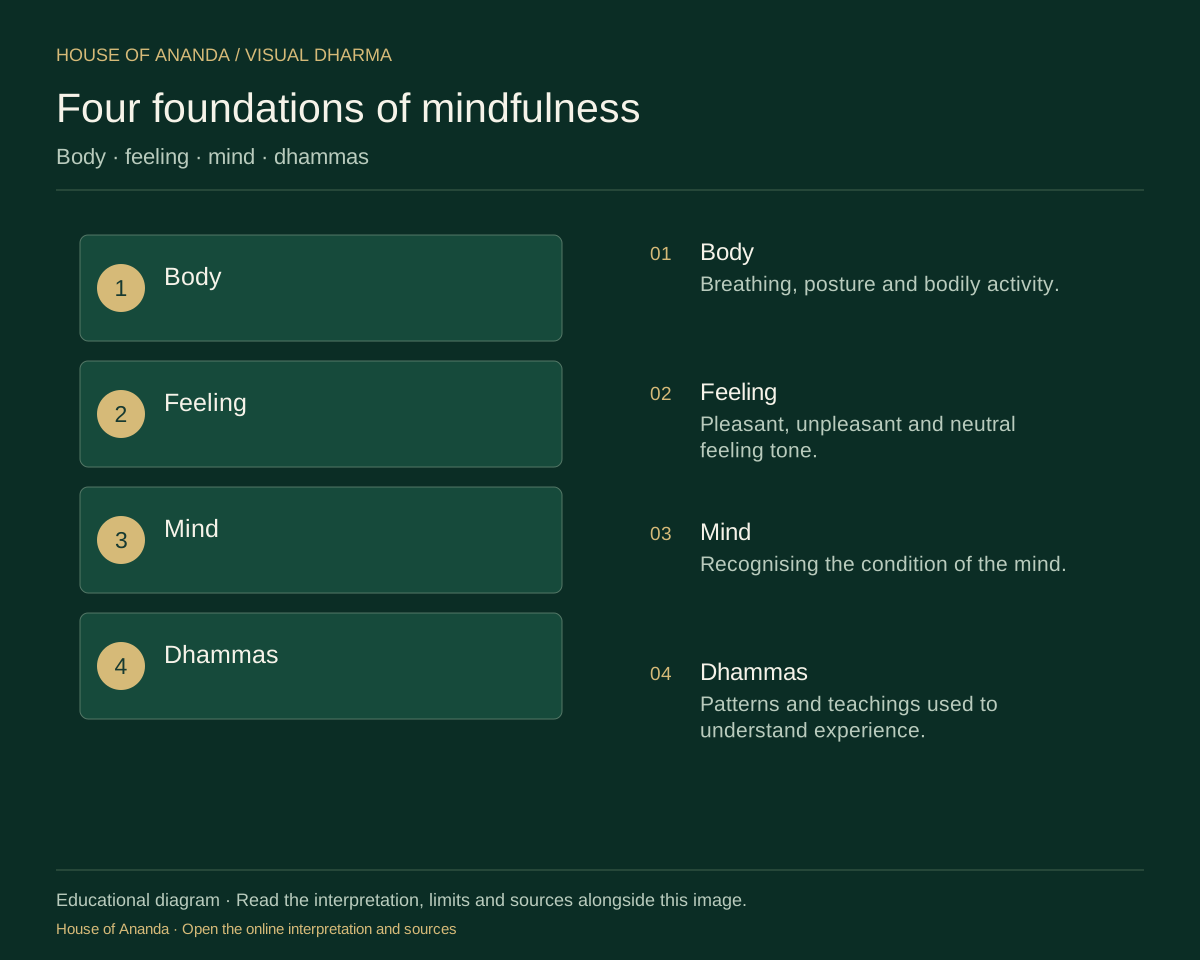
Body · feeling · mind · dhammas
Four foundations of mindfulness
Four fields of contemplation within the wider Buddhist path.
Read the diagram & interpretation
- BodyBreathing, posture and bodily activity.
- FeelingPleasant, unpleasant and neutral feeling tone.
- MindRecognising the condition of the mind.
- DhammasPatterns and teachings used to understand experience.
The four panels organise domains of attention; they are not four locations in the body. Mindfulness includes recognising what is present and remembering the purpose and framework of practice. Dhammas has several translation choices; the discourse includes hindrances and other teaching frameworks.
Keep in mind Mindfulness is not only non-judgmental awareness: these texts also concern understanding and cultivating a path away from suffering.
Sources: MN 10 · Establishing Mindfulness ↗
Before you begin
Choose a short, comfortable session. You can keep your eyes open, use a chair, adjust position or stop. If inward attention becomes unsettling, orient to the room and ordinary activity. These educational exercises do not promise treatment, attainment or a particular emotional result.
Settle · 2 minutes
Sit supported. Feel the seat and let the gaze soften. Notice whether following breathing feels comfortable today. If not, use contact with the chair instead.
Find an easy sensation · 2 minutes
Feel ordinary breathing at the nostrils, chest or abdomen. Choose one place without trying to make the breath unusually deep or slow.
Return kindly · 4 minutes
When planning or remembering takes over, recognise it and return. There is no need to count distractions. A return is part of the exercise, not a failed attempt.
Widen and finish · 2 minutes
Include the body and room. Let the specific focus go. Move comfortably and return to normal activity.
After the practice
Was the instruction manageable? Keep the same duration, shorten it or choose an external focus next time.
Art & contemplation
Look, learn, reflect

A place to return
A quiet bench evokes an accessible moment of attention. The setting is imagined and the person is not a named teacher. Meditation can also happen amid ordinary household sounds, without a remote retreat or a perfectly quiet mind.
A moment to reflectWhat is one manageable pause you can make in your day?
Follow this theme ↗A question to carry with you
Pause and reflect.
Was the instruction manageable? Keep the same duration, shorten it or choose an external focus next time.
Sources & further reading
Study notes and examples are original explanations. Follow the links for the source texts and their own contexts.