
Four frames for attention
Satipaṭṭhāna is translated as foundations or establishments of mindfulness. Sati carries a sense of remembering or keeping something in mind. Its Buddhist context includes ethical effort and discernment.
| Frame | What to notice |
|---|---|
| Body | Breathing, posture, movement and the body as body. |
| Feeling | The pleasant, unpleasant or neutral tone of experience. |
| Mind | The quality of mind: for example, distracted, collected, affected by aversion or free from it. |
| Dhammas | Patterns understood through teachings, including hindrances, awakening factors and the Four Noble Truths. |
Visual study
A teaching you can explore
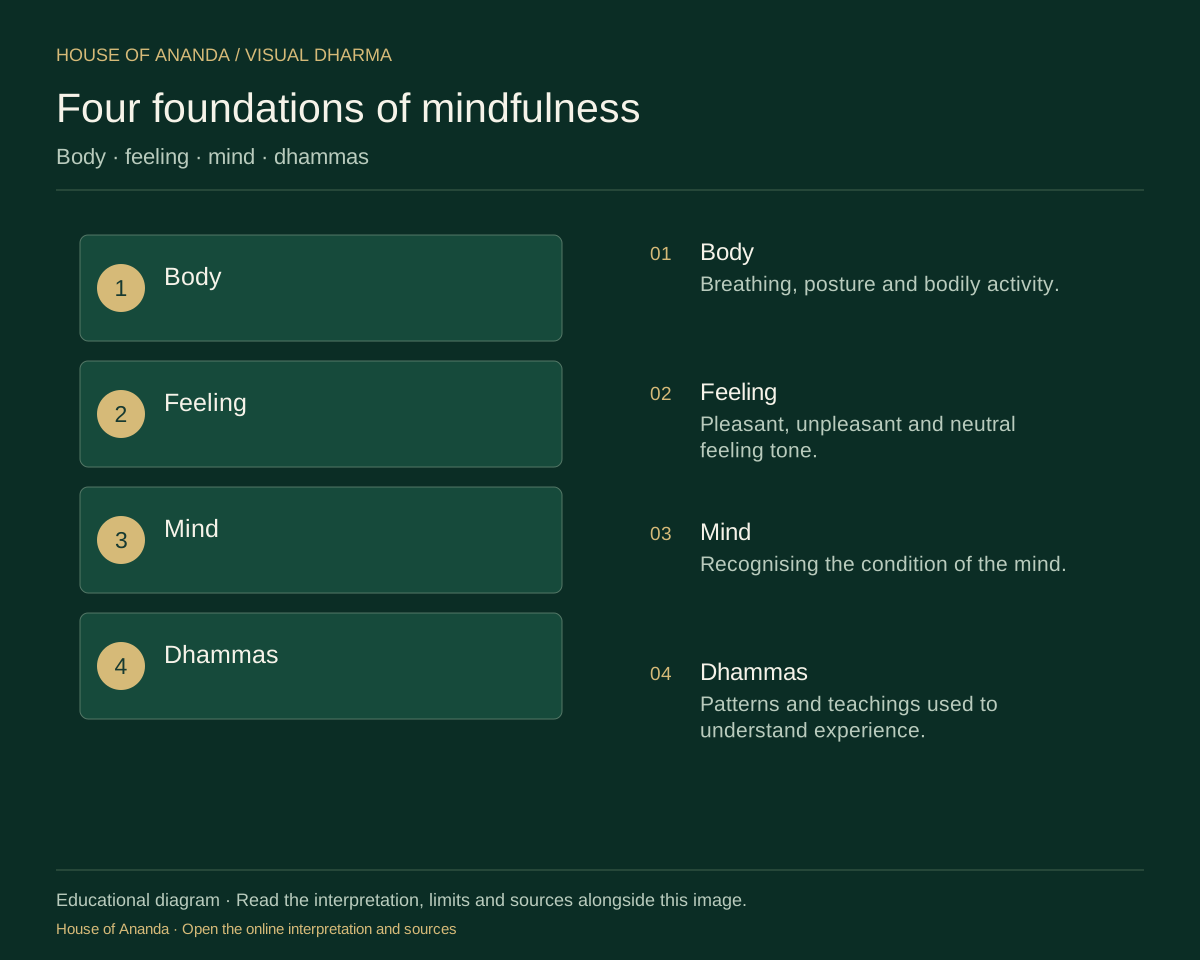
Body · feeling · mind · dhammas
Four foundations of mindfulness
Four fields of contemplation within the wider Buddhist path.
Read the diagram & interpretation
- BodyBreathing, posture and bodily activity.
- FeelingPleasant, unpleasant and neutral feeling tone.
- MindRecognising the condition of the mind.
- DhammasPatterns and teachings used to understand experience.
The four panels organise domains of attention; they are not four locations in the body. Mindfulness includes recognising what is present and remembering the purpose and framework of practice. Dhammas has several translation choices; the discourse includes hindrances and other teaching frameworks.
Keep in mind Mindfulness is not only non-judgmental awareness: these texts also concern understanding and cultivating a path away from suffering.
Sources: MN 10 · Establishing Mindfulness ↗
Observation with a direction
This practice is not an invitation to stare passively at everything that occurs. Knowing what supports clarity and what feeds harm is part of the training. Nor must a beginner attempt every classical contemplation at once; some require context and skilled guidance.
A short daily check-in
While sitting or standing comfortably, notice contact with the ground. Is the experience pleasant, unpleasant or neutral? Is the mind hurried, quiet or irritated? Finally ask what would support a wise next step. Keep these as observations rather than judgements about your worth.
Returning to the ordinary
A check-in should help you rejoin life. You might discover that you need rest, a meal, a kinder tone or a clearer boundary. Naming a mental state gives you information; it does not make that state your permanent identity.
Art & contemplation
Look, learn, reflect

A place to return
A quiet bench evokes an accessible moment of attention. The setting is imagined and the person is not a named teacher. Meditation can also happen amid ordinary household sounds, without a remote retreat or a perfectly quiet mind.
A moment to reflectWhat is one manageable pause you can make in your day?
Follow this theme ↗A question to carry with you
Pause and reflect.
Can you name what is happening without immediately turning it into “this is who I am”?
Sources & further reading
Study notes and examples are original explanations. Follow the links for the source texts and their own contexts.