
A vocabulary of forms
A symbol’s meaning depends on the object, region, date and religious use. These are introductory associations, not a universal decoding key.
| Form | A common association |
|---|---|
| Dharma wheel | The teaching and its transmission; an eight-spoked wheel is often connected with the Eightfold Path. |
| Lotus | Purity or awakening amid the conditions of ordinary life. |
| Bodhi tree | The Buddha’s awakening and its remembrance. |
| Stūpa | A sacred monument associated with relics, remembrance and pilgrimage. |
| Earth-touching gesture | A gesture associated with the Buddha’s awakening narrative. |
| Teaching gesture | Hand positions associated with teaching; exact identification varies. |
| Mandala | A structured sacred arrangement used in particular ritual and contemplative settings. |
Visual study
A teaching you can explore
Context before interpretation
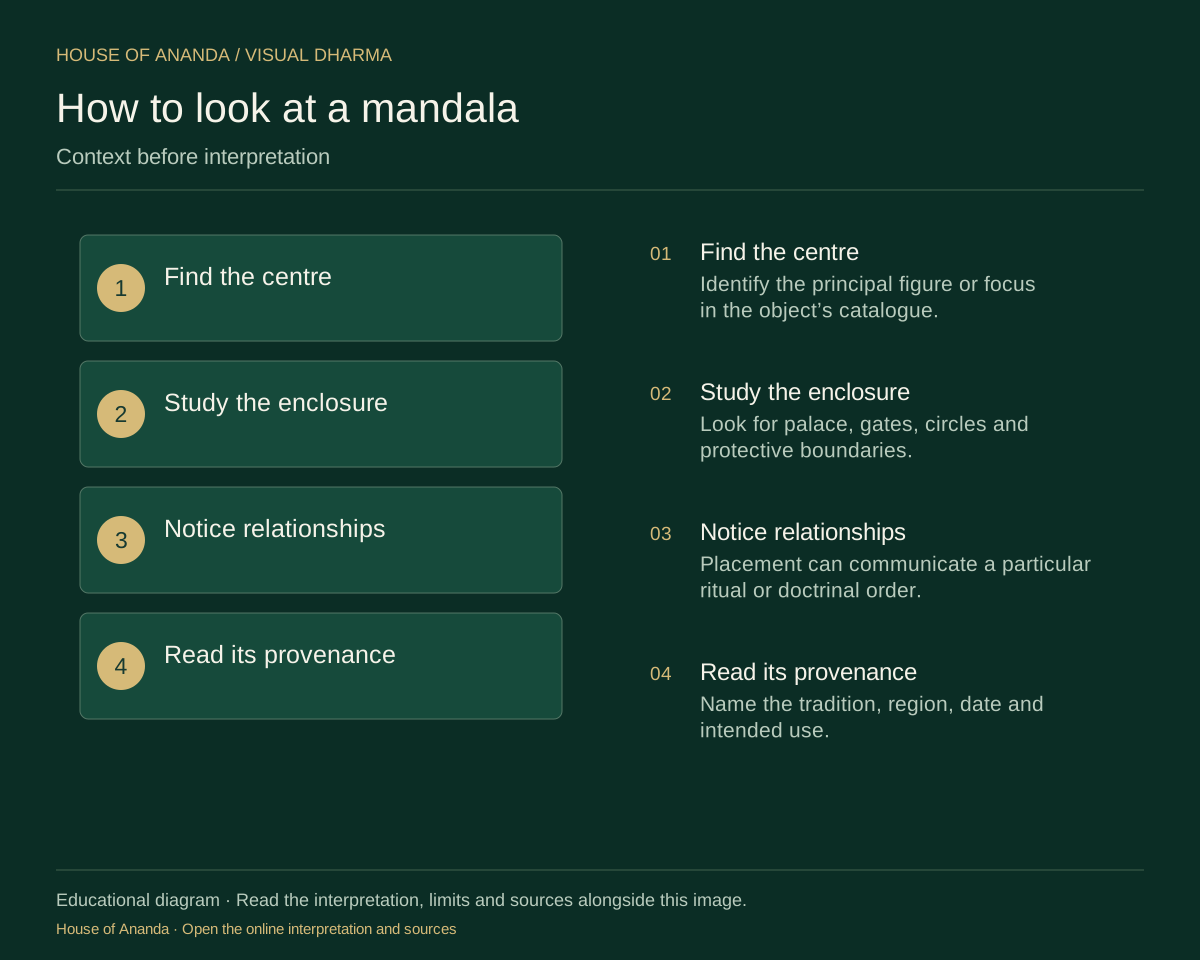
How to look at a mandala
A viewing guide for a sacred arrangement, not a universal symbolic decoder.
Read the diagram & interpretation
- Find the centreIdentify the principal figure or focus in the object’s catalogue.
- Study the enclosureLook for palace, gates, circles and protective boundaries.
- Notice relationshipsPlacement can communicate a particular ritual or doctrinal order.
- Read its provenanceName the tradition, region, date and intended use.
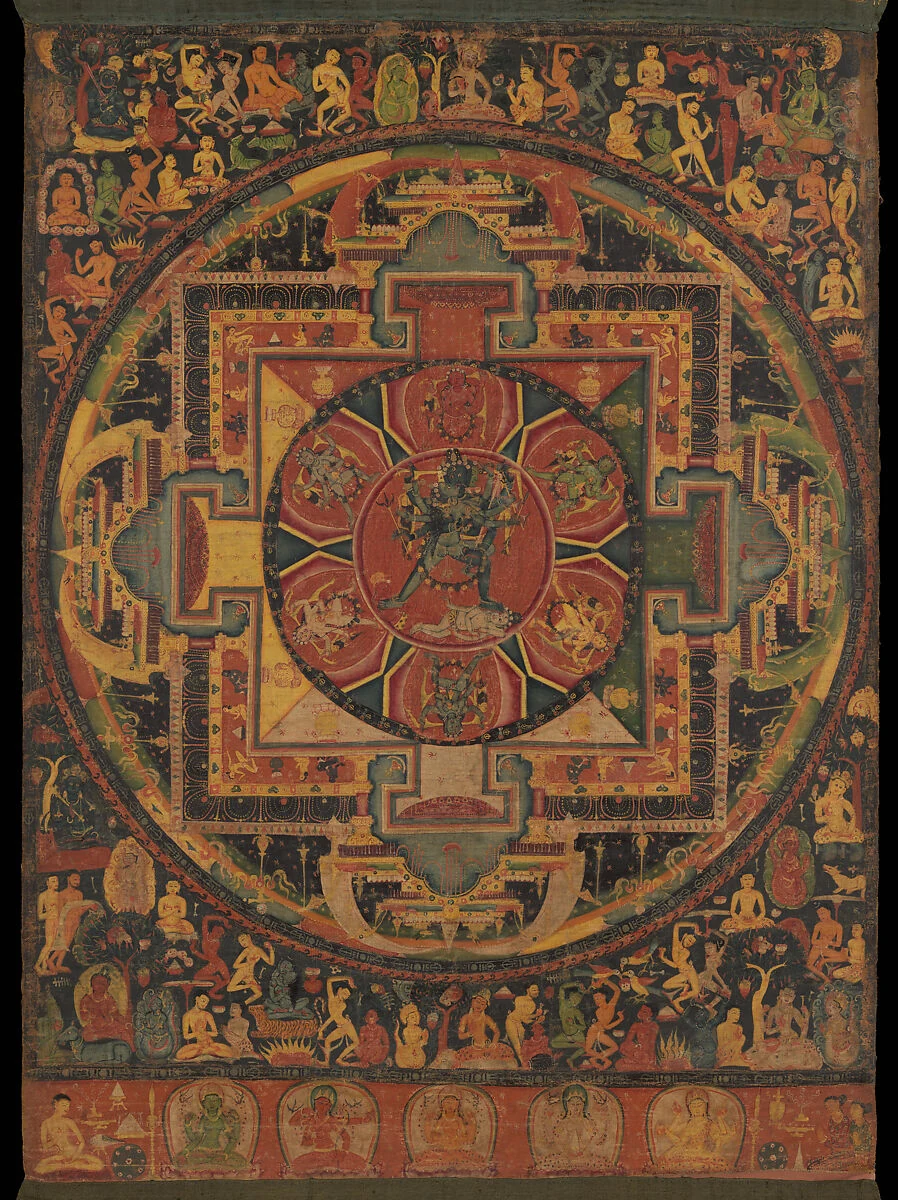
Mandalas have different structures and functions. The Nepalese Chakrasamvara mandala in this collection represents a specific sacred assembly; its figures cannot be replaced with a generic explanation about balance. A contemporary radial pattern may be beautiful without having this ritual identity.
Keep in mind This is an art-reading sequence. It is not an initiation or an instruction to perform a restricted visualisation.
Sources: The Met · Chakrasamvara Mandala ↗ · Study Buddhism · What Is Tantra? ↗
Observation · context · meaning · reflection
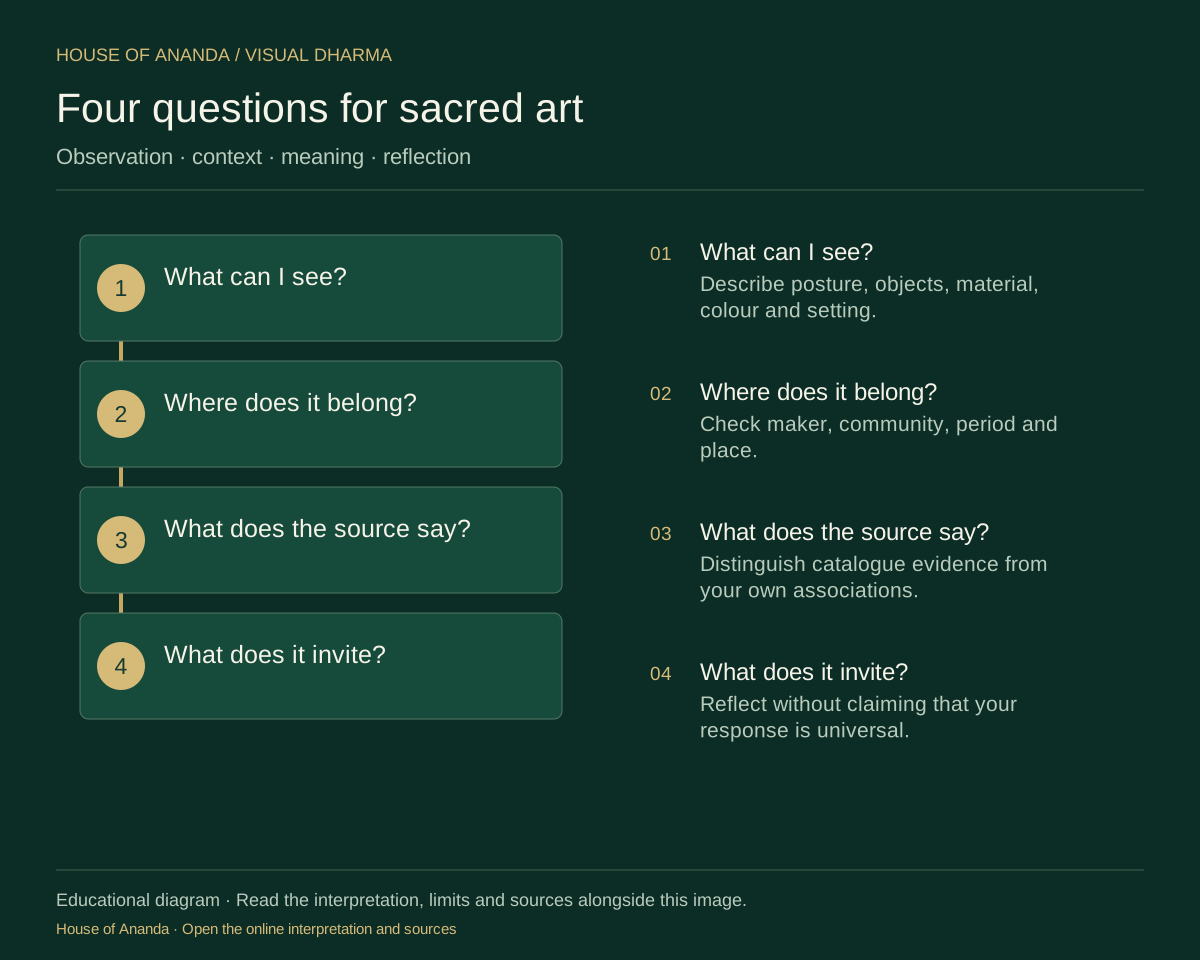
Four questions for sacred art
A practical way to make visual study more thoughtful.
Read the diagram & interpretation
- What can I see?Describe posture, objects, material, colour and setting.
- Where does it belong?Check maker, community, period and place.
- What does the source say?Distinguish catalogue evidence from your own associations.
- What does it invite?Reflect without claiming that your response is universal.
Begin with observable detail, then consult reliable context. An image may serve devotion, teaching, ritual, remembrance or several purposes at once. Ask what is known and what is inferred. The maker’s community may understand a detail differently from a modern museum visitor.
Keep in mind These four questions are an original House of Ananda study framework, not a traditional Buddhist list.
Sources: The Metropolitan Museum of Art · Buddhism and Buddhist Art ↗
Art changes across cultures
Buddhist visual traditions have developed through local materials, artistic conventions, patronage and exchanges across Asia. There is no single correct visual style for all Buddhism. A museum label may help establish date and origin, while a living practitioner can explain devotional use.
Respectful viewing
Follow a temple’s instructions about photography, footwear and behaviour. Do not assume an object is decoration simply because it is beautiful. Seek permission before photographing people or ceremonies, and avoid treating sacred images as novelty props.
Looking beyond appearance
When studying an artwork, record what is known and what remains uncertain. A calm face does not by itself establish the figure’s identity. Learning to leave an identification open is better than confidently assigning the wrong name.
Art & contemplation
Look, learn, reflect
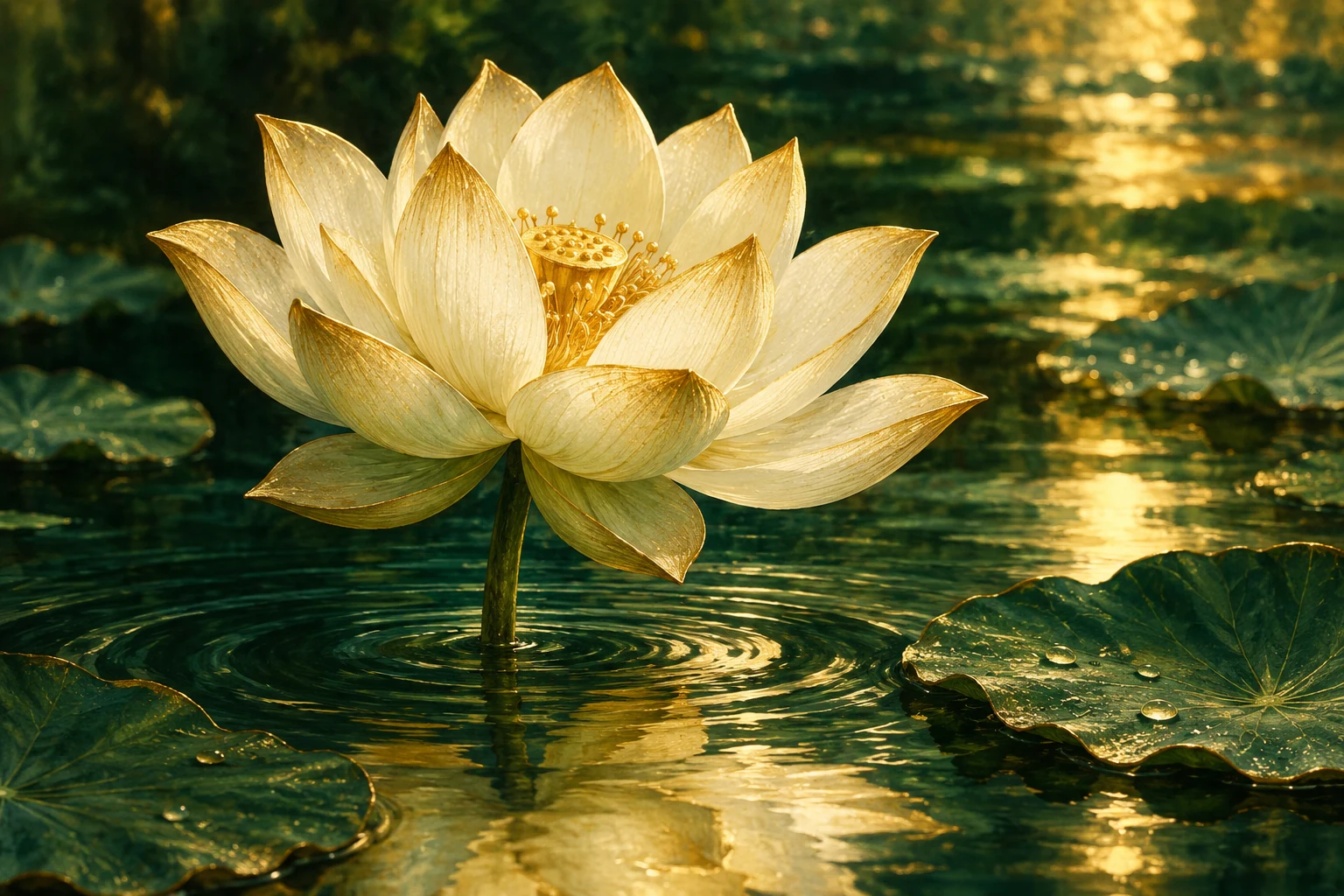
A lotus above the water
The lotus is widely associated with purity and awakening. Here the contrast between bloom and water invites a reflection on developing wisdom amid ordinary conditions. The picture is contemporary artwork, not a traditional icon with a fixed colour code.
A moment to reflectWhere might care grow within an imperfect situation?
Follow this theme ↗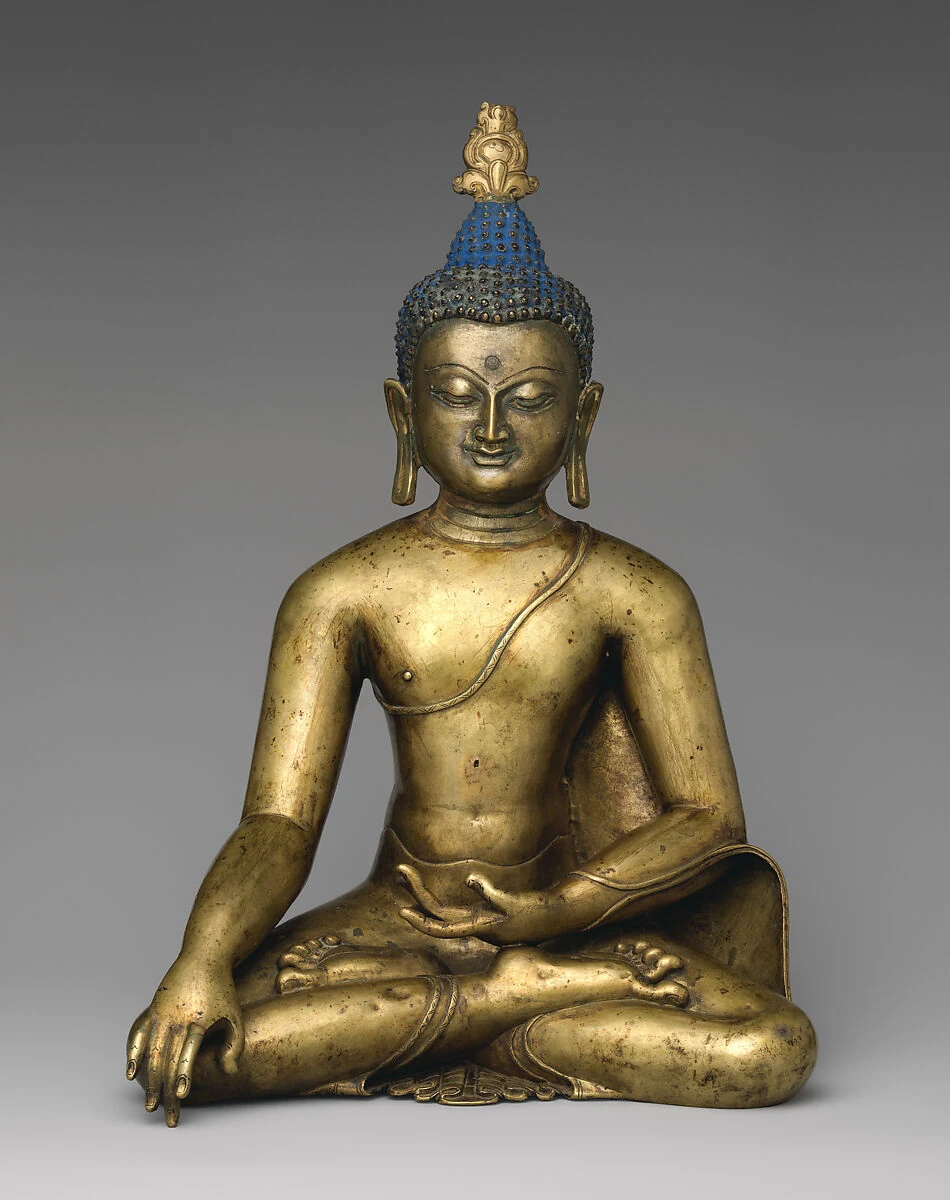
Buddha & gesture
Śākyamuni: the earth as witness
The downward right hand is the earth-touching gesture, associated with the traditional story of awakening. The robe and seated posture help establish the figure’s contemplative setting. This is a twelfth-century Central Tibetan sculpture, rather than a portrait made during the Buddha’s lifetime.
Look closelyCompare the lowered right hand with the left hand in the lap. What story does this difference tell?
Continue studying ↗Artist unknown · The Metropolitan Museum of Art · 2012.458. Object / image record ↗ · Public domain / CC0. Resized and converted to WebP; image content unchanged.
Ritual painting
A mandala as sacred arrangement
This Nepalese painting, dated around 1100, depicts Chakrasamvara and Vajravarahi within a specific tantric assembly. Its placement of figures communicates a particular sacred order. It offers a historical example against which to distinguish modern ornamental circular patterns.
Look closelyLook for centre, surrounding assembly and outer registers. Use the museum explanation before assigning meanings to individual figures.
Continue studying ↗Artist unknown · The Metropolitan Museum of Art · 1995.233. Object / image record ↗ · Public domain / CC0. Resized and converted to WebP; image content unchanged.
A question to carry with you
Pause and reflect.
Choose one image. What can you learn about its maker, community or use beyond how it looks?
Sources & further reading
Study notes and examples are original explanations. Follow the links for the source texts and their own contexts.