
Wisdom, conduct and cultivation
“Right” here indicates a quality aligned with liberation. Some modern teachers use “wise” or “skillful” to help explain it. These are eight interacting factors, not eight grades to finish one after another.
| Training | Factor | Everyday reflection |
|---|---|---|
| Wisdom | Right view | Learn to recognise suffering, its causes and the possibility of release. |
| Wisdom | Right intention | Orient towards letting go, goodwill and harmlessness. |
| Conduct | Right speech | Be truthful; avoid speech that divides, wounds or misleads. |
| Conduct | Right action | Let actions respect life, possessions and sexual boundaries. |
| Conduct | Right livelihood | Examine the effects of how you earn a living. |
| Cultivation | Right effort | Prevent and abandon unwholesome states; develop and sustain wholesome ones. |
| Cultivation | Right mindfulness | Keep body, feeling, mind and relevant teachings in awareness. |
| Cultivation | Right concentration | Develop gathered attention; early texts describe the jhānas. |
Visual study
A teaching you can explore
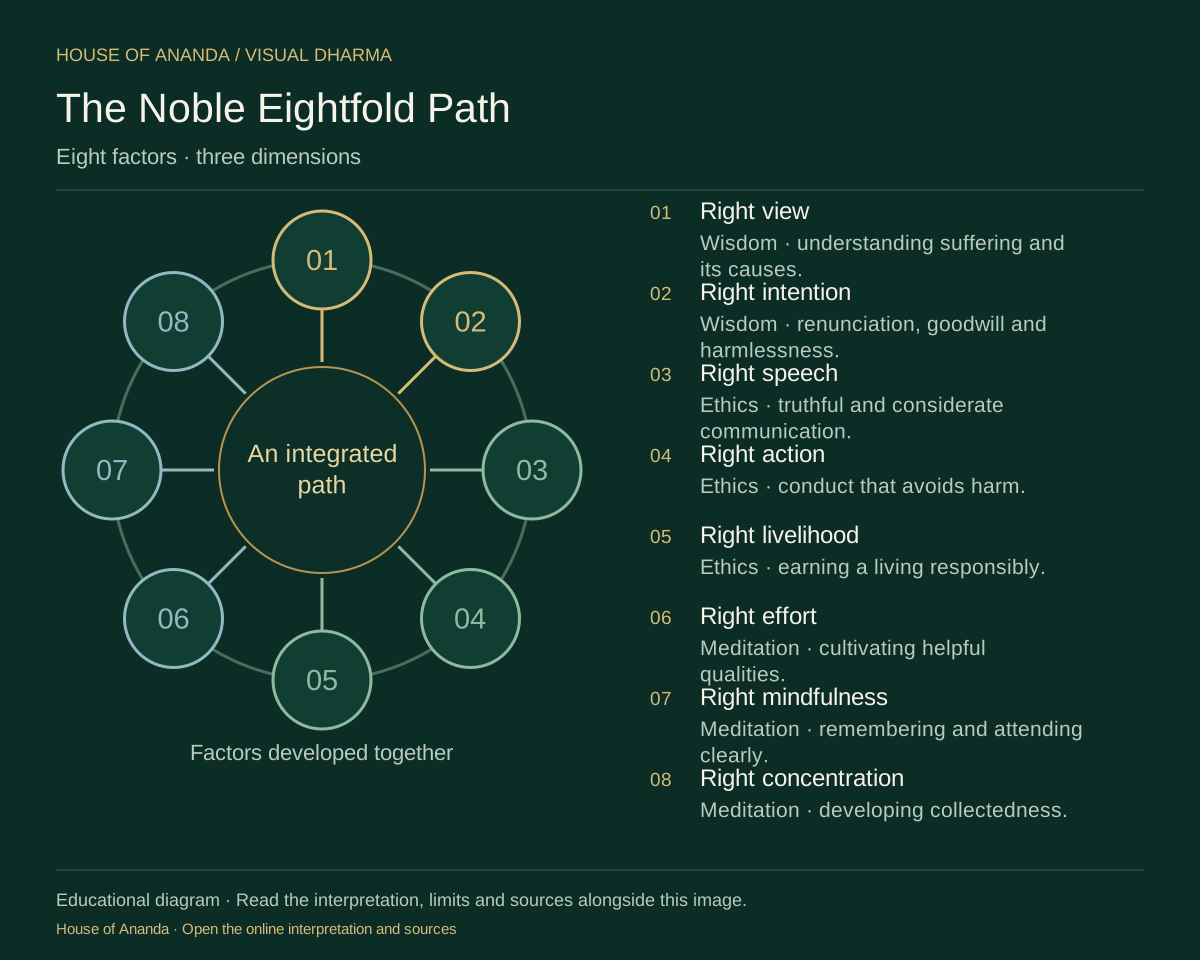
Eight factors · three dimensions
The Noble Eightfold Path
Eight mutually supporting factors develop understanding, ethical conduct and the mind.
Read the diagram & interpretation
- Right viewWisdom · understanding suffering and its causes.
- Right intentionWisdom · renunciation, goodwill and harmlessness.
- Right speechEthics · truthful and considerate communication.
- Right actionEthics · conduct that avoids harm.
- Right livelihoodEthics · earning a living responsibly.
- Right effortMeditation · cultivating helpful qualities.
- Right mindfulnessMeditation · remembering and attending clearly.
- Right concentrationMeditation · developing collectedness.
The gold, green and slate segments mark wisdom, ethics and meditation. Begin anywhere your life gives you an opportunity, while returning to the whole path. “Right” refers to what supports awakening, rather than a demand for personal perfection.
Keep in mind These are eight factors to develop together, not eight levels that must each be finished before the next.
Sources: SN 45:8 · An Analysis of the Path ↗ · Bhikkhu Bodhi · The Noble Eightfold Path ↗
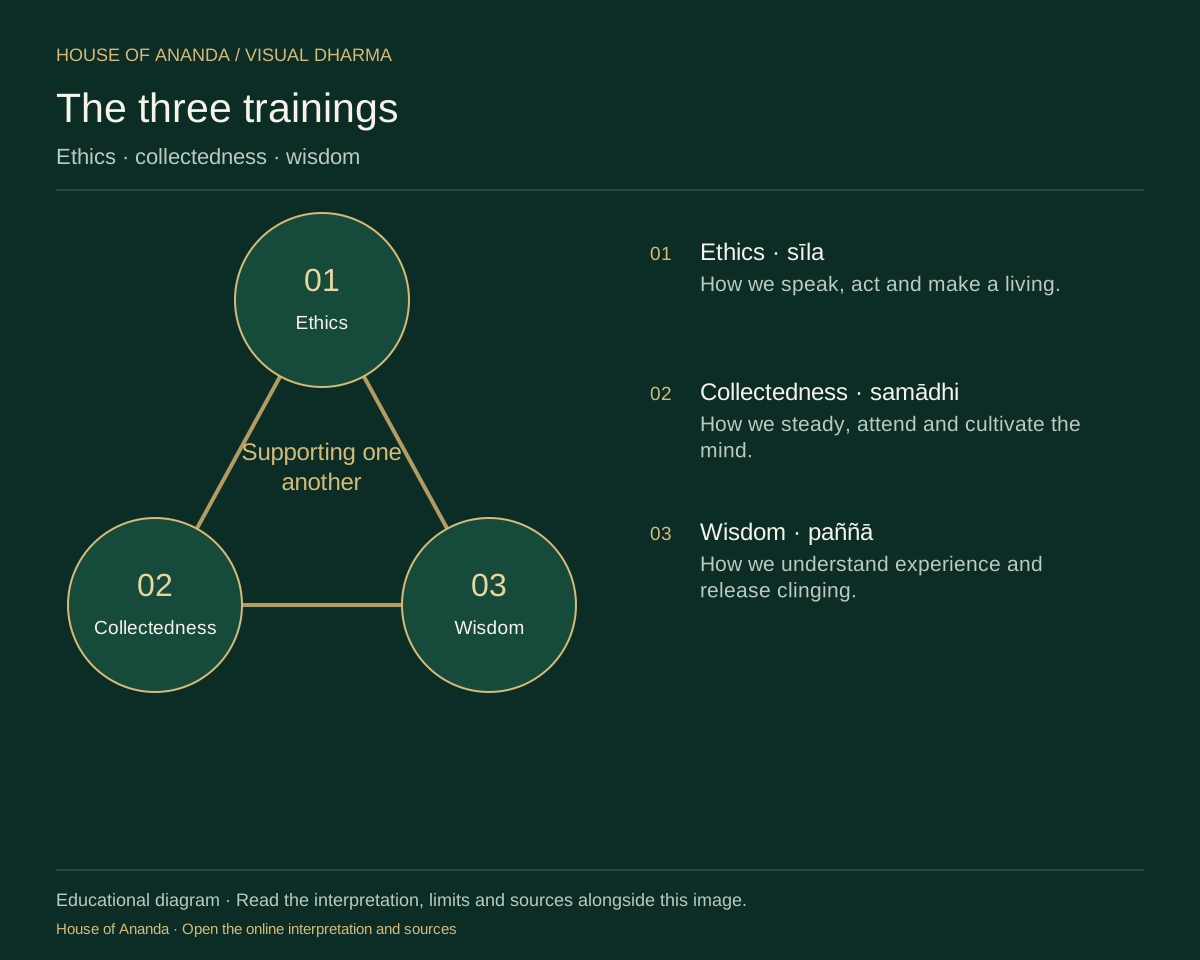
Ethics · collectedness · wisdom
The three trainings
The path can be understood through three areas of training that strengthen each other.
Read the diagram & interpretation
- Ethics · sīlaHow we speak, act and make a living.
- Collectedness · samādhiHow we steady, attend and cultivate the mind.
- Wisdom · paññāHow we understand experience and release clinging.
Ethical choices can reduce remorse; steadiness can support observation; understanding can deepen care. The connecting lines indicate reciprocal support. The Eightfold Path gives a more detailed account of these three trainings.
Keep in mind Meditation is one part of a wider path that also concerns relationships and conduct.
Why ethics belongs beside meditation
A person can concentrate while acting harmfully. Buddhist training asks what attention is serving. Speech and conduct affect relationships and the conditions in which meditation takes place; understanding gives the practices direction.
A weekly observation
Choose one factor to notice for a week while remembering the others. With speech, for example, pause before sending a difficult message. Check accuracy, intention, tone and timing. Sometimes the appropriate action is to speak firmly or set a boundary; kindness does not require silence about harm.
Art & contemplation
Look, learn, reflect

A lamp for inquiry
Light offers a contemporary metaphor for inquiry and understanding. The unlettered pages do not depict a lost scripture or an authentic manuscript. Study can illuminate experience while experience raises new questions for study.
A moment to reflectWhich question deserves a slower, more attentive reading?
Follow this theme ↗A question to carry with you
Pause and reflect.
Which factor is already present in your life, and which deserves more deliberate attention?
Sources & further reading
Study notes and examples are original explanations. Follow the links for the source texts and their own contexts.