
Different kinds of figure
Śākyamuni is the historical Buddha of this era in Buddhist tradition. Other Buddhas and bodhisattvas have major roles in Mahāyāna and Vajrayāna communities. A bodhisattva is connected with the path to Buddhahood; the term has different uses across Buddhist traditions.
Visual study
A teaching you can explore
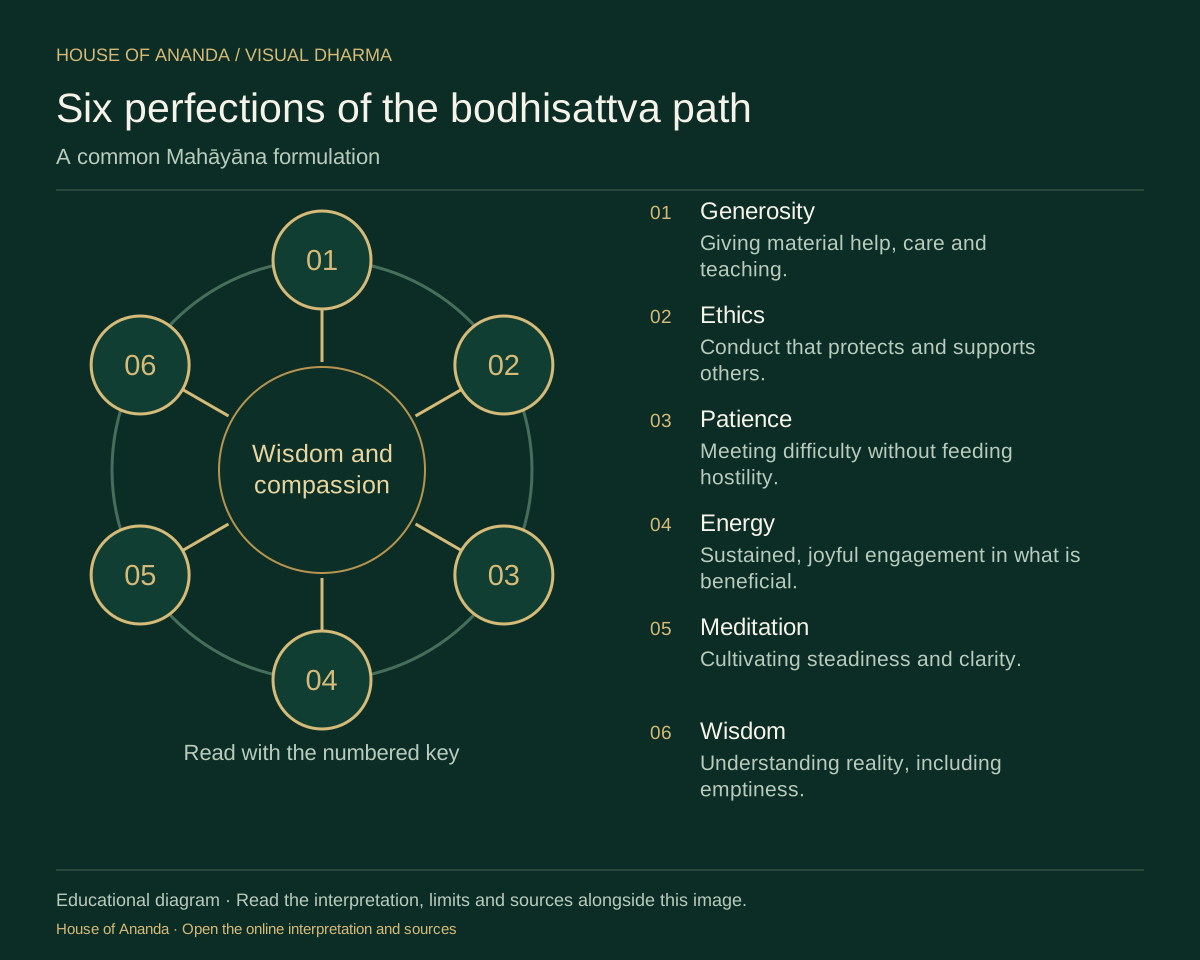
A common Mahāyāna formulation
Six perfections of the bodhisattva path
Six far-reaching qualities connect insight with the work of benefiting beings.
Read the diagram & interpretation
- GenerosityGiving material help, care and teaching.
- EthicsConduct that protects and supports others.
- PatienceMeeting difficulty without feeding hostility.
- EnergySustained, joyful engagement in what is beneficial.
- MeditationCultivating steadiness and clarity.
- WisdomUnderstanding reality, including emptiness.
The circular form emphasises their interdependence. Giving can require patience; ethical action can require courage; wisdom informs how help is offered. Traditions also teach expanded lists, including ten perfections. This sixfold map is not a complete account of every bodhisattva curriculum.
Keep in mind Patience does not mean submitting to abuse, and generosity can include a careful assessment of what is actually helpful.
Sources: Study Buddhism · Six Perfections ↗
A few important names
Names, forms and interpretations vary across languages and communities. An image needs its own historical identification.
| Figure | An introductory association |
|---|---|
| Avalokiteśvara | Compassion; known through forms including Guanyin in China, Kannon in Japan and Chenrezig in Tibetan contexts. |
| Mañjuśrī | Wisdom; often represented with a sword and a text in specific iconographic forms. |
| Tārā | A female awakened figure especially important in Tibetan traditions, associated with compassionate activity. |
| Maitreya | The future Buddha in widespread Buddhist tradition. |
| Amitābha / Amida | A Buddha central to Pure Land traditions. |
Devotion and meaning
An image can be a focus of offering, recollection, ritual and aspiration. Explaining it only as psychology can flatten its religious meaning; describing it only as a supernatural being can also miss philosophical and contemplative dimensions. Let the community’s own explanation guide understanding.
An ethical way to look
Ask for the figure’s name, place, period and use. Notice what qualities the representation invites practitioners to remember. Advanced visualisation associated with a figure may have lineage requirements; viewing an image is not the same as undertaking that practice.
Art & contemplation
Look, learn, reflect
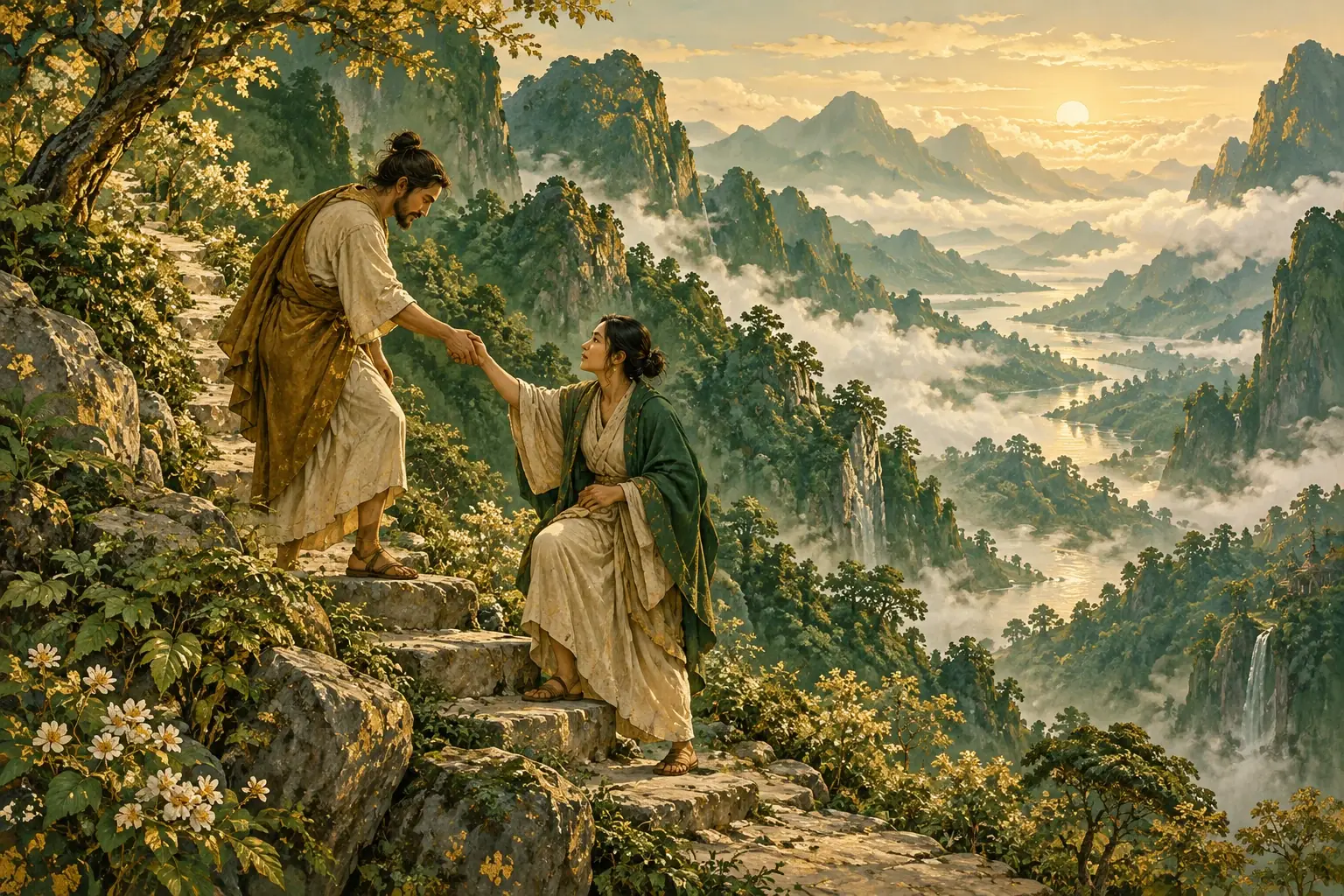
The helping hand
The scene interprets compassion as practical responsiveness. Neither figure represents a named bodhisattva or a recorded Buddhist story. Help becomes meaningful through attention to what another person actually needs.
A moment to reflectWhat would useful help look like today?
Follow this theme ↗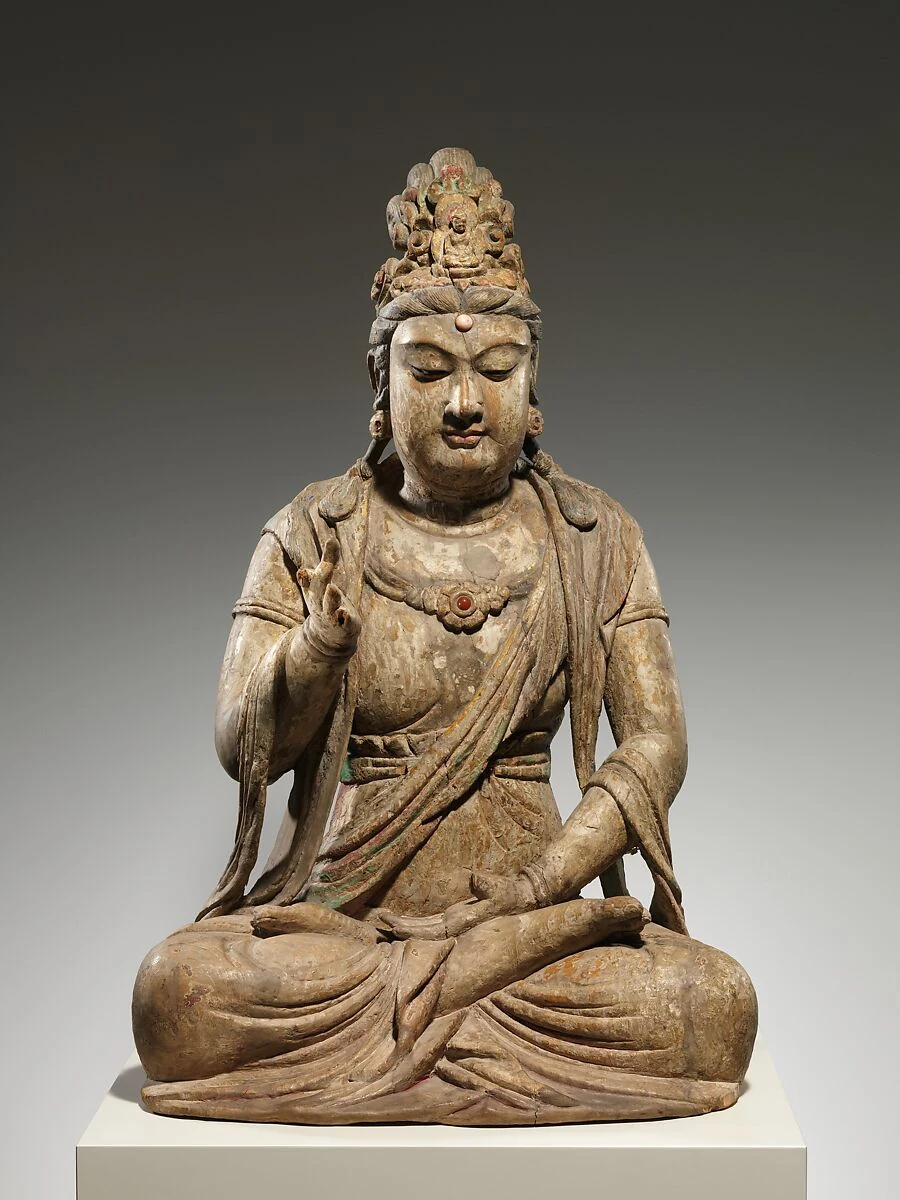
Bodhisattva
Avalokiteśvara / Guanyin: compassion
Avalokiteśvara is associated with compassion; Guanyin is the Chinese name. This Chinese sculpture belongs to a long and varied history of the figure’s representation. Its particular posture should be studied through the object record rather than assumed to be the standard form everywhere.
Look closelyNotice the ornament and headdress. Compare them with the plain robe of the Śākyamuni sculpture.
Continue studying ↗Artist unknown · The Metropolitan Museum of Art · 33.116. Object / image record ↗ · Public domain / CC0. Resized and converted to WebP; image content unchanged.
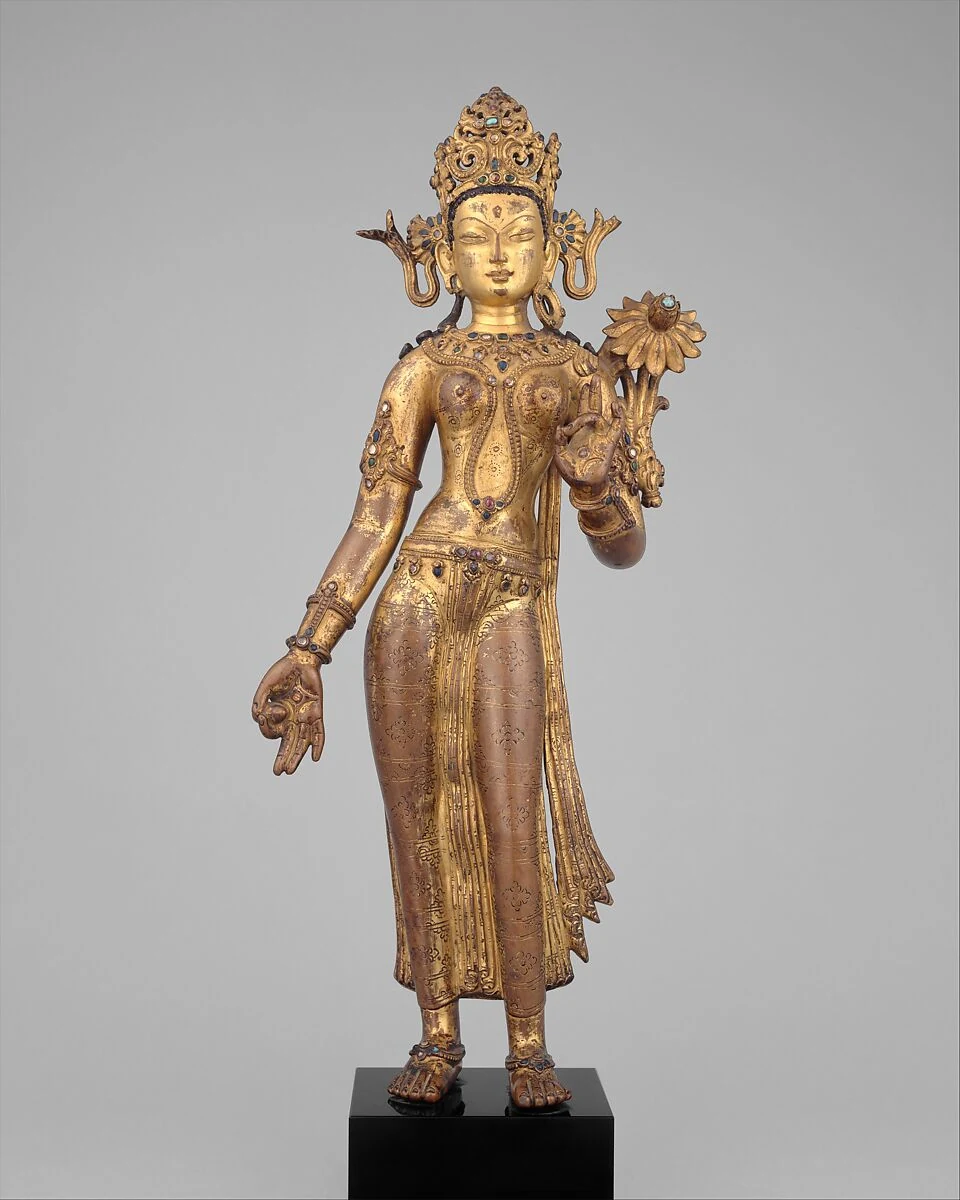
Sacred figure
Tārā: responsive care
The Met identifies this Nepalese figure as probably White Tārā. The lowered hand expresses giving, and the lotus is an important attribute. Tārā has multiple forms, so this example should not be renamed Green Tārā merely because that form is widely familiar.
Look closelyFollow the line from the lower hand to the upper body and the flower. How does the standing posture affect your response?
Continue studying ↗Artist unknown · The Metropolitan Museum of Art · 66.179. Object / image record ↗ · Public domain / CC0. Resized and converted to WebP; image content unchanged.
A question to carry with you
Pause and reflect.
What changes when you learn an image’s name and religious setting before interpreting it?
Sources & further reading
Study notes and examples are original explanations. Follow the links for the source texts and their own contexts.