
A concentrated wisdom text
The Heart Sūtra belongs to the Perfection of Wisdom tradition. It examines the aggregates and other familiar categories through emptiness. The 84000 edition translates a Tibetan canonical version; other recited versions and textual histories also matter.
Visual study
A teaching you can explore
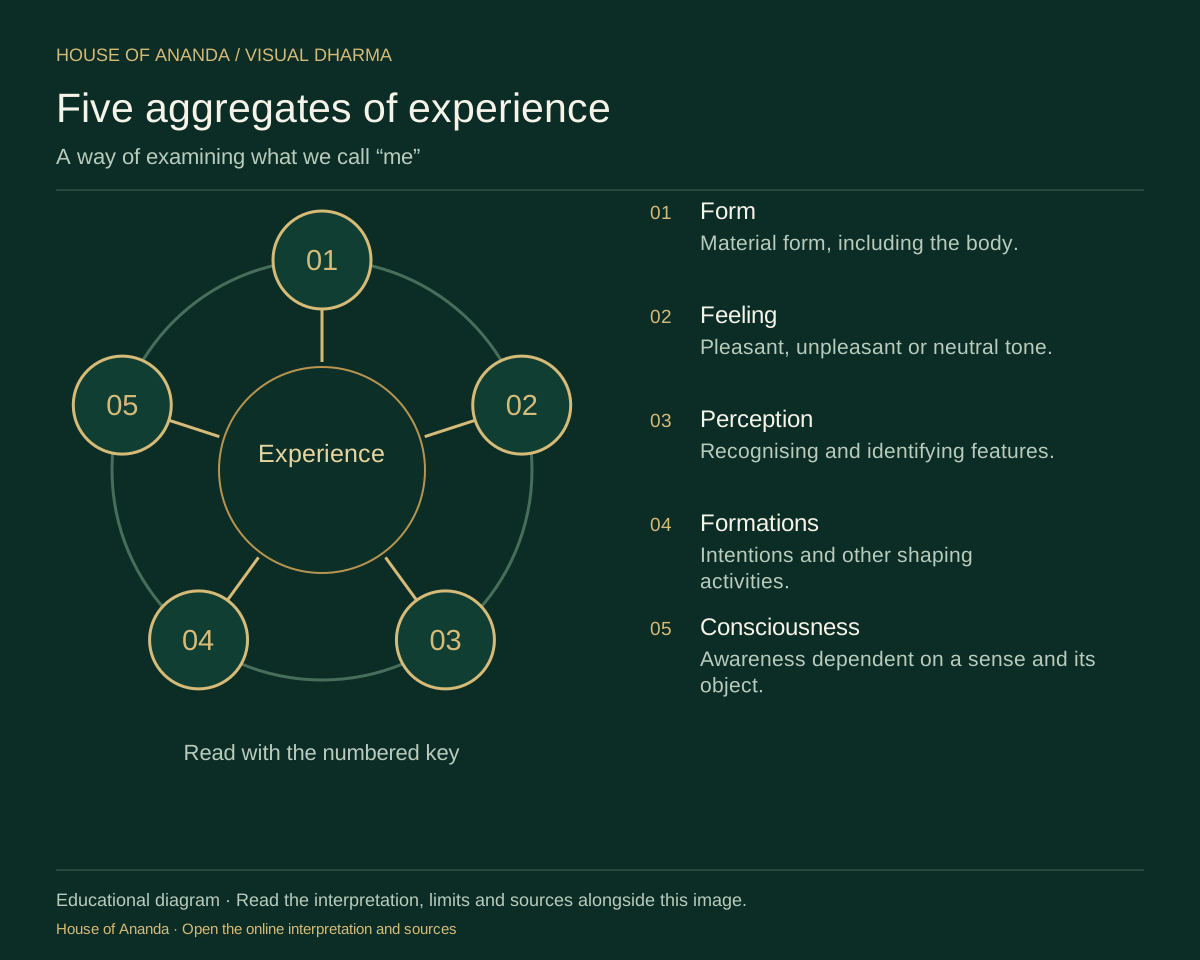
A way of examining what we call “me”
Five aggregates of experience
Five categories help analyse experience without treating it as a fixed possession.
Read the diagram & interpretation
- FormMaterial form, including the body.
- FeelingPleasant, unpleasant or neutral tone.
- PerceptionRecognising and identifying features.
- FormationsIntentions and other shaping activities.
- ConsciousnessAwareness dependent on a sense and its object.
At the sound of a message alert, there may be bodily sensation, pleasant or unpleasant tone, recognition, a wish to respond and auditory awareness. This is an editorial example, not five isolated compartments or a fixed neurological sequence.
Keep in mind Feeling tone is not the same category as the whole complexity of emotion. The aggregate model is a contemplative analysis, not a brain scan.
Sources: SN 22:59 · The Five ↗
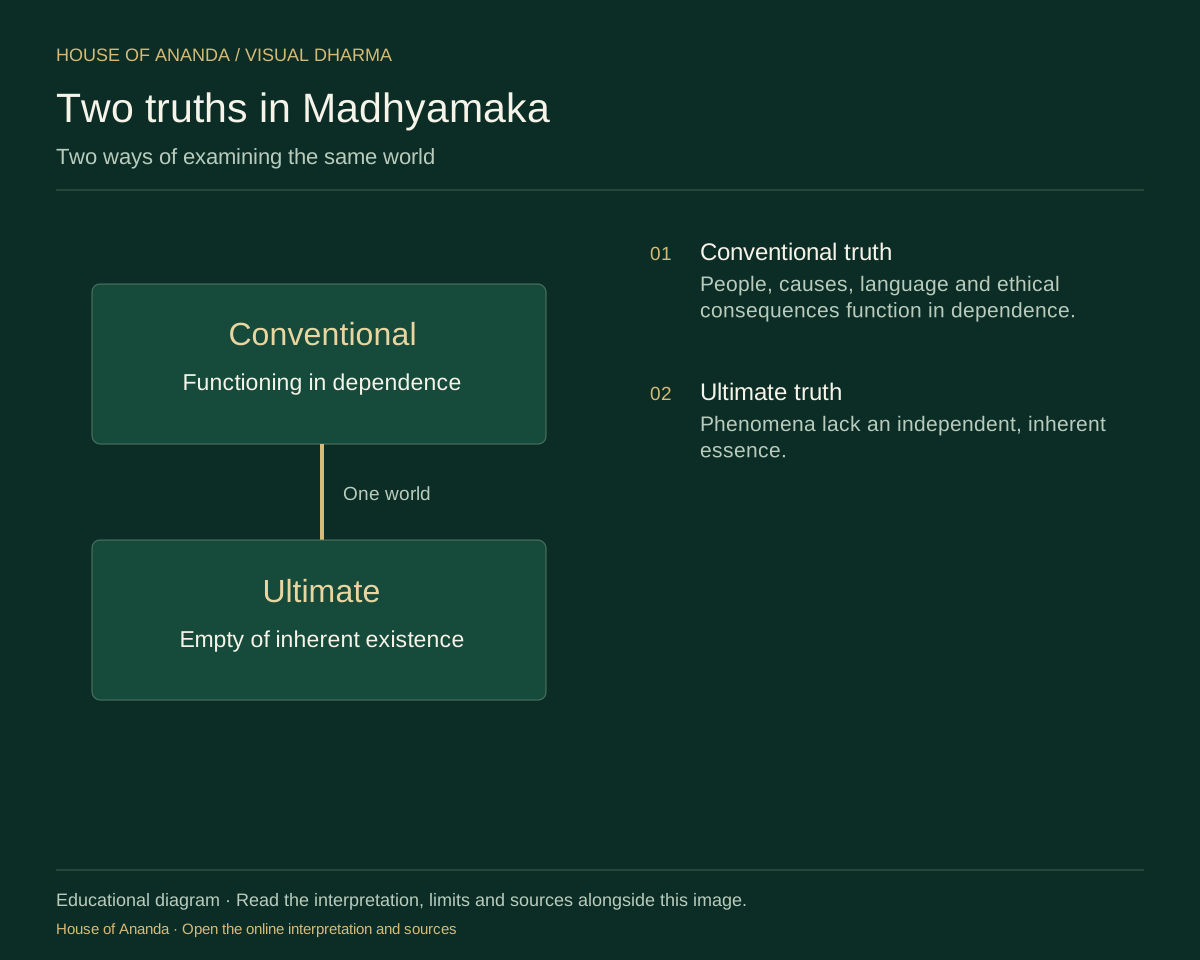
Two ways of examining the same world
Two truths in Madhyamaka
An introductory map of conventional and ultimate truth in a Mahāyāna philosophical tradition.
Read the diagram & interpretation
- Conventional truthPeople, causes, language and ethical consequences function in dependence.
- Ultimate truthPhenomena lack an independent, inherent essence.
The two panels are connected because emptiness does not erase conventional functioning. A person can lack an independent essence and still be someone whose pain matters. This framing follows a Madhyamaka context; Buddhist schools differ on how the two truths are explained.
Keep in mind “Empty” does not mean nonexistent. The panels do not depict two separate worlds or a good reality above a bad one.
Not a denial of care
Emptiness concerns the lack of independent, inherent existence. It must not be used to claim pain is imaginary or ethics pointless. Different Buddhist schools debate how the teaching should be understood.
Read with commentary
A short text can require extensive explanation. Read the introduction, identify the speakers and notice the earlier Buddhist categories invoked. Familiarity with the five aggregates helps make it less abstract.
An analogy with limits
A meal depends upon weather, growers, transport, cooking and the person eating. This may prompt gratitude, but an everyday analogy does not settle the philosophical meaning of śūnyatā. Let the example open a question rather than replace study.
Art & contemplation
Look, learn, reflect

A pattern passing
Loose grains forming and releasing a pattern invite reflection on change. This is an invented artwork, not a Tibetan ritual sand mandala. Authentic mandala construction and dissolution belong to particular communities and practices.
A moment to reflectWhat can you appreciate without asking it to stay the same?
Follow this theme ↗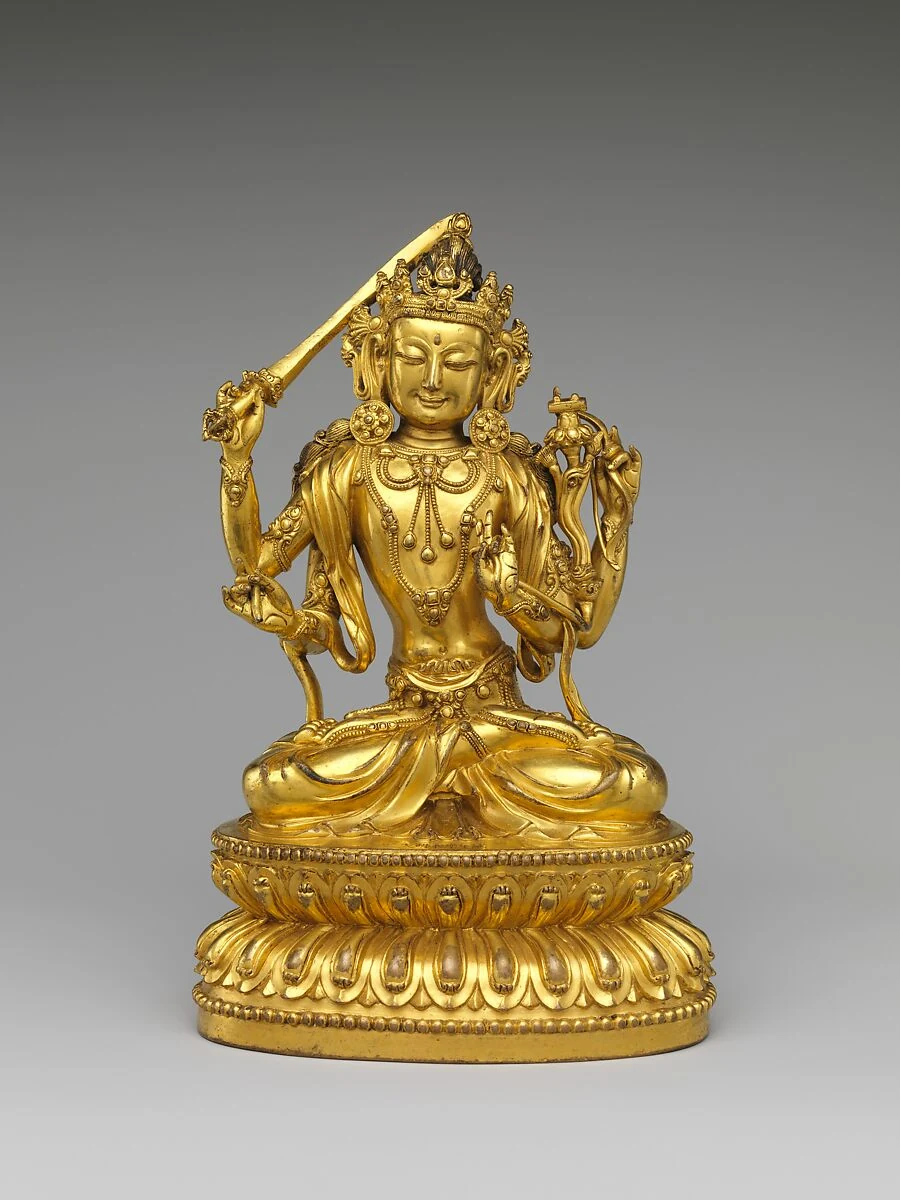
Bodhisattva
Mañjuśrī: the clarity of wisdom
Mañjuśrī is associated with wisdom. In this Chinese image, the sword and book help communicate that identity: the sword is read in relation to cutting through ignorance, while the book points toward wisdom teaching. Several arms allow several attributes to be represented together.
Look closelyFind the attributes before reading them as symbols. Which would be difficult to recognise without a catalogue?
Continue studying ↗Artist unknown · The Metropolitan Museum of Art · 2001.59. Object / image record ↗ · Public domain / CC0. Resized and converted to WebP; image content unchanged.
A question to carry with you
Pause and reflect.
What changes when an object is understood through its conditions rather than as self-contained?
Sources & further reading
Study notes and examples are original explanations. Follow the links for the source texts and their own contexts.