
Four life-associated places
Lumbini in present-day Nepal is associated with birth; Bodh Gaya with awakening; Sarnath with the first teaching; and Kushinagar with final passing. Pilgrimage connects place, narrative, devotion and community memory.
Visual study
A teaching you can explore
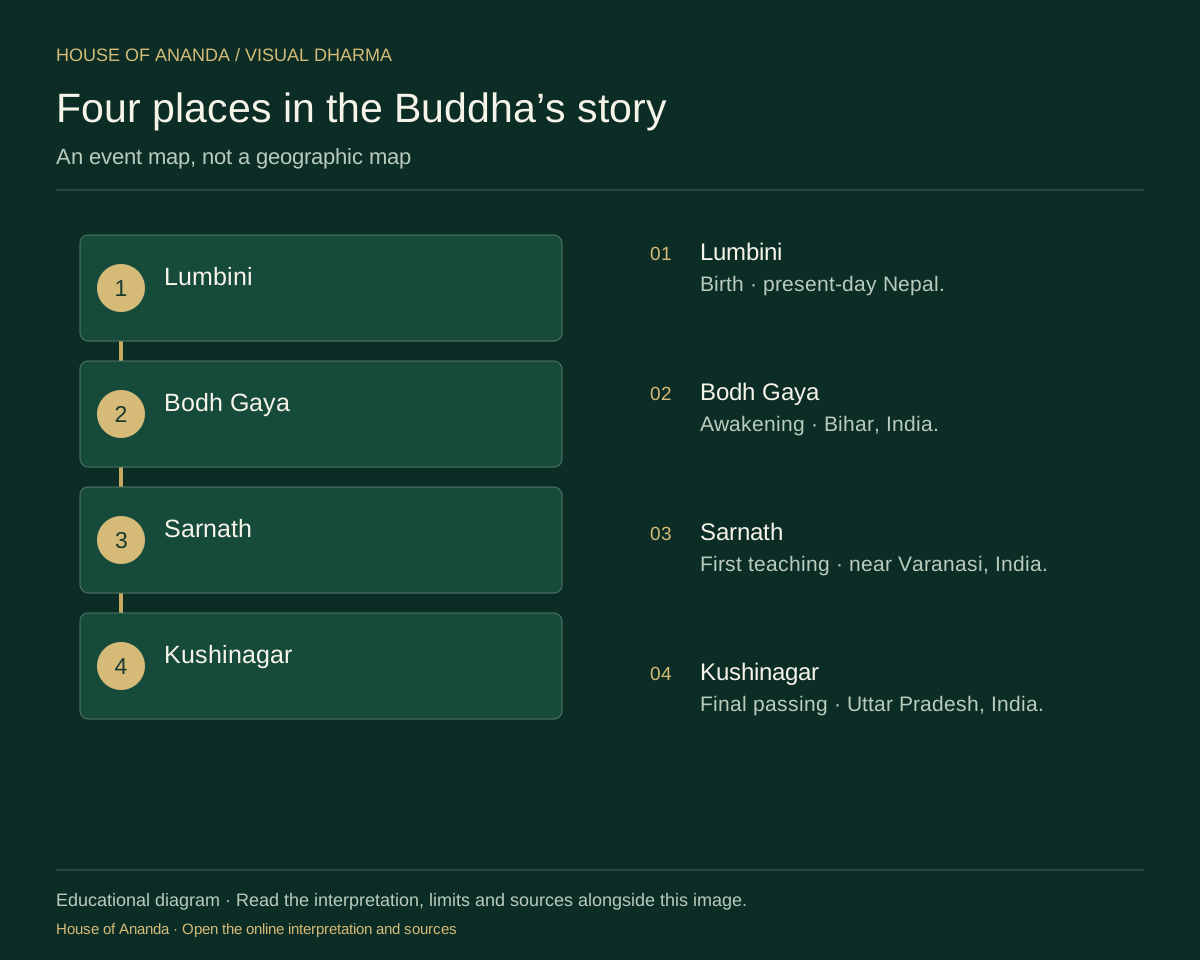
An event map, not a geographic map
Four places in the Buddha’s story
Four pilgrimage associations connect a traditional biography to places in Nepal and India.
Read the diagram & interpretation
- LumbiniBirth · present-day Nepal.
- Bodh GayaAwakening · Bihar, India.
- SarnathFirst teaching · near Varanasi, India.
- KushinagarFinal passing · Uttar Pradesh, India.
Read from birth to final passing. These places matter as centres of memory, devotion, archaeology and living community. The diagram arranges them by narrative order; distances and compass directions are intentionally not represented.
Keep in mind Traditional biography and archaeological evidence answer different kinds of question. The Buddha’s precise lifetime remains debated.
Sources: UNESCO · Lumbini ↗ · UNESCO · Mahabodhi Temple Complex ↗ · DN 16 · The Great Total Unbinding ↗
Beyond the biography
Sanchi illustrates Buddhist patronage and architecture in India. Borobudur in Central Java expresses a different setting through monumental architecture and reliefs. Borobudur is in Java, not Bali—an important distinction for an Indonesian journey.
Observance is local
Buddhist communities remember the Buddha and ancestors through varied calendars and ceremonies. Dates and forms differ. Use a temple’s own explanation and calendar, rather than assuming one observance represents every school.
Arrive as a guest
Follow local guidance on clothing, footwear, photography and access. Keep worship areas available to worshippers. Never climb or pose on sacred images. Check current access directly before travel: this is a study guide, not a current ticket or opening-hours list.
Four places of remembrance
Lumbini is associated with the Buddha’s birth, Bodh Gaya with awakening, Sarnath with teaching and Kushinagar with final passing. Pilgrimage can involve offerings, chanting, study and recollection as well as travel. The historical sites also have complex archaeological and conservation histories.
Vesak and local calendars
Vesak is widely associated with commemorating the Buddha’s birth, awakening and passing. Traditions and countries do not all observe these events on the same date or in the same way. Other observances include rains-retreat cycles, robe offerings and regional festivals. Always check the local community’s calendar before planning a visit.
Visiting with care
Read the venue’s own guidance. Ask about clothing, footwear, photography, offerings and whether a ceremony welcomes visitors. Keep conversation quiet where appropriate and allow practitioners room to worship. Customs vary, so a polite question is often better than relying on a general travel rule.
Pilgrimage without rushing
A meaningful visit can be as simple as sitting quietly, reading about the place and listening to a local guide or practitioner. Collecting photographs of many temples is not the only measure of a journey. Leave space to consider what the location means to those who care for it.
Art & contemplation
Look, learn, reflect
Nature & sacred memory
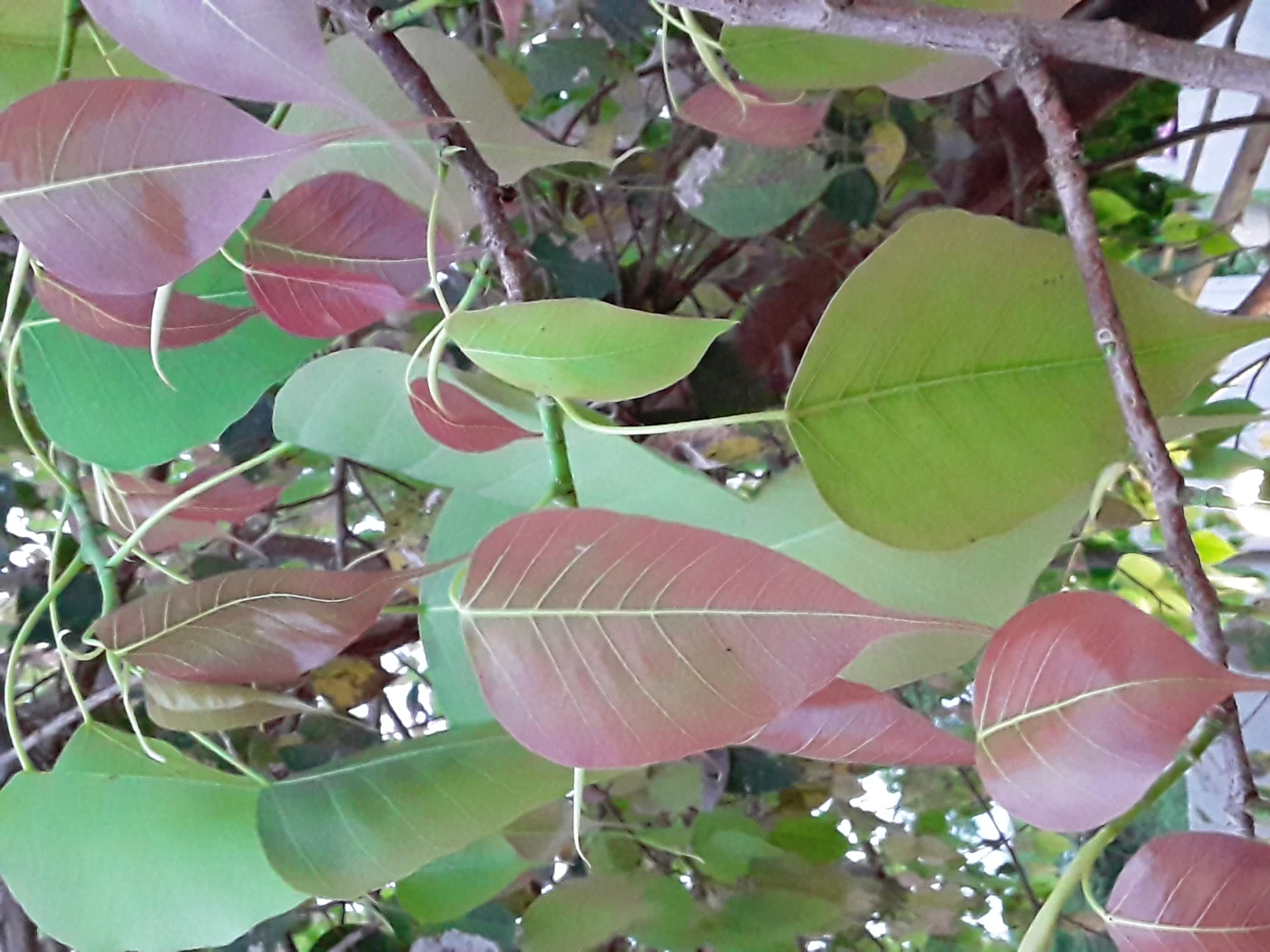
The Bodhi leaf: remembering awakening
The Bodhi tree is associated with the Buddha’s awakening. A leaf’s recognisable shape can become a reminder of that story, while the living tree continues to grow and change. This is a modern botanical photograph, not a claim to show a leaf from the ancient tree.
Look closelyObserve the tapering tip, veins and variation between leaves. How does a living form carry a remembered story?
Continue studying ↗Kamindamanuraj. Object / image record ↗ · CC BY-SA 4.0. Resized and converted to WebP; image content unchanged.
Sacred architecture
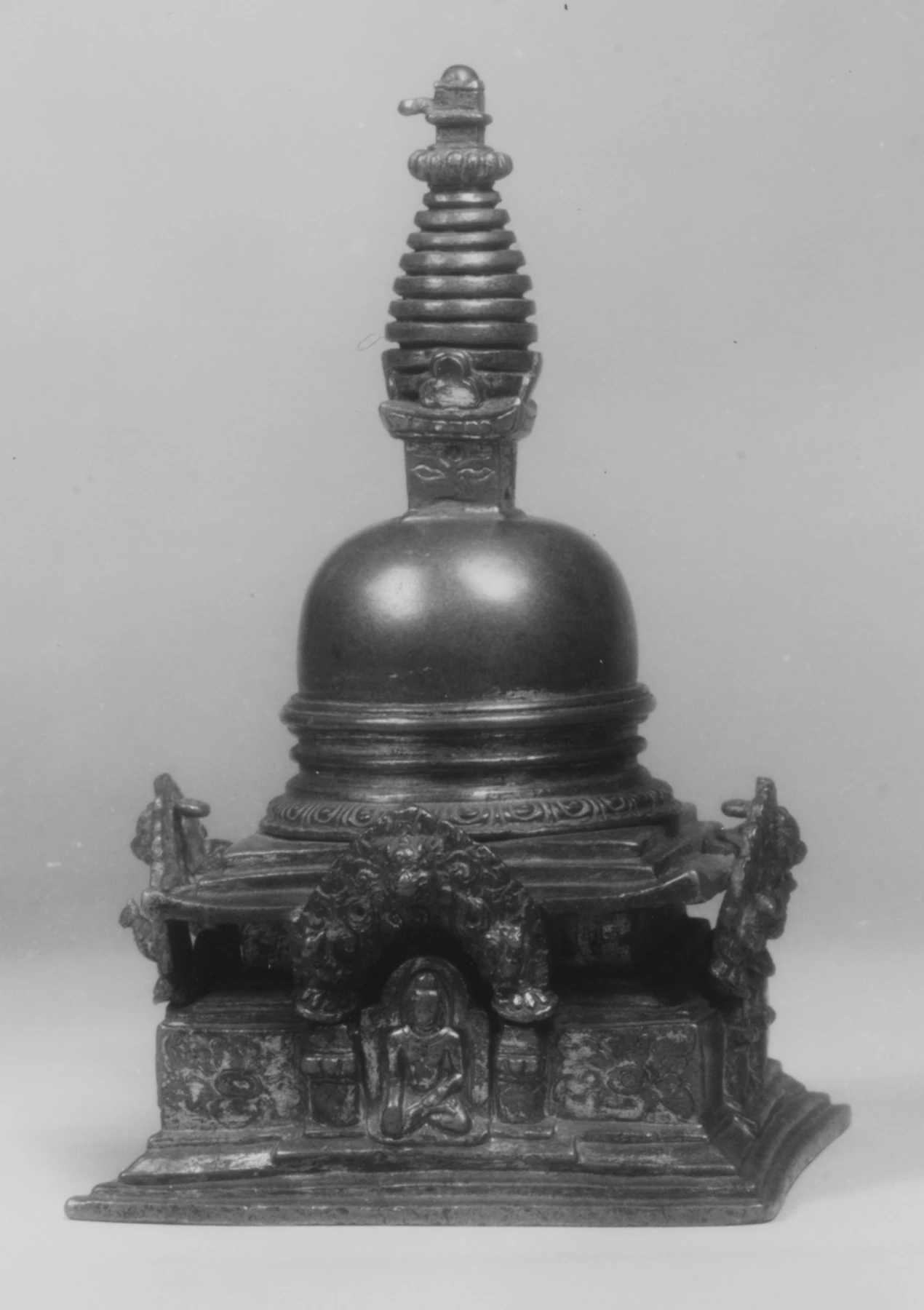
A stūpa in miniature
This sixteenth-century Nepalese model brings the form of a sacred monument into a small object. Stupas are associated with relics, memory and devotion. The Met notes the meditating Buddhas in its shrines and eyes incised on its upper structure. This is a model from Nepal, not a photograph of Sanchi.
Look closelyFollow the form from its base through the dome to the rising finial. What happens when monumental architecture is made small enough to approach closely?
Continue studying ↗Artist unknown · The Metropolitan Museum of Art · 1985.400.16. Anonymous Gift, 1985. Object / image record ↗ · Public domain / CC0. Resized and converted to WebP; image content unchanged.
A question to carry with you
Pause and reflect.
What changes if the purpose of a visit is learning from a living community rather than collecting photographs? What would make a visit an encounter with a living tradition, rather than only a stop on an itinerary?
Sources & further reading
Study notes and examples are original explanations. Follow the links for the source texts and their own contexts.