
Early South Asian communities
Buddhism emerged among the renunciant and intellectual movements of ancient South Asia. Teachings were transmitted orally, organised into collections and preserved by communities. Early Buddhist schools developed different textual and disciplinary traditions. Present-day school names should not be projected unchanged onto the Buddha’s lifetime.
Visual study
A teaching you can explore
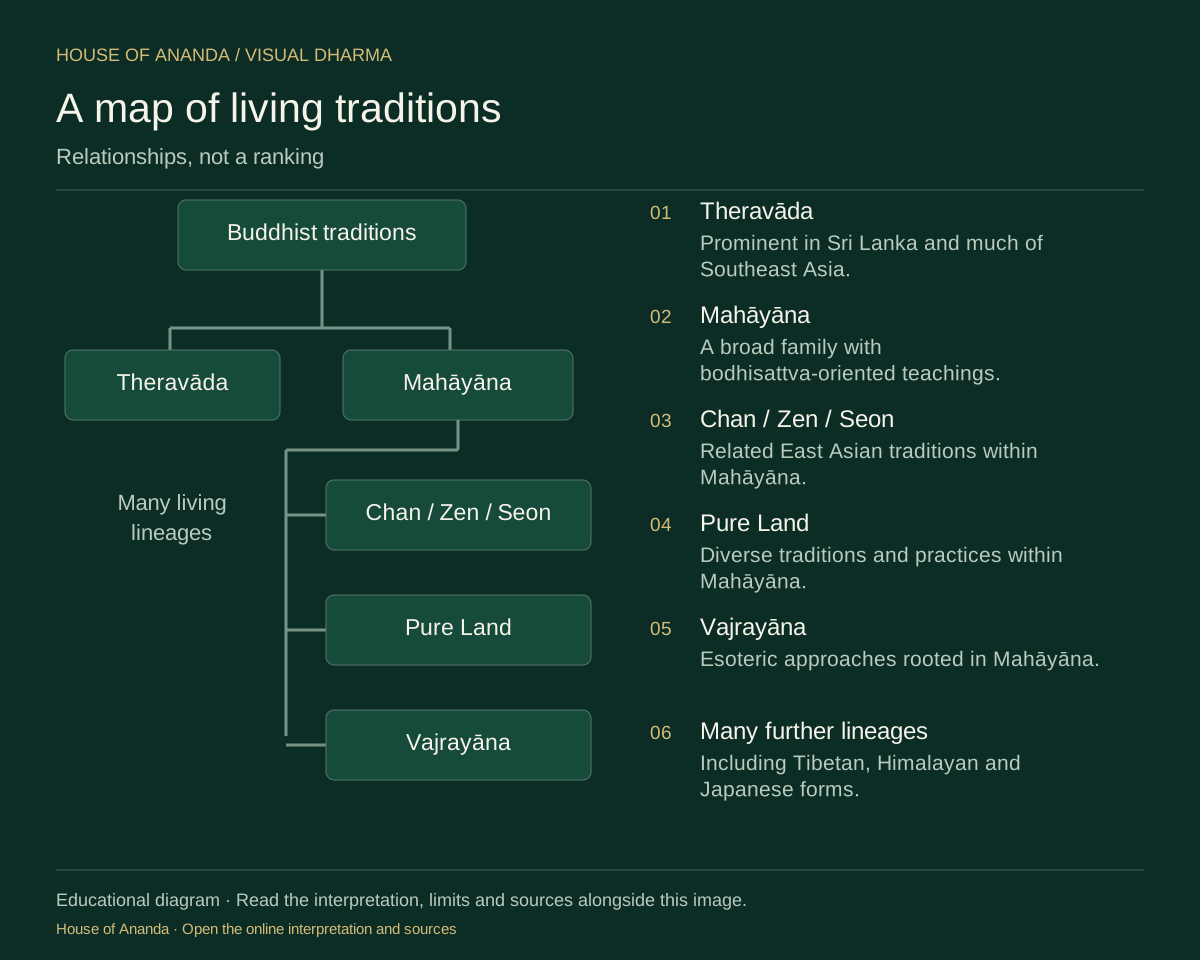
Relationships, not a ranking
A map of living traditions
A simplified orientation to large families and selected lineages.
Read the diagram & interpretation
- TheravādaProminent in Sri Lanka and much of Southeast Asia.
- MahāyānaA broad family with bodhisattva-oriented teachings.
- Chan / Zen / SeonRelated East Asian traditions within Mahāyāna.
- Pure LandDiverse traditions and practices within Mahāyāna.
- VajrayānaEsoteric approaches rooted in Mahāyāna.
- Many further lineagesIncluding Tibetan, Himalayan and Japanese forms.
Read the branches as broad relationships. Zen and Pure Land are not always separate memberships: practices can coexist. Vajrayāna is not a wholly independent third religion beside Mahāyāna; it develops within a Mahāyāna setting. Communities now live throughout the world.
Keep in mind This is a study map, not a complete historical family tree. Geographic associations are neither exclusive nor fixed.
Sources: Study Buddhism · Types of Buddhism ↗ · Stanford Encyclopedia of Philosophy · Japanese Zen ↗
A broad historical map
These periods overlap. Transmission was shaped by travellers, merchants, rulers, translators and local communities, rather than a single movement in one direction.
| Period | A development to notice |
|---|---|
| First millennium BCE | The Buddha’s teaching community; later royal patronage under Aśoka; transmission to Sri Lanka. |
| Around the beginning of the Common Era onward | Mahāyāna texts and communities develop; Buddhist transmission through Central Asia and into China expands. |
| First millennium CE | Translation and regional development in China, Korea and Japan; Buddhist learning and practice grow across Southeast Asia. |
| Later first millennium CE onward | Indian tantric Buddhist traditions and their transmission into Tibet and other regions. |
| Nineteenth century onward | Colonial encounters, reform movements, migration, new lay meditation movements and global exchange. |
A history of renewal as well as loss
Buddhist institutions declined in many parts of India while continuing elsewhere. Modern South Asia includes revival movements and diverse living communities. Global Buddhism includes immigrant temples and inherited family traditions, as well as people who encounter meditation for the first time as adults.
How to read a timeline
A timeline simplifies. A temple can combine meditation, devotional and ritual practices that a classroom chart puts in separate boxes. Ask which country, language, century and community a historical claim concerns. Avoid imagining an original “pure” Buddhism followed only by decline.
Art & contemplation
Look, learn, reflect
Sacred architecture
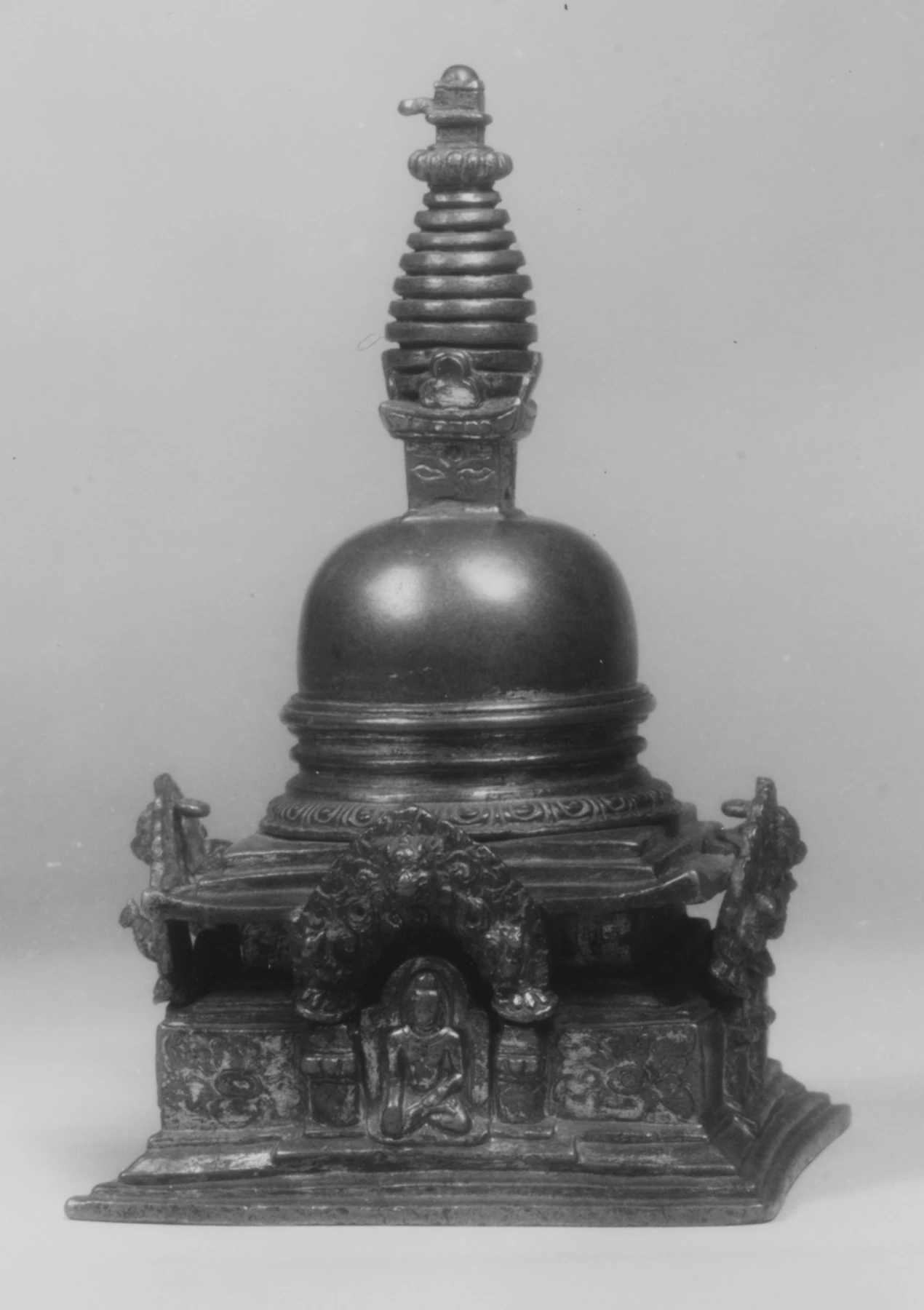
A stūpa in miniature
This sixteenth-century Nepalese model brings the form of a sacred monument into a small object. Stupas are associated with relics, memory and devotion. The Met notes the meditating Buddhas in its shrines and eyes incised on its upper structure. This is a model from Nepal, not a photograph of Sanchi.
Look closelyFollow the form from its base through the dome to the rising finial. What happens when monumental architecture is made small enough to approach closely?
Continue studying ↗Artist unknown · The Metropolitan Museum of Art · 1985.400.16. Anonymous Gift, 1985. Object / image record ↗ · Public domain / CC0. Resized and converted to WebP; image content unchanged.
Symbols in material culture
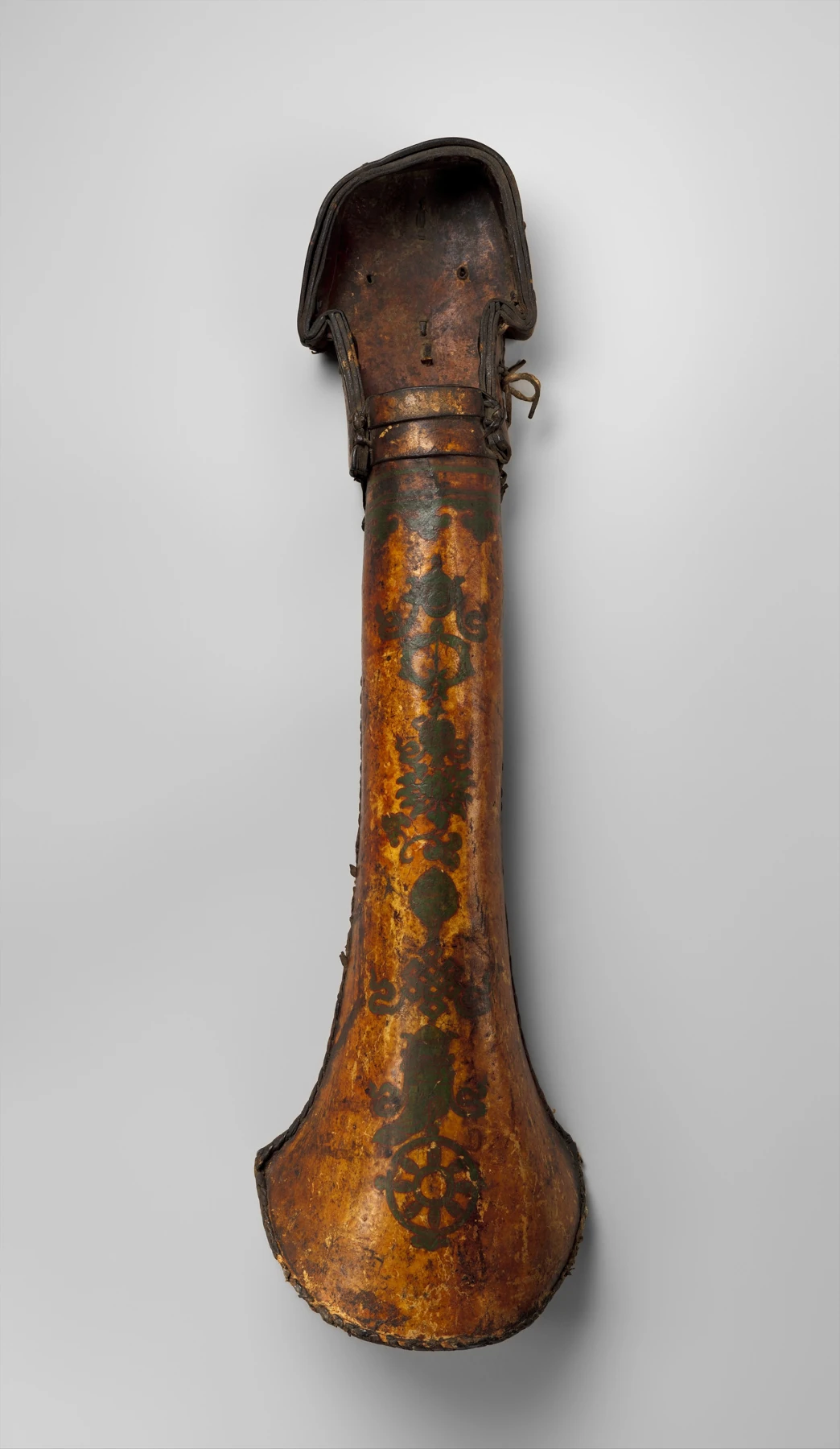
Auspicious symbols beyond the shrine
This Tibetan or Mongolian quiver, dated between the fourteenth and sixteenth centuries, carries the Eight Auspicious Symbols. It shows that religious imagery could appear on objects outside a shrine. A historical object can raise questions about protection, status and the complexity of the societies that made it.
Look closelyCompare its worn motifs with the clearer symbols on the sutra cover. Distinguish what you can still recognise from what the museum identifies.
Continue studying ↗Artist unknown · The Metropolitan Museum of Art · 2014.71. Purchase, Arthur Ochs Sulzberger Bequest, and Rogers Fund, by exchange, 2014. Object / image record ↗ · Public domain / CC0. Resized and converted to WebP; image content unchanged.
A question to carry with you
Pause and reflect.
Choose one region to study in greater depth. What do local voices add to a general history?
Sources & further reading
Study notes and examples are original explanations. Follow the links for the source texts and their own contexts.