
Calm · samatha / śamatha
Calm cultivation steadies and settles attention. Methods and descriptions vary across communities. A stable object such as the breath can help the mind gather. Calm is valuable, but a pleasant state alone does not answer every question about suffering.
Visual study
A teaching you can explore
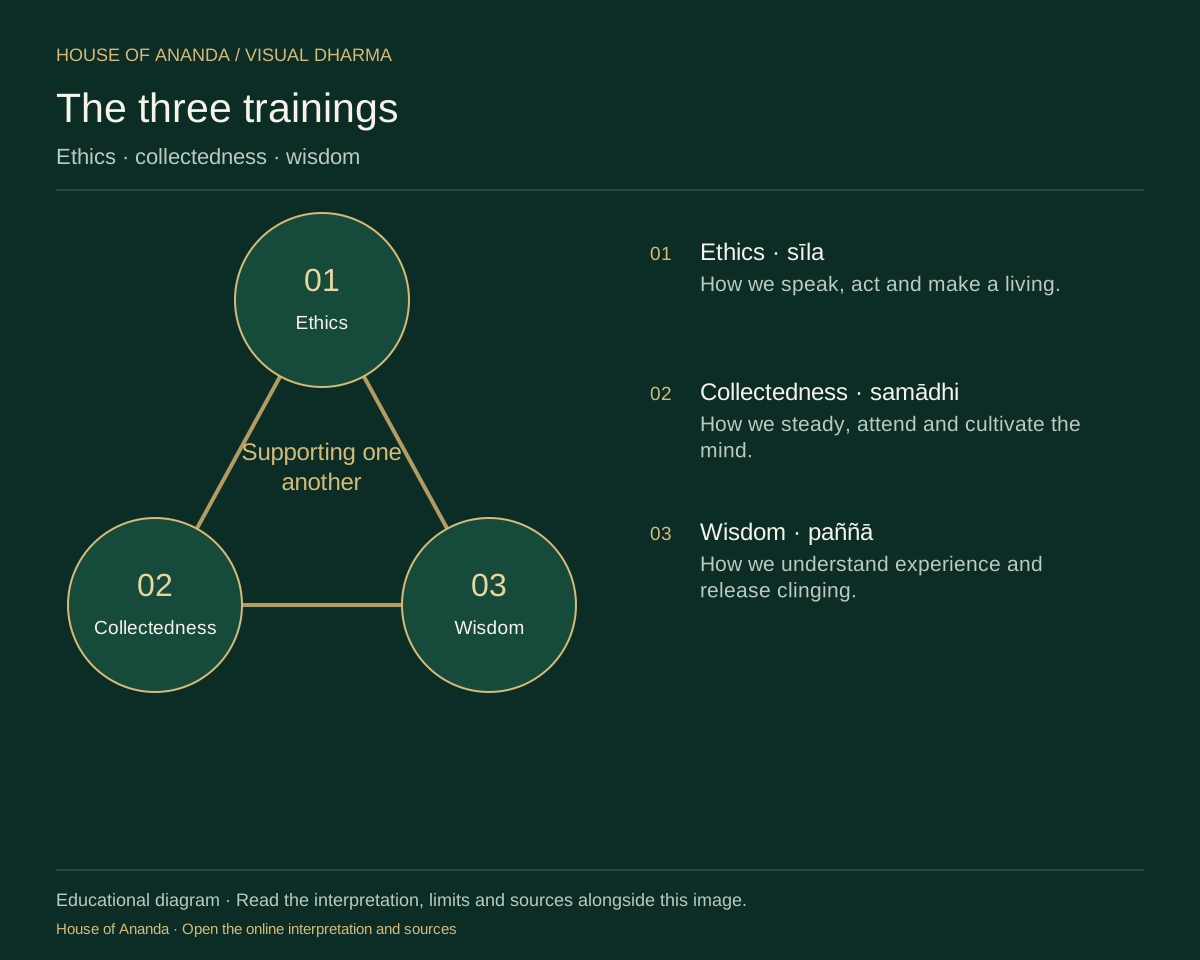
Ethics · collectedness · wisdom
The three trainings
The path can be understood through three areas of training that strengthen each other.
Read the diagram & interpretation
- Ethics · sīlaHow we speak, act and make a living.
- Collectedness · samādhiHow we steady, attend and cultivate the mind.
- Wisdom · paññāHow we understand experience and release clinging.
Ethical choices can reduce remorse; steadiness can support observation; understanding can deepen care. The connecting lines indicate reciprocal support. The Eightfold Path gives a more detailed account of these three trainings.
Keep in mind Meditation is one part of a wider path that also concerns relationships and conduct.
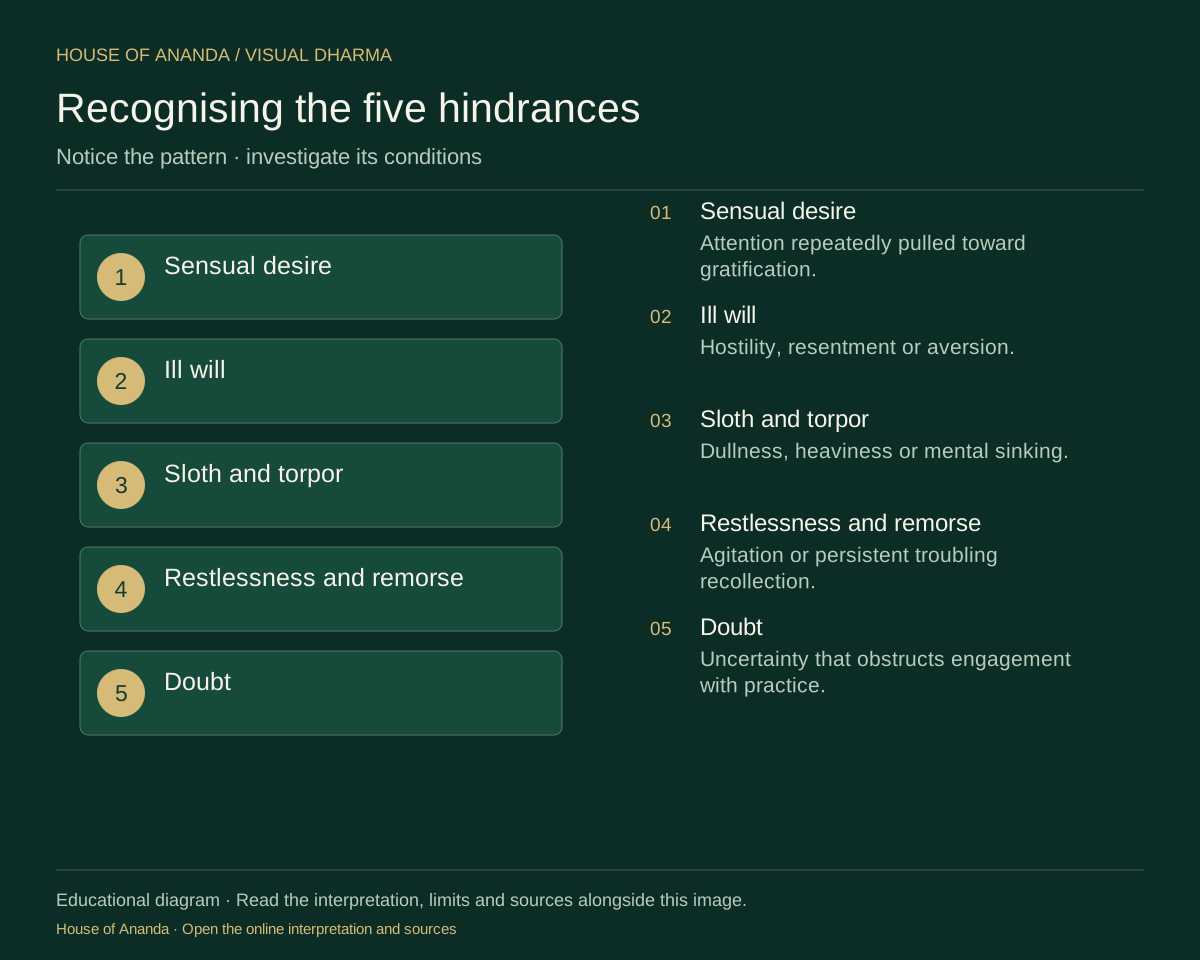
Notice the pattern · investigate its conditions
Recognising the five hindrances
Traditional obstacles to steadiness and understanding are patterns to recognise, not permanent identities.
Read the diagram & interpretation
- Sensual desireAttention repeatedly pulled toward gratification.
- Ill willHostility, resentment or aversion.
- Sloth and torporDullness, heaviness or mental sinking.
- Restlessness and remorseAgitation or persistent troubling recollection.
- DoubtUncertainty that obstructs engagement with practice.
Naming a pattern can create room for a wiser response. Ask what is feeding it: exhaustion, conflict, stimulation, unrealistic effort or a question that needs an answer? The traditional account of nourishment and its removal invites attention to conditions.
Keep in mind Ordinary fatigue may need rest, and honest inquiry is not a moral failure. This framework is not a diagnosis.
Insight · vipassanā / vipaśyanā
Insight concerns discerning the nature of experience, including change, conditioned arising and the problems of clinging. In modern usage, “Vipassana” may name particular retreat methods or movements. Those methods should not be confused with the entire historical range of insight practice.
Working together
AN 4:170 describes more than one relationship between tranquillity and insight. Different traditions organise training differently. It is unhelpful to assume that anyone cultivating calm is avoiding wisdom, or that insight requires being continually unsettled.
Concentration and jhāna
Samādhi is often translated as concentration or collectedness. Jhāna, or dhyāna, names meditative absorptions in Buddhist contexts; teachers differ in how they describe the conditions and depth involved. This library does not certify attainments or offer a shortcut to them.
For a beginner
Use one simple instruction for a manageable period. Learn to recognise what you are doing, and ask a teacher when you are unsure. Collecting many methods in a single sitting can make it harder to discover what any one of them actually teaches.
Art & contemplation
Look, learn, reflect

A place to return
A quiet bench evokes an accessible moment of attention. The setting is imagined and the person is not a named teacher. Meditation can also happen amid ordinary household sounds, without a remote retreat or a perfectly quiet mind.
A moment to reflectWhat is one manageable pause you can make in your day?
Follow this theme ↗A question to carry with you
Pause and reflect.
Does your practice need more steadiness, more clear observation, or a simpler instruction?
Sources & further reading
Study notes and examples are original explanations. Follow the links for the source texts and their own contexts.