
Context and intention
Walking is valued in Buddhist contemplative traditions. This accessible exercise is not a complete formal walking-meditation system.
Before you begin
Choose a short, comfortable session. You can keep your eyes open, use a chair, adjust position or stop. If inward attention becomes unsettling, orient to the room and ordinary activity. These educational exercises do not promise treatment, attainment or a particular emotional result.
Choose a safe route · 1 minute
Use level, familiar ground away from traffic and obstacles. Keep eyes open. If walking is unsuitable, notice contact through seated feet or hands.
Walk naturally · 2 minutes
Feel the body moving at a comfortable pace. Do not coordinate steps and breathing by force.
Attend to contact · 5 minutes
Notice weight shifting and feet meeting the ground. Include the surroundings so you remain aware of others. If distracted, return to one ordinary step.
Pause and close · 2 minutes
Stop somewhere safe. Notice standing contact and the wider scene. Continue your day without preserving an artificial slow pace.
After the practice
How did attention differ from an ordinary walk? Avoid turning the experience into a judgement about which was better.
A practice in its own right
Walking meditation belongs to Buddhist practice alongside sitting, standing and lying down. Early texts value walking; modern communities teach different forms, from carefully observed steps to relaxed mindful walking. It does not have to look the same in every setting.
Prepare a simple space
Choose a clear, level route without traffic or obstacles. Use your usual walking support if needed. Keep the eyes open. If standing is uncomfortable, the same spirit of attention can be brought to small seated movements without pretending they are identical techniques.
A six-minute introduction
Walk at a pace that lets you remain balanced and aware. There is no need to make movement exceptionally slow.
- Pause and notice contact with the ground.
- Begin walking; feel shifting weight and the arrival of each foot.
- At the end of a short path, stop, turn with awareness and begin again.
- When distracted, return to one ordinary sensation of moving.
- After a few minutes, stop and notice the wider surroundings.
Out in daily life
On a normal walk, attention must include other people, crossings and the environment. Do not become so inwardly focused that you ignore safety. You can notice three ordinary steps while moving between rooms, then return fully to the next task.
Art & contemplation
Look, learn, reflect
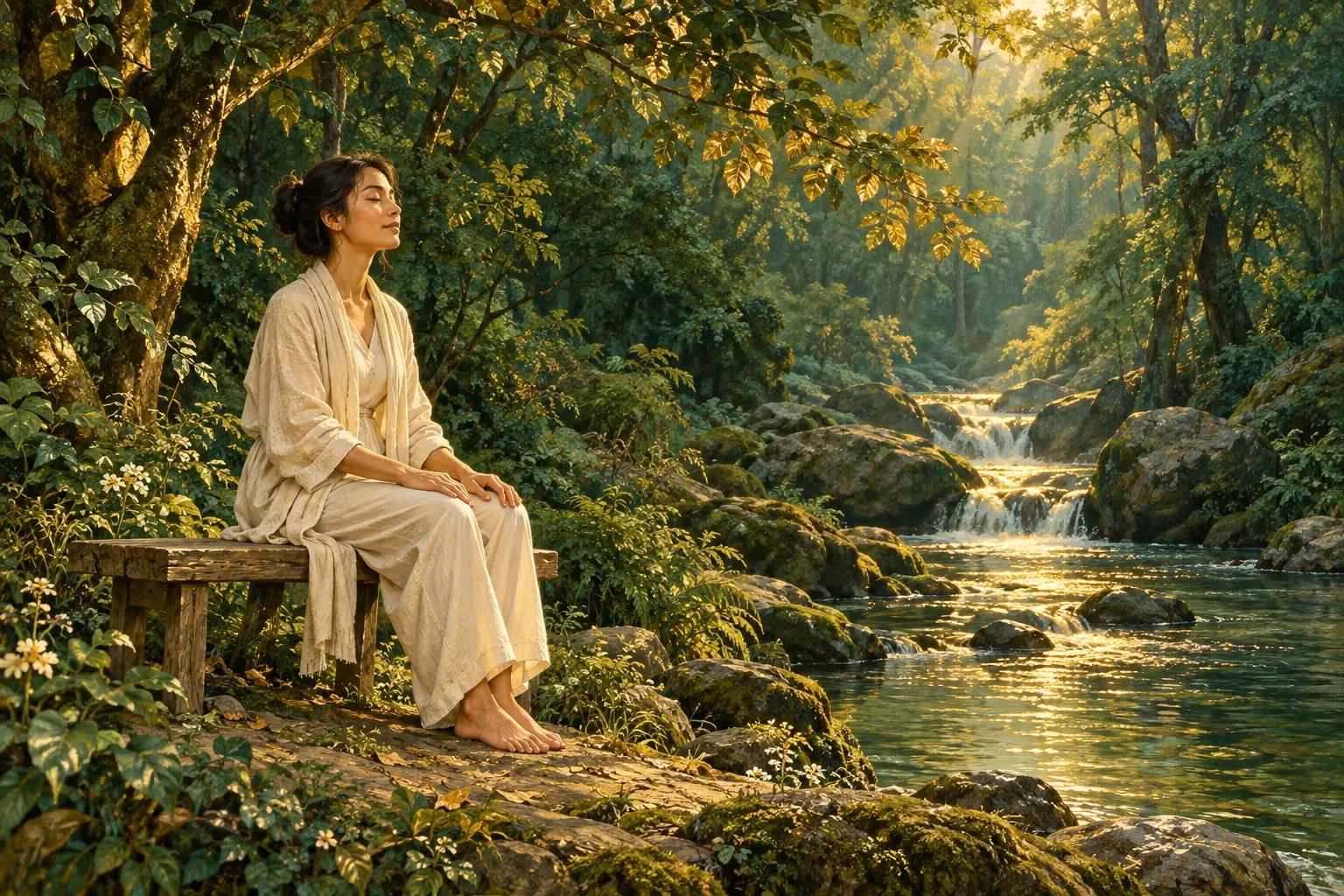
A place to return
A quiet bench evokes an accessible moment of attention. The setting is imagined and the person is not a named teacher. Meditation can also happen amid ordinary household sounds, without a remote retreat or a perfectly quiet mind.
A moment to reflectWhat is one manageable pause you can make in your day?
Follow this theme ↗A question to carry with you
Pause and reflect.
How did attention differ from an ordinary walk? Avoid turning the experience into a judgement about which was better. What changes when walking becomes something you experience, rather than only a way of getting somewhere?
Sources & further reading
Study notes and examples are original explanations. Follow the links for the source texts and their own contexts.