
Amitābha and Sukhāvatī
Pure Land traditions centre on Amitābha, called Amida in Japan, and the aspiration for birth in Sukhāvatī. Important texts include the Larger and Smaller Sūtras on Amitāyus and the Contemplation Sūtra. These are religious teachings, not geographical travel accounts.
Visual study
A teaching you can explore
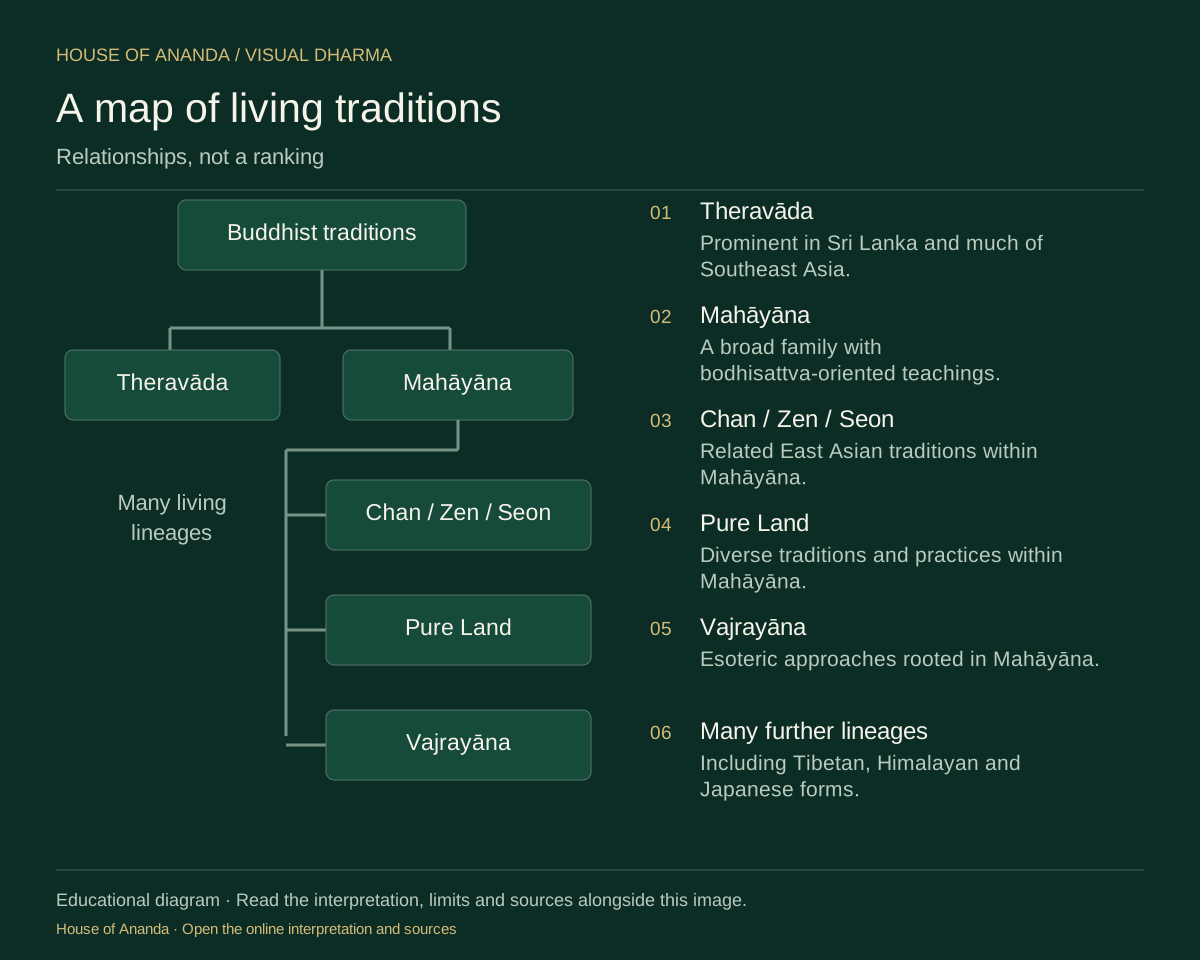
Relationships, not a ranking
A map of living traditions
A simplified orientation to large families and selected lineages.
Read the diagram & interpretation
- TheravādaProminent in Sri Lanka and much of Southeast Asia.
- MahāyānaA broad family with bodhisattva-oriented teachings.
- Chan / Zen / SeonRelated East Asian traditions within Mahāyāna.
- Pure LandDiverse traditions and practices within Mahāyāna.
- VajrayānaEsoteric approaches rooted in Mahāyāna.
- Many further lineagesIncluding Tibetan, Himalayan and Japanese forms.
Read the branches as broad relationships. Zen and Pure Land are not always separate memberships: practices can coexist. Vajrayāna is not a wholly independent third religion beside Mahāyāna; it develops within a Mahāyāna setting. Communities now live throughout the world.
Keep in mind This is a study map, not a complete historical family tree. Geographic associations are neither exclusive nor fixed.
Sources: Study Buddhism · Types of Buddhism ↗ · Stanford Encyclopedia of Philosophy · Japanese Zen ↗
Remembering the Buddha
Name-recitation, often called nianfo in Chinese and nembutsu in Japanese, is important in many communities. Faith, trust, vows, gratitude and practice have different emphases across schools. Recitation is not simply a generic positive affirmation.
Diversity within the tradition
Japanese Jōdo and Jōdo Shinshū are not identical. Pure Land practice also exists in Chinese and other communities, sometimes alongside Chan and additional practices. A modern silent-retreat model does not represent all Buddhism.
A thoughtful introduction
Read a community’s own account, then listen to an authorised public service or attend with guidance. You may respectfully observe without pretending to undertake vows you do not understand. Ask what the name means to those who recite it.
A major Buddhist path
Pure Land traditions are important across East Asia. They centre in varied ways on Amitābha Buddha, known as Amida in Japan, and the aspiration for birth in Sukhāvatī, the Land of Bliss. “Pure Land” should not be reduced to a minor devotional supplement to “real” meditation.
Recalling the Buddha
Practices include recollection and recitation of the Buddha’s name, with differing understandings of faith, vows, practice and other-power. Chinese nianfo and Japanese nembutsu name related forms of recollection. Particular communities give their own explanations and instructions.
Texts and interpretation
The Larger and Smaller Sukhāvatīvyūha sūtras and the Contemplation Sūtra are important in East Asian Pure Land traditions. BDK’s English canon offers a route into these texts. Read their introductions, because historical setting and a school’s interpretation affect how the language is understood.
A different emphasis
The reliance and gratitude expressed in Pure Land practice can challenge the idea that spiritual life is only a project of personal achievement. This is not the claim that ethics or care no longer matter. It is also not accurate to assume every Pure Land school explains liberation in the same way.
An approach for the visitor
Attend an open service or read an introductory teaching from a named Pure Land community. Ask what the recitation means to its practitioners before treating it as a generic calming sound.
Art & contemplation
Look, learn, reflect
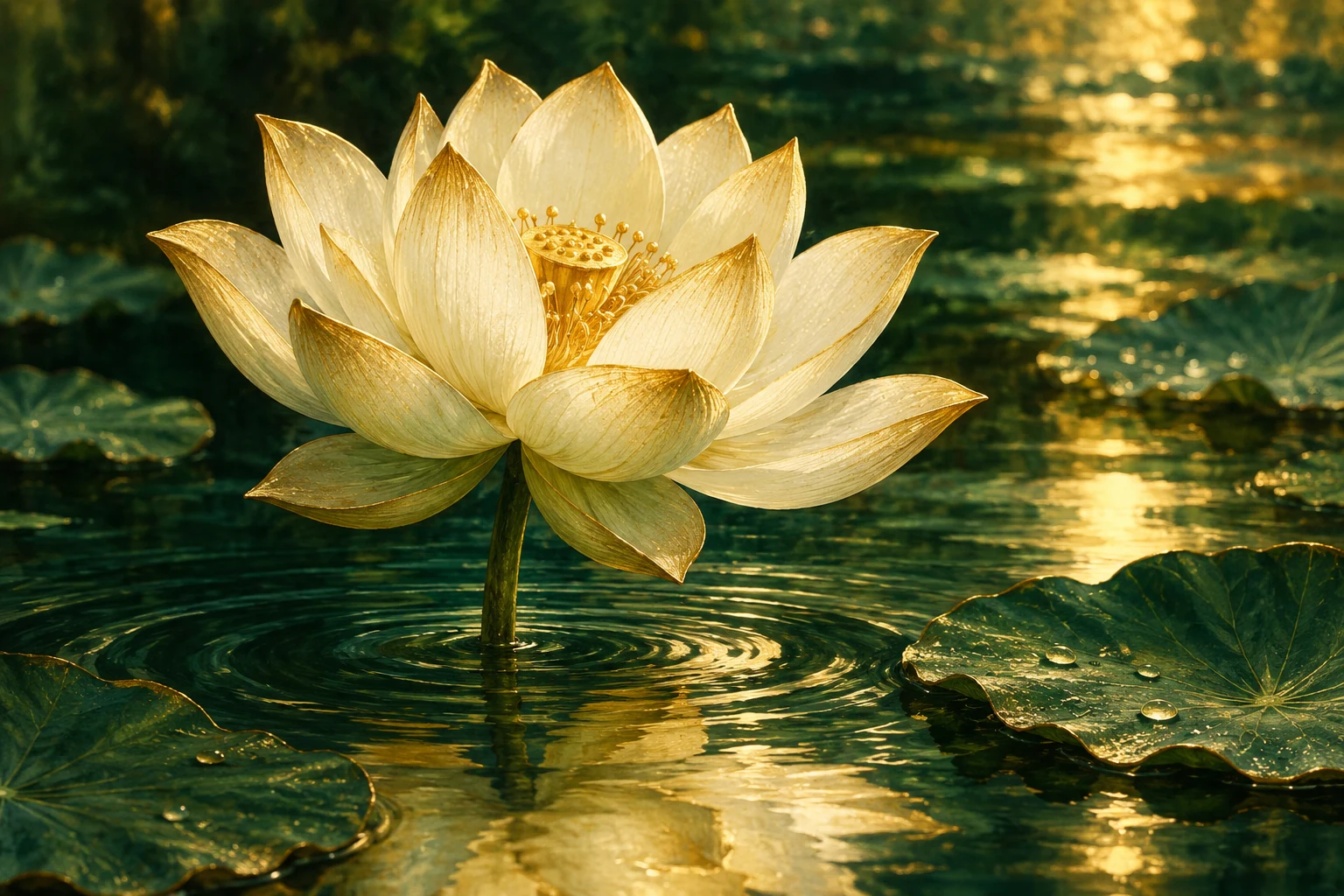
A lotus above the water
The lotus is widely associated with purity and awakening. Here the contrast between bloom and water invites a reflection on developing wisdom amid ordinary conditions. The picture is contemporary artwork, not a traditional icon with a fixed colour code.
A moment to reflectWhere might care grow within an imperfect situation?
Follow this theme ↗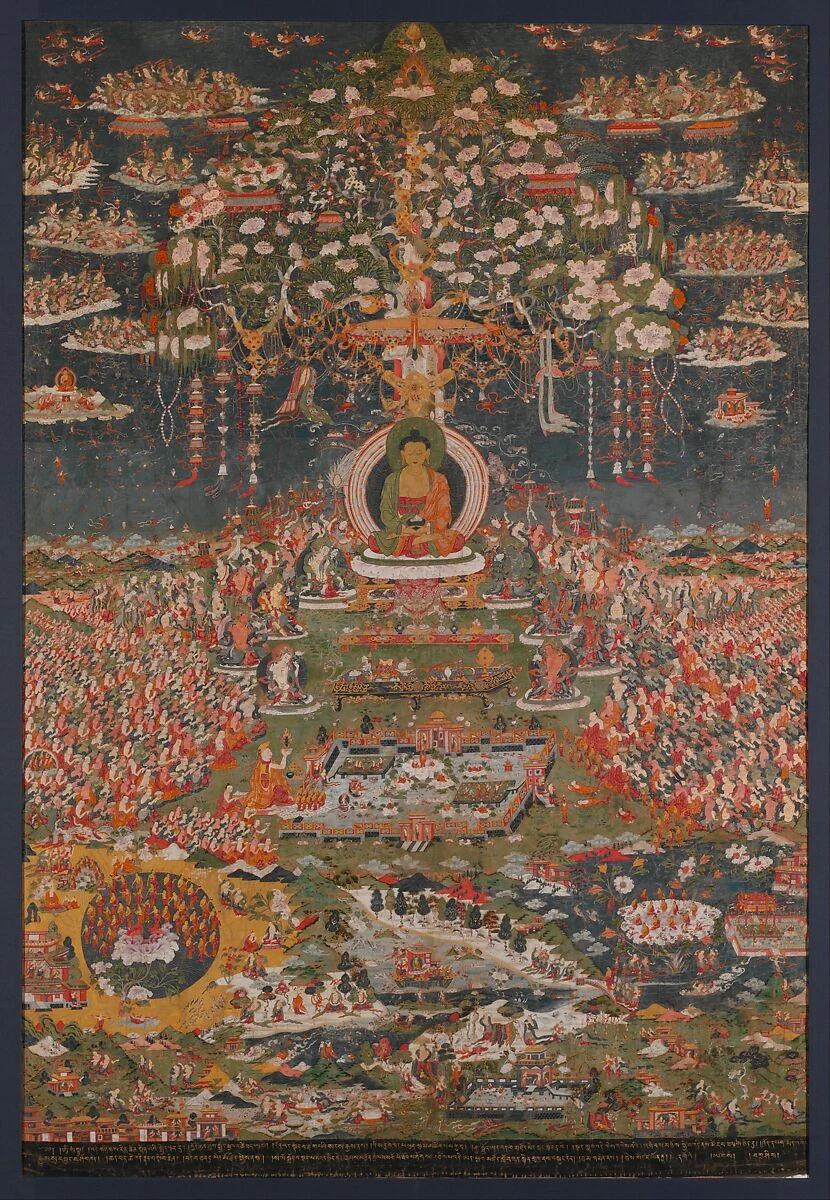
Buddha & sacred landscape
Amitābha and the Pure Land
This Tibetan painting places Amitābha within Sukhāvatī, the Western Pure Land. It is a sacred landscape shaped by Buddhist devotion and imagination, not a map to a physical travel destination. Pure Land teachings and practices have distinct expressions across Buddhist communities.
Look closelyBegin with the central Buddha, then examine how the surrounding figures and landscape direct attention back toward the centre.
Continue studying ↗Artist unknown · The Metropolitan Museum of Art · 2004.139. Object / image record ↗ · Public domain / CC0. Resized and converted to WebP; image content unchanged.
A question to carry with you
Pause and reflect.
How does devotional trust differ from trying to control every outcome through personal effort? How does an emphasis on gratitude or reliance differ from your usual idea of spiritual effort?
Sources & further reading
Study notes and examples are original explanations. Follow the links for the source texts and their own contexts.