
Four qualities
Mettā or maitrī is goodwill; karuṇā is compassion towards suffering; muditā is joy in another’s wellbeing; upekkhā or upekṣā is equanimity. Often called divine abodes or immeasurables, their cultivation reaches beyond those we already like.
Visual study
A teaching you can explore
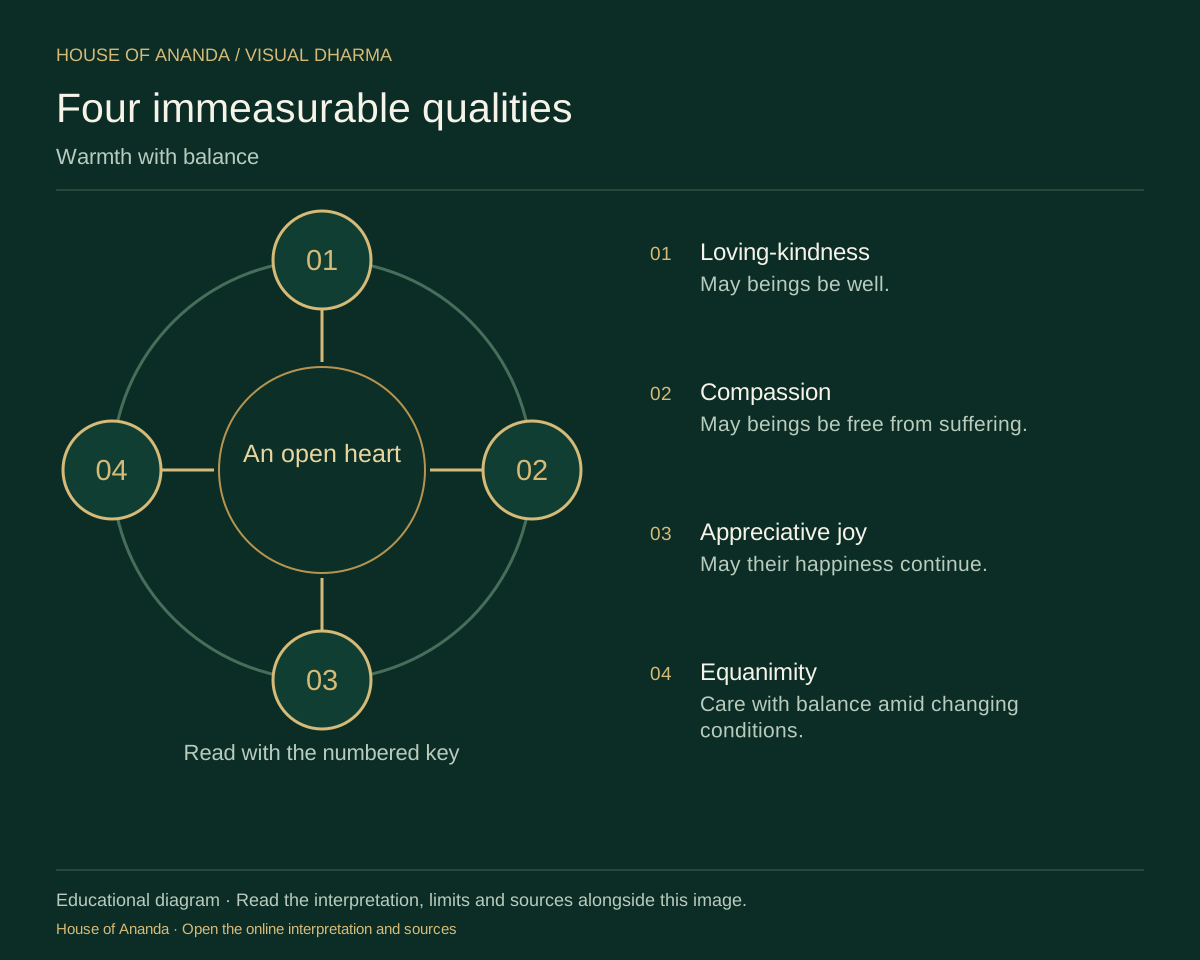
Warmth with balance
Four immeasurable qualities
Four qualities extend care beyond narrow preference.
Read the diagram & interpretation
- Loving-kindnessMay beings be well.
- CompassionMay beings be free from suffering.
- Appreciative joyMay their happiness continue.
- EquanimityCare with balance amid changing conditions.
The wording in the panels is an introductory House of Ananda adaptation. The qualities support each other: compassion can be steadied by equanimity, and joy can loosen the habit of comparing ourselves with others. Begin with an accessible person or situation rather than forcing a difficult emotional state.
Keep in mind Equanimity is not indifference, compassion need not become overwhelm, and kindness can coexist with firm boundaries.
Sources: Nyanaponika Thera · The Four Sublime States ↗ · Sutta Nipāta 1:8 · Goodwill ↗
Let them work together
Goodwill wishes wellbeing. Compassion responds when it is threatened. Appreciative joy meets flourishing without envy. Equanimity helps care remain steady amid change. No one quality should be used to silence the others.
Boundaries still belong
Compassion can include saying no, reporting harm or leaving an unsafe situation. Joy for someone else does not require pretending your own grief has vanished. Begin introductory practice with a manageable example.
Study through encounters
Meet a tired colleague with care, appreciate a friend’s achievement, and notice when your help becomes an attempt to control. These are modern applications. Formal meditation systems offer more detailed instructions than this overview.
Four qualities of relationship
Also known as the brahmavihāras, these qualities are cultivated across Buddhist traditions. English translations differ, but the distinctions are useful.
| Quality | Its direction | A common confusion |
|---|---|---|
| Mettā / maitrī | Wishing beings well. | Needing to like or please everyone. |
| Karuṇā | Responding to suffering with a wish for relief. | Pity that looks down on another person. |
| Muditā | Appreciating another’s happiness and good fortune. | Measuring their success against your own. |
| Upekkhā / upekṣā | Steadiness and balance amid changing conditions. | Indifference or withdrawing all care. |
They balance each other
Compassion needs enough steadiness to remain useful. Equanimity needs warmth so that it does not harden into distance. Appreciative joy makes room for another person’s good news. Goodwill gives the whole practice a generous direction.
A practice through the week
Choose one quality each day, then repeat. For goodwill, send a considerate message. For compassion, offer practical help that is actually wanted. For joy, congratulate someone without redirecting the conversation to yourself. For equanimity, notice one situation you cannot control and identify the action that remains yours to take.
Care with limits
Care does not require unlimited availability. Rest and clear boundaries can make care more sustainable. The practice is not a test of how much distress you can absorb; it asks how to meet experience without adding hostility or possessiveness.
Art & contemplation
Look, learn, reflect

A lotus above the water
The lotus is widely associated with purity and awakening. Here the contrast between bloom and water invites a reflection on developing wisdom amid ordinary conditions. The picture is contemporary artwork, not a traditional icon with a fixed colour code.
A moment to reflectWhere might care grow within an imperfect situation?
Follow this theme ↗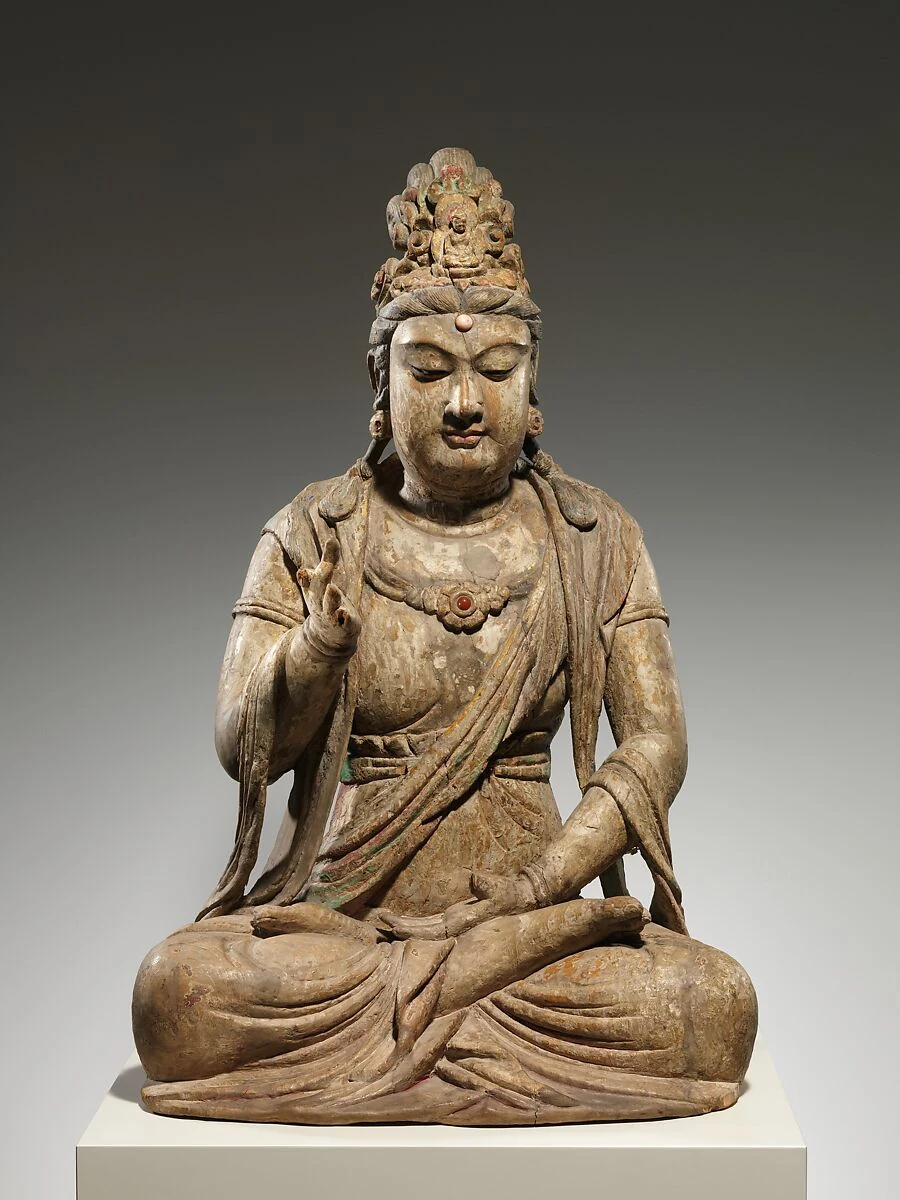
Bodhisattva
Avalokiteśvara / Guanyin: compassion
Avalokiteśvara is associated with compassion; Guanyin is the Chinese name. This Chinese sculpture belongs to a long and varied history of the figure’s representation. Its particular posture should be studied through the object record rather than assumed to be the standard form everywhere.
Look closelyNotice the ornament and headdress. Compare them with the plain robe of the Śākyamuni sculpture.
Continue studying ↗Artist unknown · The Metropolitan Museum of Art · 33.116. Object / image record ↗ · Public domain / CC0. Resized and converted to WebP; image content unchanged.
A question to carry with you
Pause and reflect.
Which quality comes easily, and which do you confuse with pity, passivity or comparison? Which of these qualities is easiest for you? Which could bring balance to the others?
Sources & further reading
Study notes and examples are original explanations. Follow the links for the source texts and their own contexts.