
Two objects in relationship
The vajra, called dorje in Tibetan, is a ritual implement whose name evokes thunderbolt and diamond. In a common tantric Buddhist explanation, the vajra represents compassionate method and the bell represents wisdom. Their paired use expresses the union of these dimensions of awakening. This is a contextual symbolic relationship, not a universal definition of every bell or sceptre.
Look at the actual objects
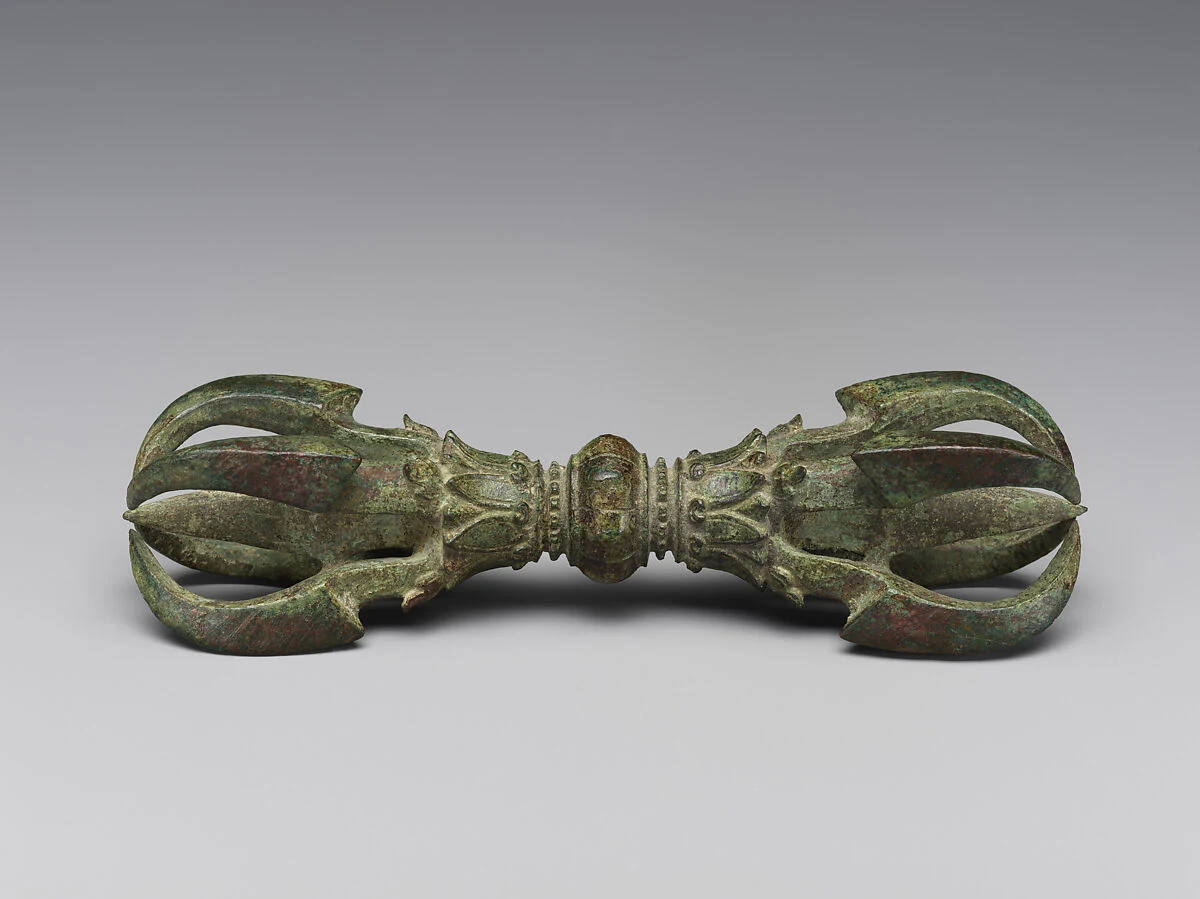
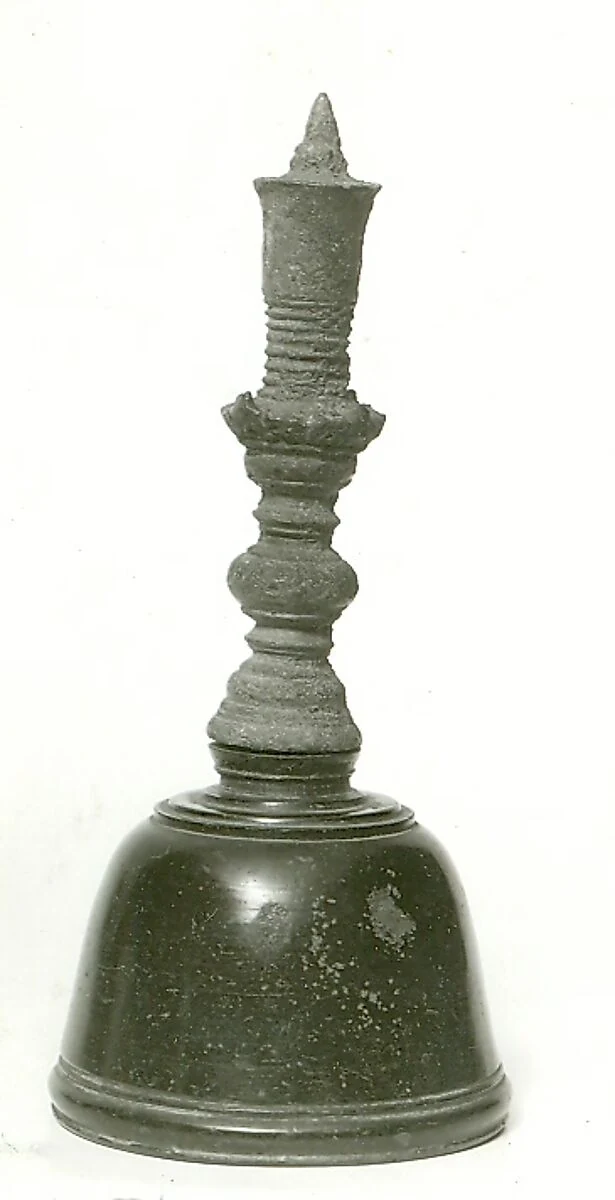
The atlas includes a vajra from Java, around the tenth century, and an East Javanese prayer bell from the eleventh century. They are separate museum objects and are not presented as an original matched pair. Their presence is a reminder that Buddhist ritual art has a much wider geographic history than a single modern association might suggest.
Beyond a decorative pairing
A useful contemporary reflection asks what happens when the desire to help is accompanied by careful understanding. Good intentions need attention to effects and circumstances. Conversely, understanding that never informs conduct can remain distant from other people’s needs. This is our study prompt inspired by the paired symbolism, not a replacement for a lineage’s ritual explanation.
Learning from a tradition
Notice the number and form of prongs, the handle and the body of the bell; then consult the object record. Do not assume that a museum label establishes how a particular teacher uses a similar object today. If you wish to learn a ritual practice, ask the relevant community about its teaching, preparation and commitments.
Art & contemplation
Look, learn, reflect
Ritual object
Vajra: a ritual implement from Java
This Javanese object shows the double-ended form of a vajra. In common tantric Buddhist explanations, the vajra is associated with compassionate method and paired symbolically with the wisdom of the bell. Its geographic origin is part of its history and should not be replaced with a generic Tibetan label.
Look closelyNotice symmetry, prongs and central grip. Ask how a hand-held object differs from an image painted on a wall.
Continue studying ↗Artist unknown · The Metropolitan Museum of Art · 1987.142.297. Object / image record ↗ · Public domain / CC0. Resized and converted to WebP; image content unchanged.
Ritual object
A prayer bell from East Java
This eleventh-century Javanese bell belongs to a history of ritual instruments. The bell can represent wisdom in tantric Buddhist pairings with the vajra. These two museum objects are shown for comparison and are not documented as an original matched set.
Look closelyConsider sound as well as shape. A photograph records an object’s appearance but not the ceremony in which it was used.
Continue studying ↗Artist unknown · The Metropolitan Museum of Art · 30.87.4. Object / image record ↗ · Public domain / CC0. Resized and converted to WebP; image content unchanged.
A question to carry with you
Pause and reflect.
Where might a wish to help benefit from more listening and understanding?
Sources & further reading
Study notes and examples are original explanations. Follow the links for the source texts and their own contexts.