
A particular world of relationships
In Buddhist contexts, a mandala can organise a sacred assembly and its environment. It may be painted, constructed or visualised within a specific tradition. Many have a centre and surrounding arrangements, but appearance alone does not tell you their complete meaning. A round design sold as a mandala is not necessarily a Buddhist ritual diagram.
Visual study
A teaching you can explore
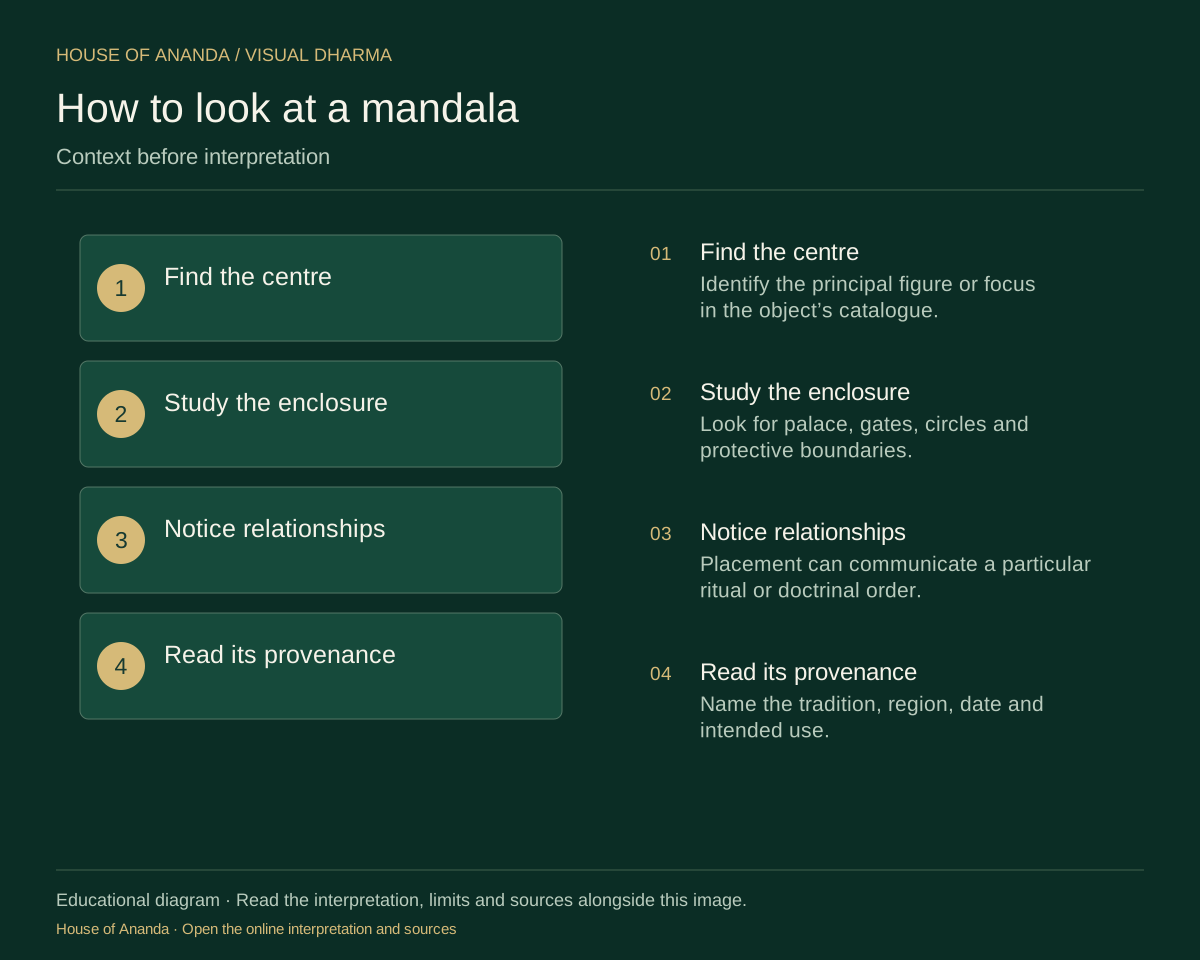
Context before interpretation
How to look at a mandala
A viewing guide for a sacred arrangement, not a universal symbolic decoder.
Read the diagram & interpretation
- Find the centreIdentify the principal figure or focus in the object’s catalogue.
- Study the enclosureLook for palace, gates, circles and protective boundaries.
- Notice relationshipsPlacement can communicate a particular ritual or doctrinal order.
- Read its provenanceName the tradition, region, date and intended use.
Mandalas have different structures and functions. The Nepalese Chakrasamvara mandala in this collection represents a specific sacred assembly; its figures cannot be replaced with a generic explanation about balance. A contemporary radial pattern may be beautiful without having this ritual identity.
Keep in mind This is an art-reading sequence. It is not an initiation or an instruction to perform a restricted visualisation.
Sources: The Met · Chakrasamvara Mandala ↗ · Study Buddhism · What Is Tantra? ↗
Look closely: a Nepalese example
The Chakrasamvara Mandala in the atlas was made in Nepal around 1100. The Met identifies its centre as Chakrasamvara and Vajravarahi, surrounded by a particular sacred assembly. Burial-ground imagery forms part of its setting. These details belong to this work and its tantric context; they are not decorative symbols to which any preferred meaning can be attached.
Sand, change and contemporary imagery
Some communities construct sand mandalas within ceremonial sequences. Their making and dissolution can be discussed in connection with impermanence, while also serving specific ritual purposes. The abstract sand artwork in this library is a modern interpretation of change. It deliberately does not claim to reproduce a recognised sacred mandala or supply instructions for a ceremony.
A respectful viewing practice
Start with the object’s title, region, date and source. Identify the main focus, look at the surrounding relationships, then read the specialist explanation. You can appreciate the work without inventing a ritual use for it. Formal tantric practices may involve empowerment, commitments and instruction from a qualified teacher.
Art & contemplation
Look, learn, reflect
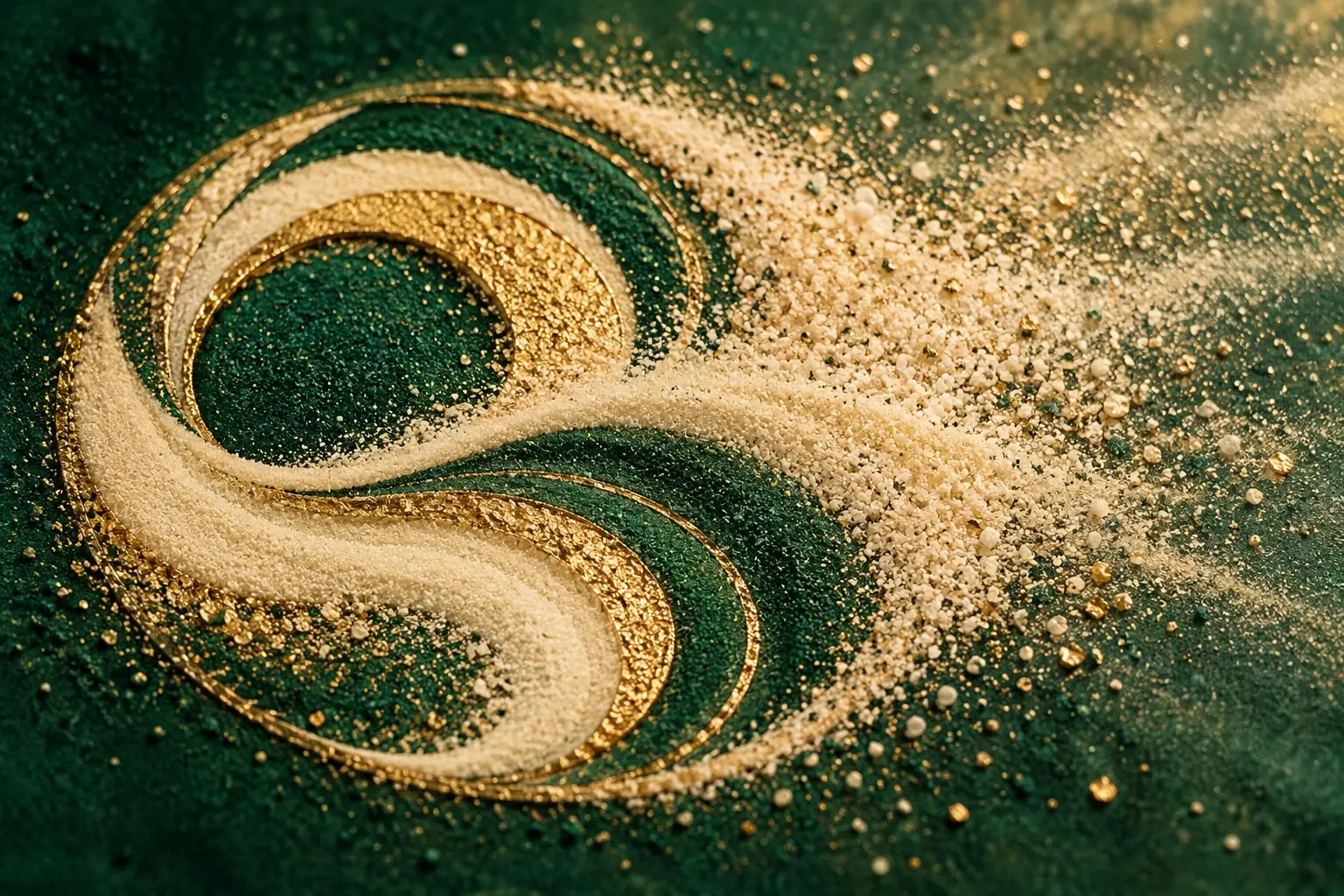
A pattern passing
Loose grains forming and releasing a pattern invite reflection on change. This is an invented artwork, not a Tibetan ritual sand mandala. Authentic mandala construction and dissolution belong to particular communities and practices.
A moment to reflectWhat can you appreciate without asking it to stay the same?
Follow this theme ↗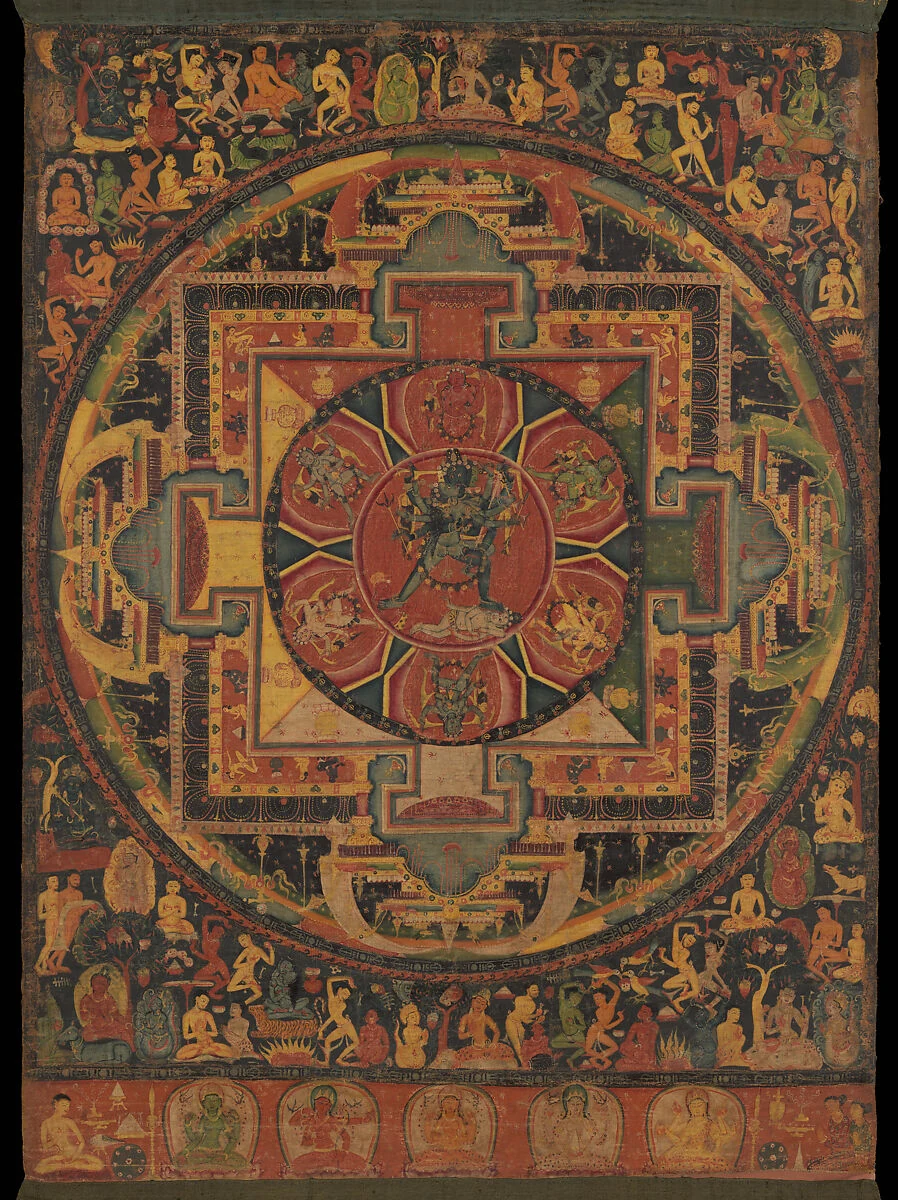
Ritual painting
A mandala as sacred arrangement
This Nepalese painting, dated around 1100, depicts Chakrasamvara and Vajravarahi within a specific tantric assembly. Its placement of figures communicates a particular sacred order. It offers a historical example against which to distinguish modern ornamental circular patterns.
Look closelyLook for centre, surrounding assembly and outer registers. Use the museum explanation before assigning meanings to individual figures.
Continue studying ↗Artist unknown · The Metropolitan Museum of Art · 1995.233. Object / image record ↗ · Public domain / CC0. Resized and converted to WebP; image content unchanged.
A question to carry with you
Pause and reflect.
What changes when you approach an intricate image as a carefully arranged relationship rather than as decoration?
Sources & further reading
Study notes and examples are original explanations. Follow the links for the source texts and their own contexts.