
A history, not only a mood
Japanese Zen descends from Chinese Chán, a word related to the Indic meditation term dhyāna. Zen is not merely minimalist design. Its communities preserve liturgy, ethical commitments and training relationships.
Visual study
A teaching you can explore
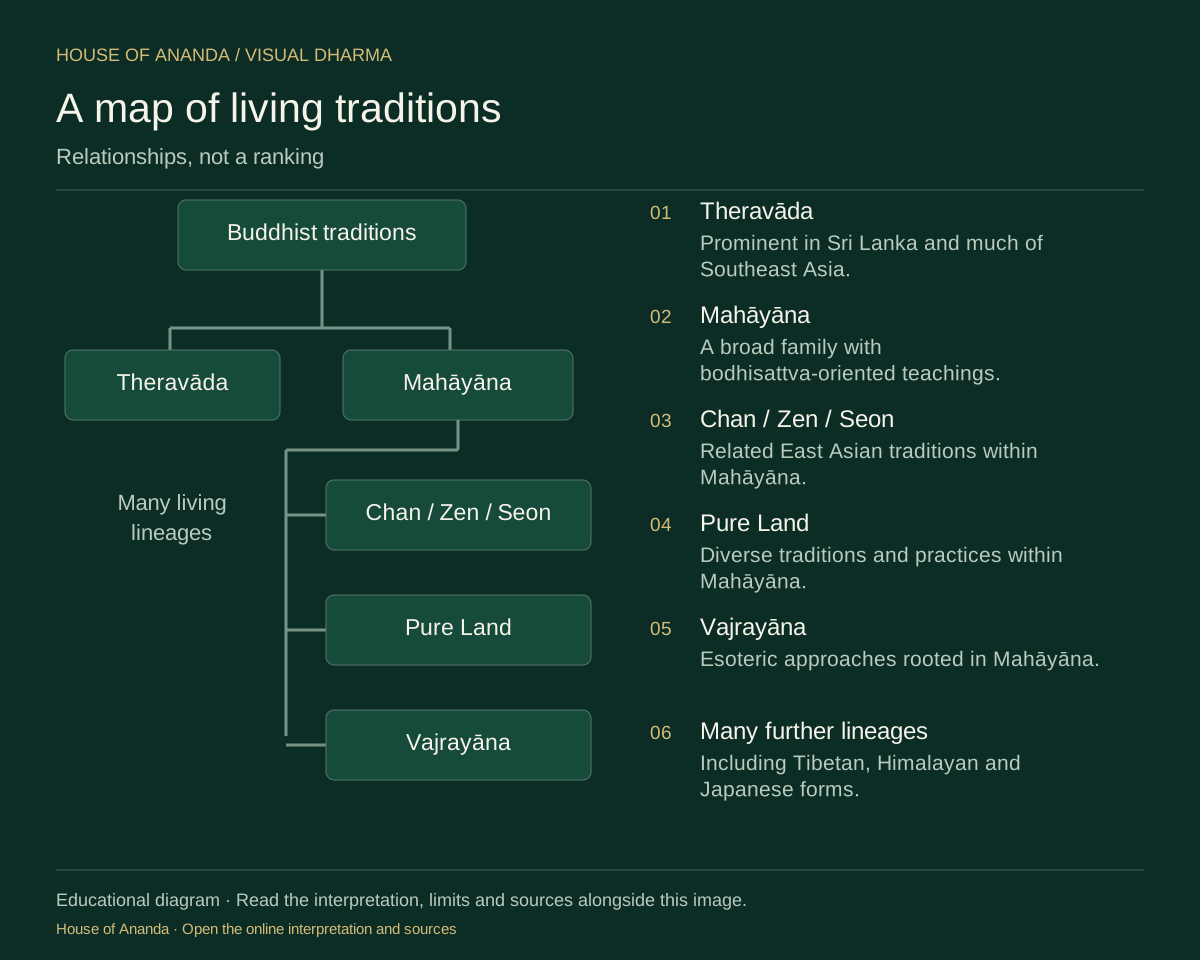
Relationships, not a ranking
A map of living traditions
A simplified orientation to large families and selected lineages.
Read the diagram & interpretation
- TheravādaProminent in Sri Lanka and much of Southeast Asia.
- MahāyānaA broad family with bodhisattva-oriented teachings.
- Chan / Zen / SeonRelated East Asian traditions within Mahāyāna.
- Pure LandDiverse traditions and practices within Mahāyāna.
- VajrayānaEsoteric approaches rooted in Mahāyāna.
- Many further lineagesIncluding Tibetan, Himalayan and Japanese forms.
Read the branches as broad relationships. Zen and Pure Land are not always separate memberships: practices can coexist. Vajrayāna is not a wholly independent third religion beside Mahāyāna; it develops within a Mahāyāna setting. Communities now live throughout the world.
Keep in mind This is a study map, not a complete historical family tree. Geographic associations are neither exclusive nor fixed.
Sources: Study Buddhism · Types of Buddhism ↗ · Stanford Encyclopedia of Philosophy · Japanese Zen ↗
Zazen
Zazen means seated meditation. Sōtō guidance attends to posture, eyes, breathing and how sitting begins and ends. Different schools teach seated practice differently. At a first visit, follow that community’s instructions instead of assembling techniques at random.
Kōans
Kōans are not simply riddles with clever answers. Where used formally, they belong to structured training. Reading a famous exchange can be thought-provoking without reproducing this training or establishing an attainment.
Comfortable participation
Discuss a chair or other supported position with the teacher. Do not force a lotus posture to look authentic. Ask about session length, walking intervals and etiquette. Learning how to adjust respectfully helps make practice sustainable.
Art & contemplation
Look, learn, reflect
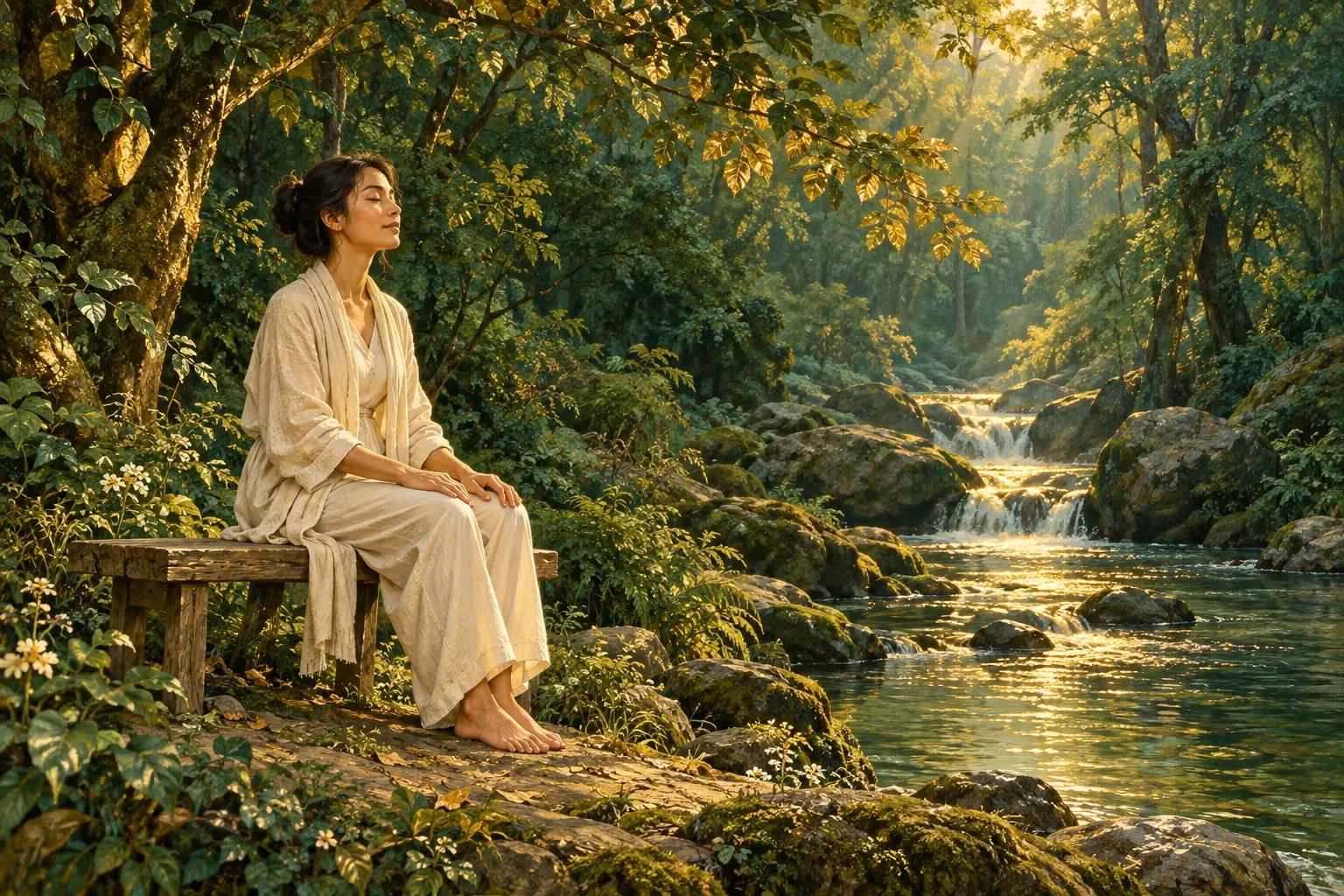
A place to return
A quiet bench evokes an accessible moment of attention. The setting is imagined and the person is not a named teacher. Meditation can also happen amid ordinary household sounds, without a remote retreat or a perfectly quiet mind.
A moment to reflectWhat is one manageable pause you can make in your day?
Follow this theme ↗A question to carry with you
Pause and reflect.
What changes when sitting becomes something to learn, rather than a state to perform?
Sources & further reading
Study notes and examples are original explanations. Follow the links for the source texts and their own contexts.