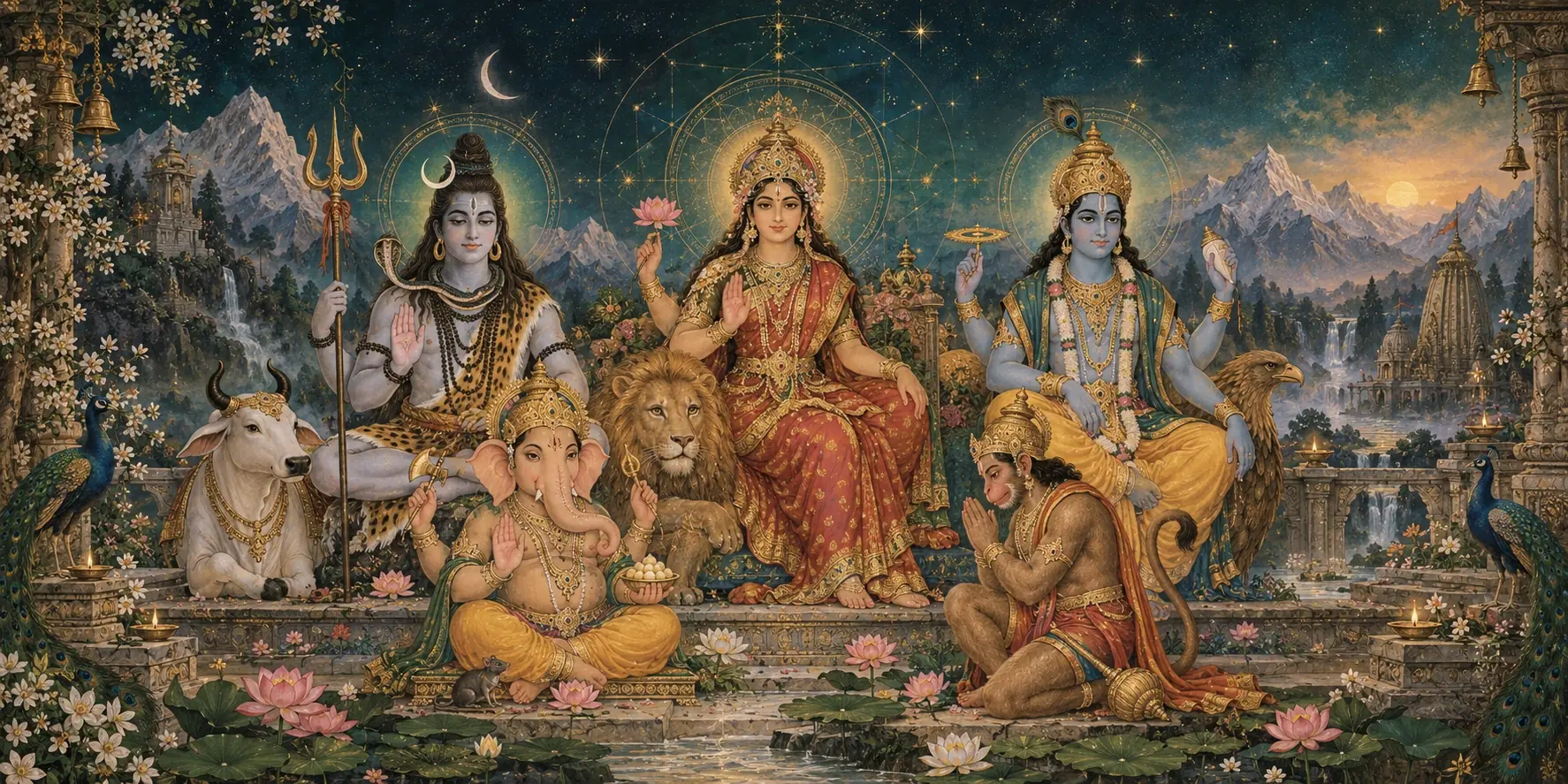
Meet major gods and goddesses through their symbols, relationships, textual traditions and many-layered stories—without pretending that Hinduism has one single pantheon or one final version.
“Hindu gods” is a useful doorway, but not a complete map. Hindu traditions include devotion to one supreme deity, many divine forms, the Goddess as ultimate reality, deities understood as manifestations of brahman, village and regional gods, philosophical non-dualism, and more.
Deva and devī can mean god and goddess; mūrti is a sacred embodied form through which worship may be offered—not simply an “idol”. A family relationship, symbol or story can change across texts, regions and lineages.
Search the divine library
Names, forms and stories.
शिव
Śaiva
Śiva
Transformation, asceticism, dance and gracious presence
Recognising the form
Trident, drum, crescent Moon, third eye, matted hair, liṅga
Vāhana or association
Nandi the bull
Texts and traditions
Śiva Purāṇa; Liṅga Purāṇa; Śvetāśvatara Upaniṣad; Tamil Tēvāram
A story to enter through
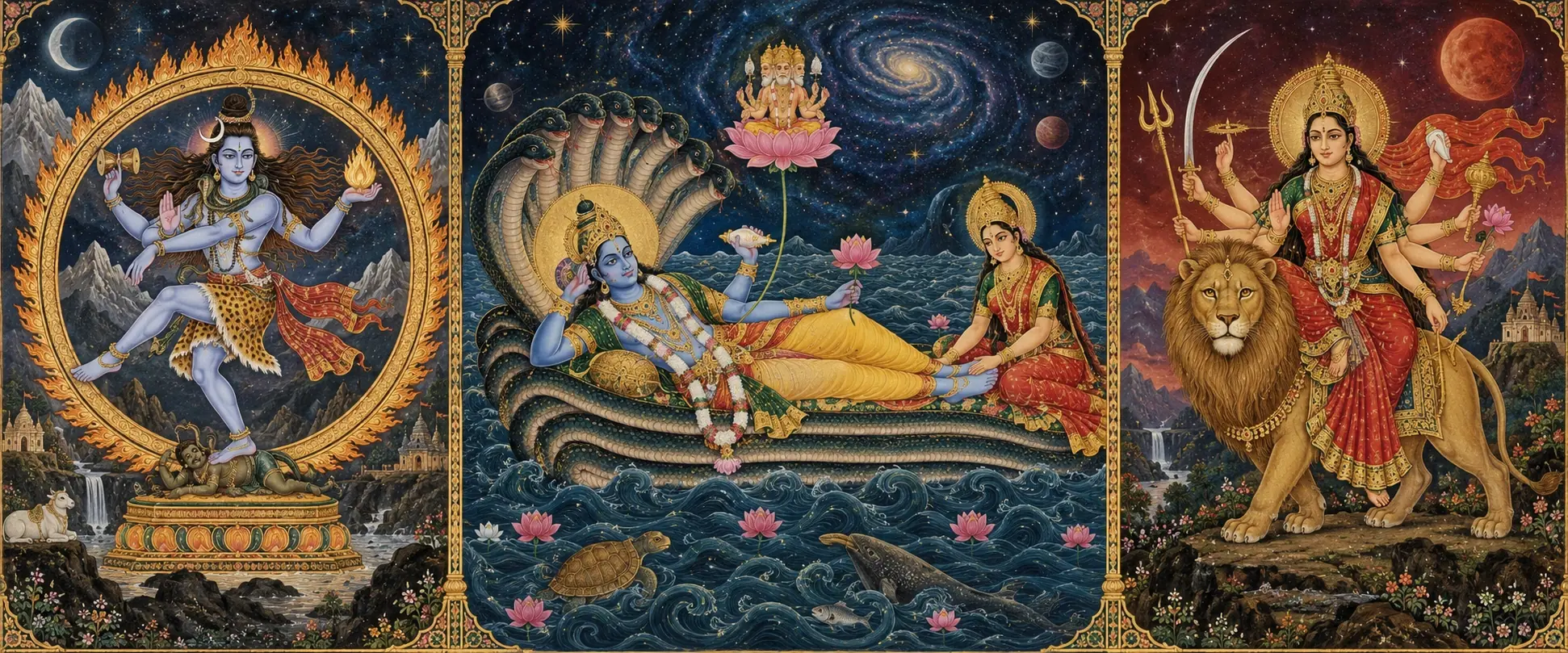
As Naṭarāja, Śiva’s dance gathers creation, preservation, dissolution, concealment and grace into one image. In another cycle, he receives the descending Gaṅgā in his hair so her force does not shatter the earth.
Three traditions, three visual worlds · contemporary House of Ananda editorial artwork, not a consecrated image.
Viṣṇu’s descents
The daśāvatāra is not one fixed list.
Ten-avatar lists became influential, but their order and membership vary. Some include the Buddha, some Balarāma, and different communities centre other manifestations.
01Matsya · fish
02Kūrma · tortoise
03Varāha · boar
04Narasiṃha · man-lion
05Vāmana · dwarf-brahmin
06Paraśurāma · axe-bearing Rāma
07Rāma · prince of Ayodhyā
08Kṛṣṇa · teacher and beloved
09Buddha or Balarāma · lists vary
10Kalki · future figure
Legends and sacred stories
Stories live in the retelling.
These are concise pathways into larger textual and performance traditions, not definitive versions.
01
The churning of the ocean
Devas and asuras cooperate and compete to churn the cosmic ocean. Poison appears before nectar; Śiva contains the poison, while treasures including Lakṣmī emerge. Purāṇic versions arrange the participants and meanings differently.
02
The descent of Gaṅgā
Bhagīratha seeks release for his ancestors. Gaṅgā agrees to descend, but her power requires Śiva to receive her. The story binds austerity, grace, water and sacred geography.
03
Durgā and Mahiṣāsura
When a shape-shifting adversary defeats the gods, their energies manifest as Durgā. The Devī Māhātmya presents her victory as the sovereignty of the Goddess, not merely assistance to male gods.
04
Hanumān finds Sītā
Crossing the sea through courage, intelligence and remembered strength, Hanumān finds Sītā in Laṅkā. He offers Rāma’s ring, receives her message and becomes an exemplar of service joined with discernment.
05
Kṛṣṇa lifts Govardhana
Kṛṣṇa asks his community to honour the mountain and their lived ecology. When Indra sends a storm, Kṛṣṇa shelters the people beneath Govardhana, reshaping the meaning of divine protection.
06
The birth of Gaṇeśa
The widely known Śiva–Pārvatī account is one among multiple birth stories. Reading variants side by side shows how Purāṇic storytelling works: narratives are retold to express theology, place and relationship.
Source path
Read text, image and practice.
Purāṇas, epics, hymns, temple traditions, vernacular poetry and performance do different work. Dates and authorship are often layered or debated.