Choose a guide for the full context, illustrations and Sanskrit–English tables. Guided practice and full-session spoken guidance are available for movement and contemplative sessions.
Existing complete guide
The Haṭha practice room: six classes, a searchable atlas and guided practice.
Open complete guide →Contemplative practice series
Develop attention alongside ethical reflection; posture is only one part of the eight-limbed framework.
Full guide, tables & review status →Contemplative practice series
Study, self-inquiry and discernment rather than physical achievement.
Full guide, tables & review status →Contemplative practice series
Connect meaningful devotion, short recitation and care for others.
Full guide, tables & review status →Contemplative practice series
Work with intention and attachment through modest acts of service.
Full guide, tables & review status →Contemplative practice series
Learn meaning, then alternate gentle repetition with silence.
Full guide, tables & review status →Contemplative practice series
Explore attention and listening as a gentle introduction to absorption-oriented study.
Full guide, tables & review status →Teacher-led lesson outlines
Learn the context and choose a responsible teacher before specialised Kuṇḍalinī methods.
Take these lesson outlines to a qualified teacher. They do not open as self-guided movements.
Full guide, tables & review status →Teacher-led lesson outlines
Approach tantric traditions as specific living lineages, not a generic exercise style.
Take these lesson outlines to a qualified teacher. They do not open as self-guided movements.
Full guide, tables & review status →Existing complete guide
The existing illustrated Haṭha practices.
Open complete guide →Existing complete guide
The complete existing Primary Series reference, with traditional sequencing and individual adaptations.
Open complete guide →Illustrated movement series
Link familiar movements with a comfortable breath; pause whenever transitions need extra time.
Full guide, tables & review status →Illustrated movement series
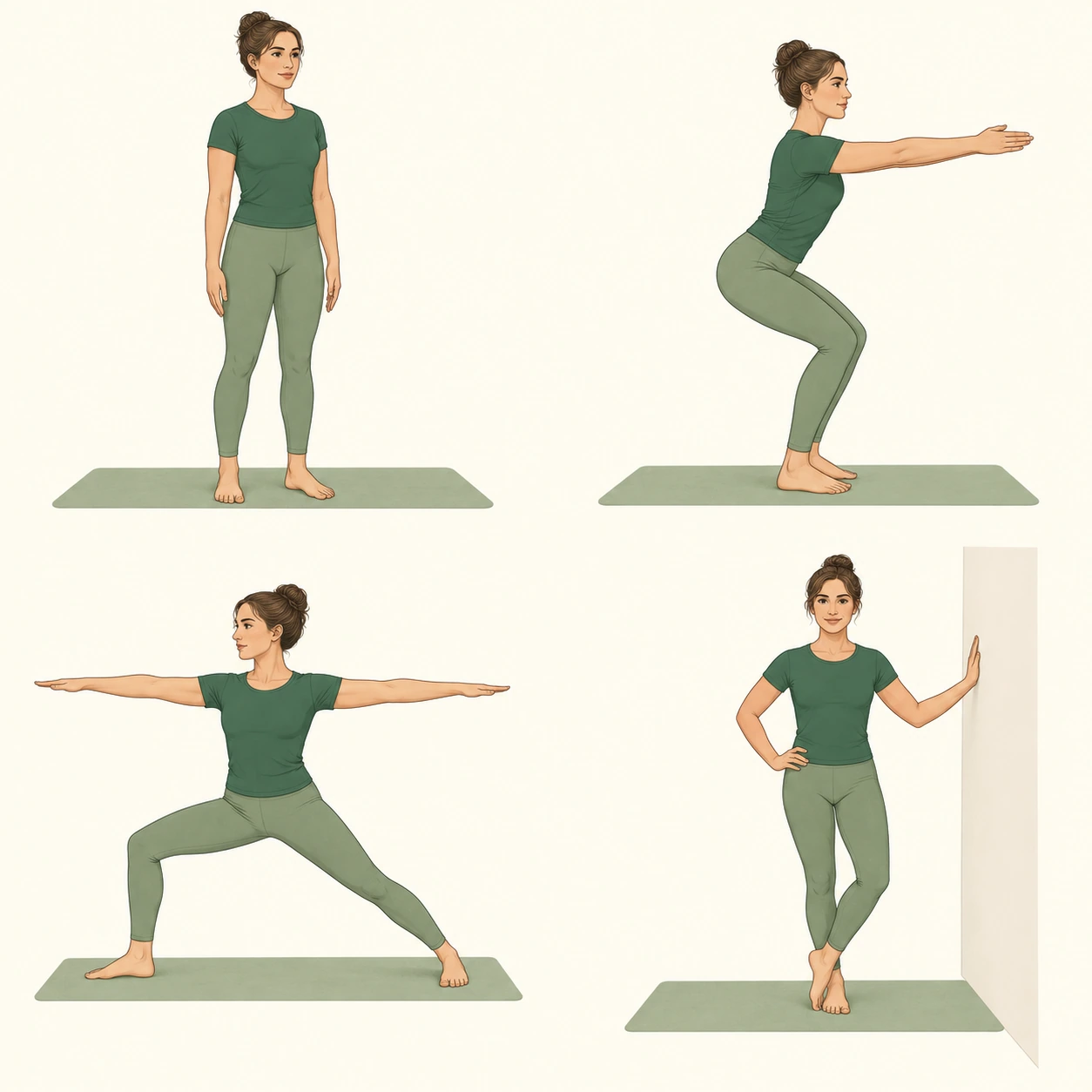
Study feet, support height and a manageable range before increasing complexity.
Full guide, tables & review status →Illustrated movement series
Balance posture, ordinary breathing, relaxation and contemplation.
Full guide, tables & review status →Illustrated movement series
Connect simple movement with breath awareness, rest and an intention of service.
Full guide, tables & review status →Illustrated movement series
Adapt each repetition to the person and the breath, not a predetermined shape.
Full guide, tables & review status →Illustrated movement series
Notice the effect of practice and revise the sequence with individual guidance.
Full guide, tables & review status →Illustrated movement series
Use compassionate awareness: notice sensation, choose a response and pause.
Full guide, tables & review status →Illustrated movement series
Explore supportive alignment alongside a freely chosen heart-centred intention.
Full guide, tables & review status →Illustrated movement series
Begin with non-harming as an intention; include study, optional mantra and a quiet finish.
Full guide, tables & review status →Illustrated movement series
Build deliberate effort with permission to rest and an easy neck.
Full guide, tables & review status →Illustrated movement series
Bring together basic posture, reflection and optional devotion.
Full guide, tables & review status →Illustrated movement series
Explore gravity and a smaller movement without chasing an ideal shape.
Full guide, tables & review status →Teacher-led lesson outlines
Learn the preparatory forms from a qualified Shadow Yoga teacher.
Take these lesson outlines to a qualified teacher. They do not open as self-guided movements.
Full guide, tables & review status →Illustrated movement series
Connect basic movement, ordinary breathing and guided-rest study.
Full guide, tables & review status →Illustrated movement series
Choose mild sensation and short exploratory stays; take neutral rest between forms.
Full guide, tables & review status →Illustrated movement series
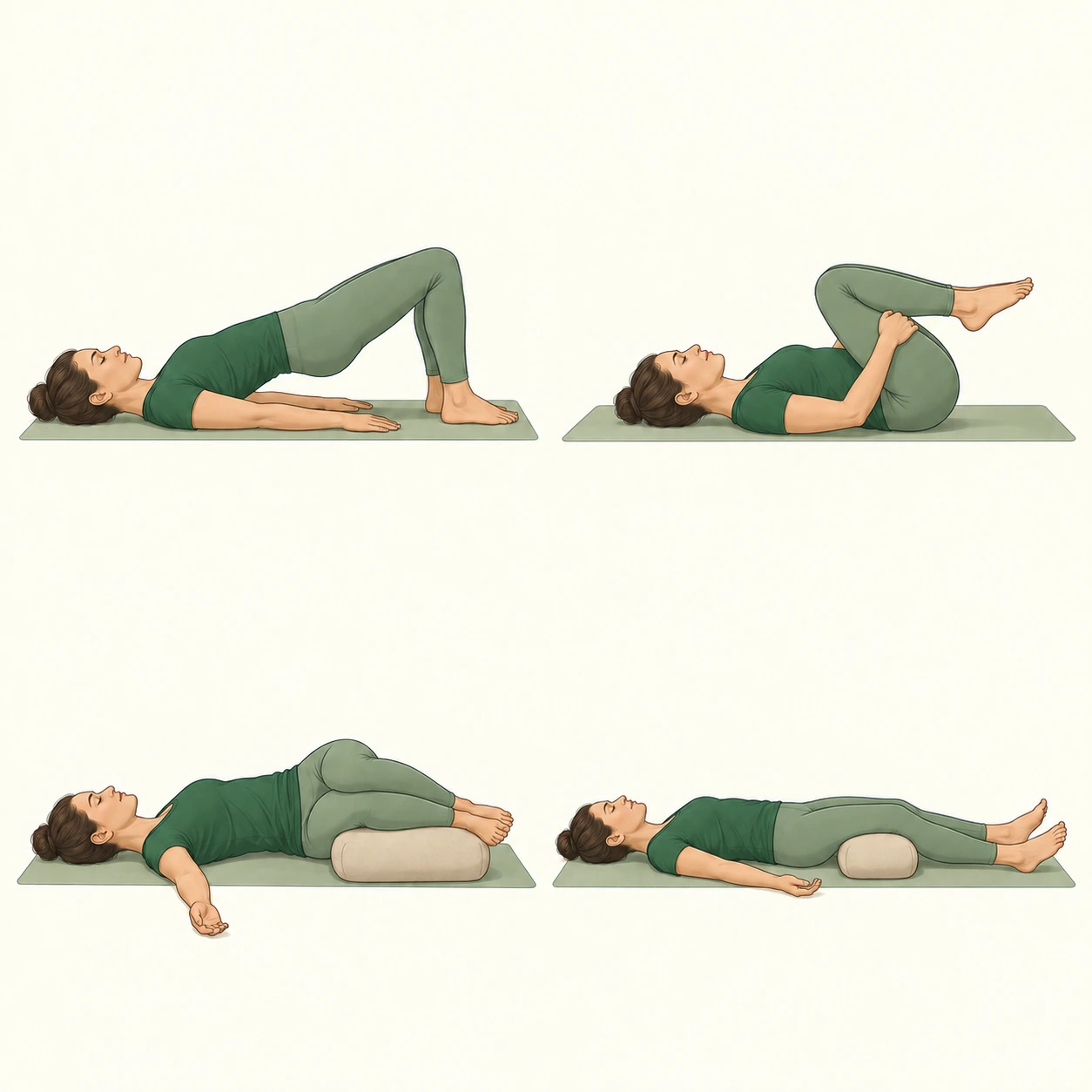
Use enough support that rest is the intention, rather than stretching.
Full guide, tables & review status →Illustrated movement series
Build strength through repeated manageable efforts, with rests instead of endurance contests.
Full guide, tables & review status →Teacher-led lesson outlines
Learn the movement pattern before considering a heated class.
Take these lesson outlines to a qualified teacher. They do not open as self-guided movements.
Full guide, tables & review status →Teacher-led lesson outlines
Understand the specific 26-posture and two-breathing format before joining a taught class.
Take these lesson outlines to a qualified teacher. They do not open as self-guided movements.
Full guide, tables & review status →Illustrated movement series
Give each transition time; extra breaths and pauses are part of the flow.
Full guide, tables & review status →Illustrated movement series
Keep effort modest and range comfortable; a chair option is a complete choice.
Full guide, tables & review status →Illustrated movement series
Repeat simple movements with control; dynamic does not mean hurried.
Full guide, tables & review status →Illustrated movement series
Explore practical alignment and support rather than a single ideal shape.
Full guide, tables & review status →Illustrated movement series
Combine active movement with quiet supported positions; keep their intentions distinct.
Full guide, tables & review status →Illustrated movement series
Explore felt experience in small movements; sensation is information, not a diagnosis.
Full guide, tables & review status →Illustrated movement series
Use the sequence as a menu: change, omit or repeat a comfortable option.
Full guide, tables & review status →Illustrated movement series
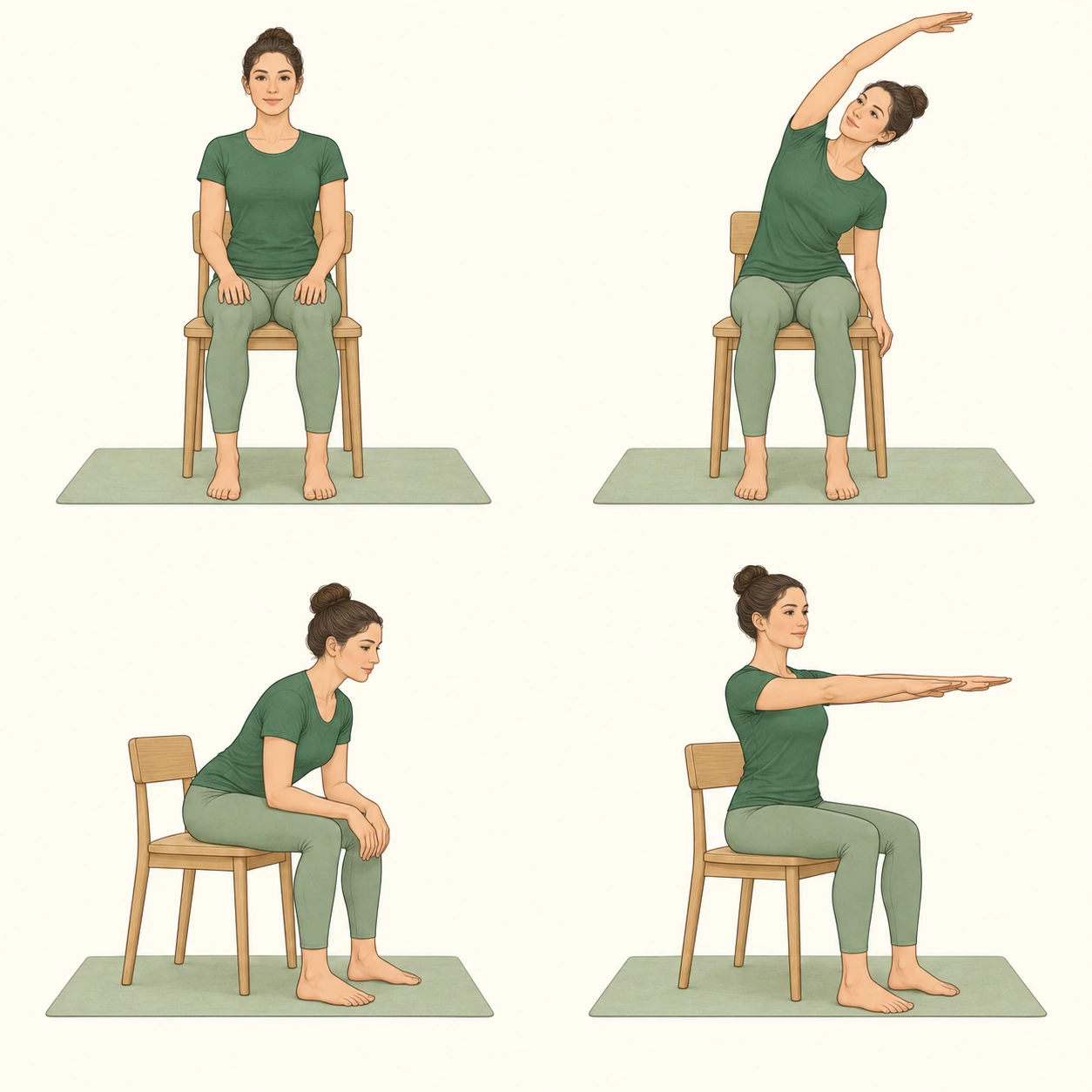
A genuinely seated series: no floor transfers or unsupported standing.
Full guide, tables & review status →Illustrated movement series
Choose supports that suit your access needs; an adaptive practice is individual.
Full guide, tables & review status →Teacher-led lesson outlines
Plan practice around the individual pregnancy with a qualified prenatal teacher and maternity clinician.
Take these lesson outlines to a qualified teacher. They do not open as self-guided movements.
Full guide, tables & review status →Teacher-led lesson outlines
Return to movement according to recovery, symptoms and individual clinical guidance.
Take these lesson outlines to a qualified teacher. They do not open as self-guided movements.
Full guide, tables & review status →Illustrated movement series
Offer short playful shapes with a responsible adult, no competition and no forced holds.
Full guide, tables & review status →Illustrated movement series
Offer autonomy, breaks and body-neutral language; there is no performance target.
Full guide, tables & review status →Illustrated movement series
Start with seated support and decide individually whether standing work is suitable.
Full guide, tables & review status →Illustrated movement series
Use invitations, predictable steps, open-eye options and the freedom to stop.
Full guide, tables & review status →Teacher-led lesson outlines
Work with an appropriately qualified yoga therapist on an individual plan.
Take these lesson outlines to a qualified teacher. They do not open as self-guided movements.
Full guide, tables & review status →Illustrated movement series
Complement sport with manageable mobility and rest rather than maximal stretching.
Full guide, tables & review status →Contemplative practice series
Explore guided-rest principles and body awareness.
Full guide, tables & review status →Contemplative practice series
Begin by observing breathing, then add small movements.
Full guide, tables & review status →Contemplative practice series
Return attention gently and let the posture remain adaptable.
Full guide, tables & review status →Contemplative practice series
Explore meaning, manageable repetition and optional mālā use.
Full guide, tables & review status →Contemplative practice series
Use sound and listening as contemplative anchors.
Full guide, tables & review status →Contemplative practice series
Use short call-and-response or listening within a meaningful devotional context.
Full guide, tables & review status →Contemplative practice series
Begin with a soft visual anchor and comfortable blinking.
Full guide, tables & review status →Teacher-led lesson outlines
Learn equipment use with a trained aerial teacher and inspected rigging.
Take these lesson outlines to a qualified teacher. They do not open as self-guided movements.
Full guide, tables & review status →Teacher-led lesson outlines
Build consent, communication and trained spotting before acrobatic work.
Take these lesson outlines to a qualified teacher. They do not open as self-guided movements.
Full guide, tables & review status →Illustrated movement series
Practise side by side with another person, each supporting their own body.
Full guide, tables & review status →Teacher-led lesson outlines
Treat water safety and board competence as prerequisites.
Take these lesson outlines to a qualified teacher. They do not open as self-guided movements.
Full guide, tables & review status →Teacher-led lesson outlines
Use a supervised suitable pool and an instructor trained for water-based practice.
Take these lesson outlines to a qualified teacher. They do not open as self-guided movements.
Full guide, tables & review status →Illustrated movement series
Combine small controlled movements and breath awareness.
Full guide, tables & review status →Illustrated movement series
Use bodyweight resistance and rest before introducing external weights.
Full guide, tables & review status →Illustrated movement series
Use gentle rhythm and grounded movement without jumps.
Full guide, tables & review status →Contemplative practice series
Make space for play without demanding a particular emotion.
Full guide, tables & review status →