 House of AnandaMovement · Stillness · Wisdom · Journey
Practice library / Meditation, breath & contemplation
Contemplative practice series
Nāda Yoga
Contemplation of sound, including inner listening.
Use sound and listening as contemplative anchors.
Before you follow a sequence
The imagery is contextual, not a map of subtle sound. This is not hearing therapy or a promise of mystical experiences.
These are introductory House of Ananda sequences, not a prescribed traditional syllabus. Some foundational sequences are shared across related styles; the emphasis and boundaries above explain how to approach them. Repeat the first session before adding variety. The three sessions are separate practices, not one long workout.
Have a stable chair without wheels, a wall, a mat and cushions or blocks available. Only attempt floor transfers and standing work that are already comfortable. Use a chair alternative or individual instruction when a sequence does not match your access needs.
Time blocks include setup, short repetitions, both sides, transitions and rest. They are not continuous hold times. One breath is a full inhale–exhale cycle; pause or take extra breaths whenever needed. Never force a breath, hold, stretch or emotional response.
Stop for pain, dizziness or feeling unwell. Seek individual advice for pregnancy, recent surgery, injury or medical concerns. Yoga does not replace medical care. NCCIH safety guidance.
For modern descriptive movements, “no established Sanskrit name” is intentional. Sanskrit terms for reflection, repetition and service describe practices, not bodily movements.
Nāda Yoga · Session 1 · about 16 minutes
Listen without searching
Notice ordinary sound; no claim about subtle energy is required.
Guided practice & spoken session →Read left to right, then down. Complete both sides where marked; the image shows one representative side. Select any numbered panel for its full table instructions.
- 13 min block
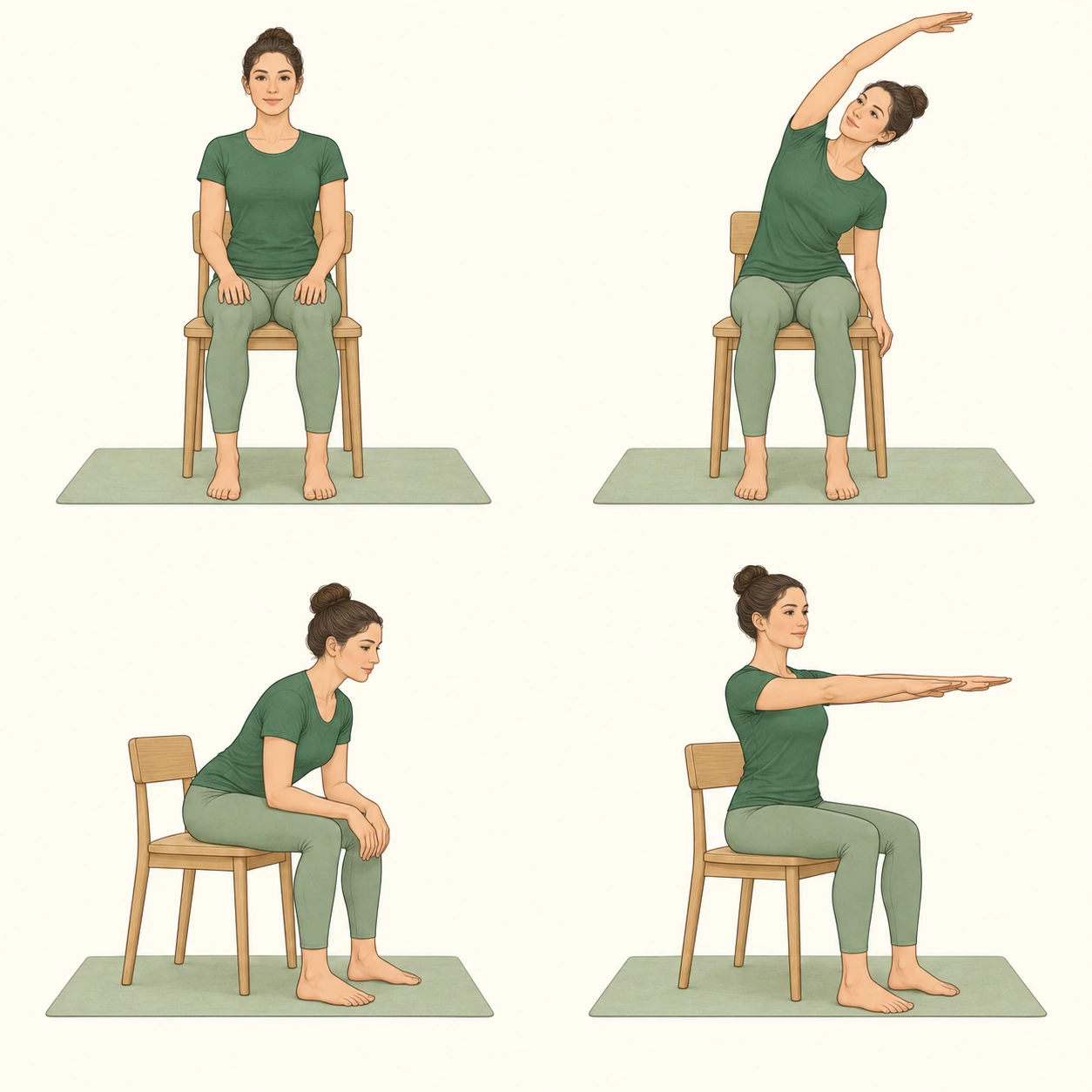
Supported chair seat
No established Sanskrit name
Natural breathing.
- 24 min block
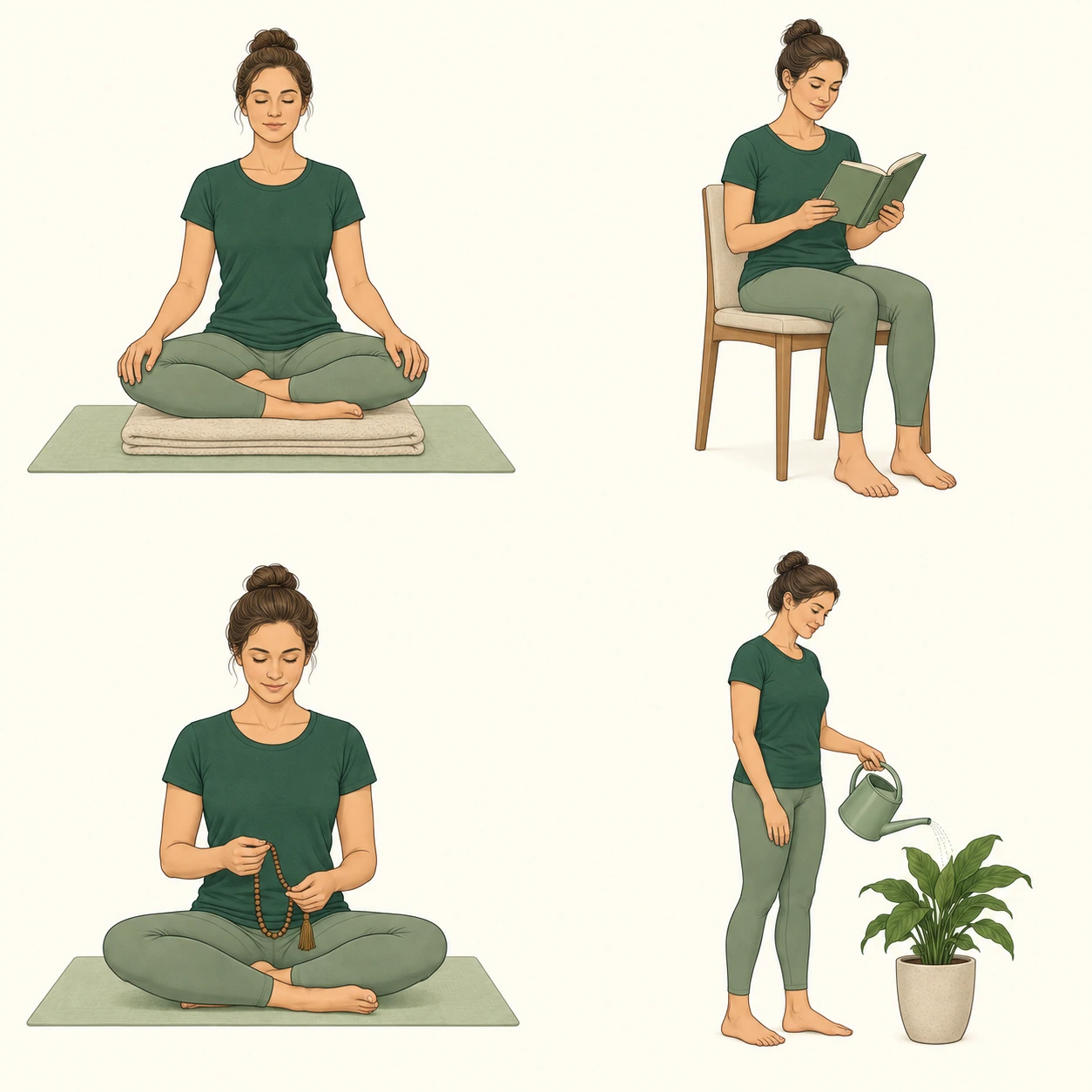
Comfortable meditation seat
Sukhāsana
Let breathing remain natural.
- 32 min block
Supported chair seat
No established Sanskrit name
Natural breathing.
- 45 min block
Comfortable meditation seat
Sukhāsana
Let breathing remain natural.
- 52 min block
Study and reflection
Svādhyāya
Unforced breathing; no synchronisation needed.
Original AI illustrations; exact labels, sequence and breath cues are provided as selectable text. Pictures show a moment, not the entire transition. Use the instructions below and your teacher’s adaptations.
On a small screen, scroll the table sideways to read the full instructions and alternatives.
| Step / time | English / Sanskrit / meaning | Breath / sides | Complete instructions | Alternative / boundary |
|---|---|---|---|---|
| 13 min | Supported chair seatNo established Sanskrit nameModern descriptive name; no single established Sanskrit equivalent | Natural breathing.No required right / left sequence. | Arrange your supports and choose a comfortable starting position before beginning. Use a stable chair without wheels, feet on the floor or blocks. Rest hands on thighs. Notice contact with the seat and the room. Adjust whenever needed. | Use back support and a comfortable footrest; do not force an upright position. |
| 24 min | Comfortable meditation seatSukhāsanaComfortable / easy posture | Let breathing remain natural.No required right / left sequence. | Use a comfortable, familiar floor transfer with stable support. Begin from a seat on the mat; remain in the chair if a floor transfer is unsuitable. Sit on a cushion or chair. Choose eyes open or closed. Notice one ordinary breath at a time; when attention wanders, return gently. Shift or stop if uncomfortable. Use surrounding sounds as the anchor. Do not strain to hear internal sounds. | Sit with back support or rest on your side; meditation need not require sitting on the floor. |
| 32 min | Supported chair seatNo established Sanskrit nameModern descriptive name; no single established Sanskrit equivalent | Natural breathing.No required right / left sequence. | Roll to a side if lying down, use your hands to sit up and transfer to a stable chair slowly if required. Use a stable chair without wheels, feet on the floor or blocks. Rest hands on thighs. Notice contact with the seat and the room. Adjust whenever needed. | Use back support and a comfortable footrest; do not force an upright position. |
| 45 min | Comfortable meditation seatSukhāsanaComfortable / easy posture | Let breathing remain natural.No required right / left sequence. | Use a comfortable, familiar floor transfer with stable support. Begin from a seat on the mat; remain in the chair if a floor transfer is unsuitable. Sit on a cushion or chair. Choose eyes open or closed. Notice one ordinary breath at a time; when attention wanders, return gently. Shift or stop if uncomfortable. Notice sounds beginning and ending; hearing protection remains appropriate in loud places. | Sit with back support or rest on your side; meditation need not require sitting on the floor. |
| 52 min | Study and reflectionSvādhyāyaSelf-study / study of teachings | Unforced breathing; no synchronisation needed.No required right / left sequence. | Roll to a side if lying down, use your hands to sit up and transfer to a stable chair slowly if required. Read a short passage from the linked study resource. Pause and write one question and one practical observation. Do not try to settle every philosophical question in one session. | Listen to a passage or reflect on a short sentence instead. |
Finish or rest early whenever you need. Back to this series.
Nāda Yoga · Session 2 · about 18 minutes
Sound and silence
Leave quiet space between short groups of repetitions.
Guided practice & spoken session →Read left to right, then down. Complete both sides where marked; the image shows one representative side. Select any numbered panel for its full table instructions.
- 12 min block
Supported chair seat
No established Sanskrit name
Natural breathing.
- 24 min block
Gentle mantra repetition
Japa
Repeat on a comfortable exhale; breathe normally between phrases.
- 32 min block
Comfortable meditation seat
Sukhāsana
Let breathing remain natural.
- 44 min block
Gentle mantra repetition
Japa
Repeat on a comfortable exhale; breathe normally between phrases.
- 54 min block
Comfortable meditation seat
Sukhāsana
Let breathing remain natural.
- 62 min block
Supported chair seat
No established Sanskrit name
Natural breathing.
Original AI illustrations; exact labels, sequence and breath cues are provided as selectable text. Pictures show a moment, not the entire transition. Use the instructions below and your teacher’s adaptations.
On a small screen, scroll the table sideways to read the full instructions and alternatives.
| Step / time | English / Sanskrit / meaning | Breath / sides | Complete instructions | Alternative / boundary |
|---|---|---|---|---|
| 12 min | Supported chair seatNo established Sanskrit nameModern descriptive name; no single established Sanskrit equivalent | Natural breathing.No required right / left sequence. | Arrange your supports and choose a comfortable starting position before beginning. Use a stable chair without wheels, feet on the floor or blocks. Rest hands on thighs. Notice contact with the seat and the room. Adjust whenever needed. | Use back support and a comfortable footrest; do not force an upright position. |
| 24 min | Gentle mantra repetitionJapaRepetition / recitation | Repeat on a comfortable exhale; breathe normally between phrases.No required right / left sequence. | Use a comfortable, familiar floor transfer with stable support. Begin from a seat on the mat; remain in the chair if a floor transfer is unsuitable. Use a mantra already meaningful to you, or quietly repeat “Oṃ” if appropriate to your practice. Use a few repetitions, optionally moving one mālā bead per phrase. Pause in silence. | Listen or repeat mentally; no requirement to finish 108 repetitions or prolong the breath. |
| 32 min | Comfortable meditation seatSukhāsanaComfortable / easy posture | Let breathing remain natural.No required right / left sequence. | Release the previous position. Pause in a comfortable neutral position and arrange any support before continuing. Sit on a cushion or chair. Choose eyes open or closed. Notice one ordinary breath at a time; when attention wanders, return gently. Shift or stop if uncomfortable. | Sit with back support or rest on your side; meditation need not require sitting on the floor. |
| 44 min | Gentle mantra repetitionJapaRepetition / recitation | Repeat on a comfortable exhale; breathe normally between phrases.No required right / left sequence. | Release the previous position. Pause in a comfortable neutral position and arrange any support before continuing. Use a mantra already meaningful to you, or quietly repeat “Oṃ” if appropriate to your practice. Use a few repetitions, optionally moving one mālā bead per phrase. Pause in silence. | Listen or repeat mentally; no requirement to finish 108 repetitions or prolong the breath. |
| 54 min | Comfortable meditation seatSukhāsanaComfortable / easy posture | Let breathing remain natural.No required right / left sequence. | Release the previous position. Pause in a comfortable neutral position and arrange any support before continuing. Sit on a cushion or chair. Choose eyes open or closed. Notice one ordinary breath at a time; when attention wanders, return gently. Shift or stop if uncomfortable. | Sit with back support or rest on your side; meditation need not require sitting on the floor. |
| 62 min | Supported chair seatNo established Sanskrit nameModern descriptive name; no single established Sanskrit equivalent | Natural breathing.No required right / left sequence. | Roll to a side if lying down, use your hands to sit up and transfer to a stable chair slowly if required. Use a stable chair without wheels, feet on the floor or blocks. Rest hands on thighs. Notice contact with the seat and the room. Adjust whenever needed. | Use back support and a comfortable footrest; do not force an upright position. |
Finish or rest early whenever you need. Back to this series.
Nāda Yoga · Session 3 · about 20 minutes
Make space for distraction
Notice wandering without treating it as failure.
Guided practice & spoken session →Read left to right, then down. Complete both sides where marked; the image shows one representative side. Select any numbered panel for its full table instructions.
- 13 min block
Supported chair seat
No established Sanskrit name
Natural breathing.
- 27 min block
Comfortable meditation seat
Sukhāsana
Let breathing remain natural.
- 32 min block
Supported chair seat
No established Sanskrit name
Natural breathing.
- 45 min block
Comfortable meditation seat
Sukhāsana
Let breathing remain natural.
- 53 min block
Study and reflection
Svādhyāya
Unforced breathing; no synchronisation needed.
Original AI illustrations; exact labels, sequence and breath cues are provided as selectable text. Pictures show a moment, not the entire transition. Use the instructions below and your teacher’s adaptations.
On a small screen, scroll the table sideways to read the full instructions and alternatives.
| Step / time | English / Sanskrit / meaning | Breath / sides | Complete instructions | Alternative / boundary |
|---|---|---|---|---|
| 13 min | Supported chair seatNo established Sanskrit nameModern descriptive name; no single established Sanskrit equivalent | Natural breathing.No required right / left sequence. | Arrange your supports and choose a comfortable starting position before beginning. Use a stable chair without wheels, feet on the floor or blocks. Rest hands on thighs. Notice contact with the seat and the room. Adjust whenever needed. | Use back support and a comfortable footrest; do not force an upright position. |
| 27 min | Comfortable meditation seatSukhāsanaComfortable / easy posture | Let breathing remain natural.No required right / left sequence. | Use a comfortable, familiar floor transfer with stable support. Begin from a seat on the mat; remain in the chair if a floor transfer is unsuitable. Sit on a cushion or chair. Choose eyes open or closed. Notice one ordinary breath at a time; when attention wanders, return gently. Shift or stop if uncomfortable. | Sit with back support or rest on your side; meditation need not require sitting on the floor. |
| 32 min | Supported chair seatNo established Sanskrit nameModern descriptive name; no single established Sanskrit equivalent | Natural breathing.No required right / left sequence. | Roll to a side if lying down, use your hands to sit up and transfer to a stable chair slowly if required. Use a stable chair without wheels, feet on the floor or blocks. Rest hands on thighs. Notice contact with the seat and the room. Adjust whenever needed. | Use back support and a comfortable footrest; do not force an upright position. |
| 45 min | Comfortable meditation seatSukhāsanaComfortable / easy posture | Let breathing remain natural.No required right / left sequence. | Use a comfortable, familiar floor transfer with stable support. Begin from a seat on the mat; remain in the chair if a floor transfer is unsuitable. Sit on a cushion or chair. Choose eyes open or closed. Notice one ordinary breath at a time; when attention wanders, return gently. Shift or stop if uncomfortable. | Sit with back support or rest on your side; meditation need not require sitting on the floor. |
| 53 min | Study and reflectionSvādhyāyaSelf-study / study of teachings | Unforced breathing; no synchronisation needed.No required right / left sequence. | Roll to a side if lying down, use your hands to sit up and transfer to a stable chair slowly if required. Read a short passage from the linked study resource. Pause and write one question and one practical observation. Do not try to settle every philosophical question in one session. | Listen to a passage or reflect on a short sentence instead. |
Finish or rest early whenever you need. Back to this series.