 House of AnandaMovement · Stillness · Wisdom · Journey
Practice library / Adapted & specialist approaches
Illustrated movement series
Accessible / Adaptive Yoga
Adjusts practices for different bodies, abilities and access needs.
Choose supports that suit your access needs; an adaptive practice is individual.
Before you follow a sequence
These seated starting points cannot cover every disability or access need. Arrange an individual adaptation when the movements or instructions do not fit you.
These are introductory House of Ananda sequences, not a prescribed traditional syllabus. Some foundational sequences are shared across related styles; the emphasis and boundaries above explain how to approach them. Repeat the first session before adding variety. The three sessions are separate practices, not one long workout.
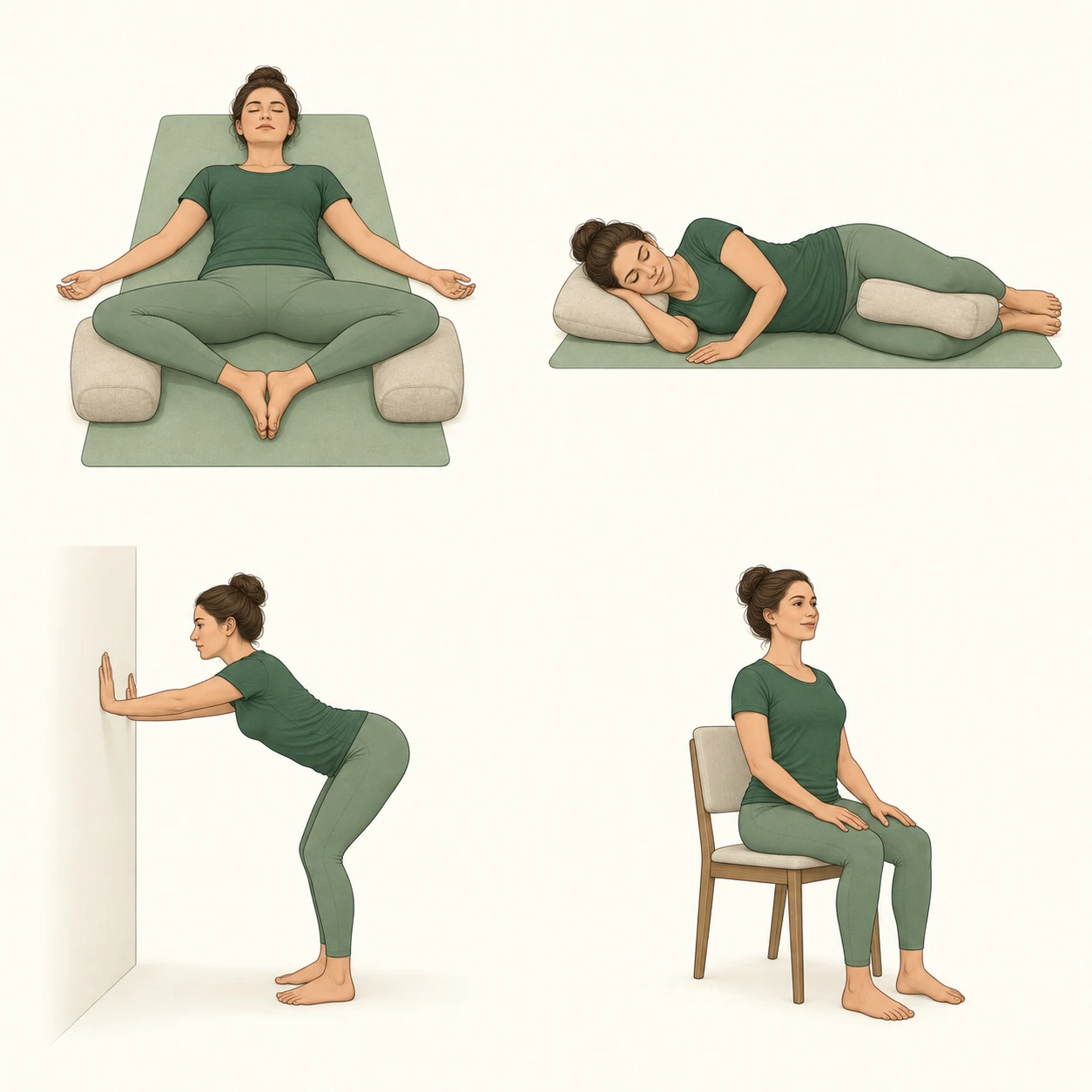
Have a stable chair without wheels, a wall, a mat and cushions or blocks available. Only attempt floor transfers and standing work that are already comfortable. Use a chair alternative or individual instruction when a sequence does not match your access needs.
Time blocks include setup, short repetitions, both sides, transitions and rest. They are not continuous hold times. One breath is a full inhale–exhale cycle; pause or take extra breaths whenever needed. Never force a breath, hold, stretch or emotional response.
Stop for pain, dizziness or feeling unwell. Seek individual advice for pregnancy, recent surgery, injury or medical concerns. Yoga does not replace medical care. NCCIH safety guidance.
For modern descriptive movements, “no established Sanskrit name” is intentional. Sanskrit terms for reflection, repetition and service describe practices, not bodily movements.
Accessible / Adaptive Yoga · Session 1 · about 20 minutes
A complete chair practice
Stay seated throughout; use a stable chair and supported feet.
Guided practice & spoken session →Read left to right, then down. Complete both sides where marked; the image shows one representative side. Select any numbered panel for its full table instructions.
- 12 min block
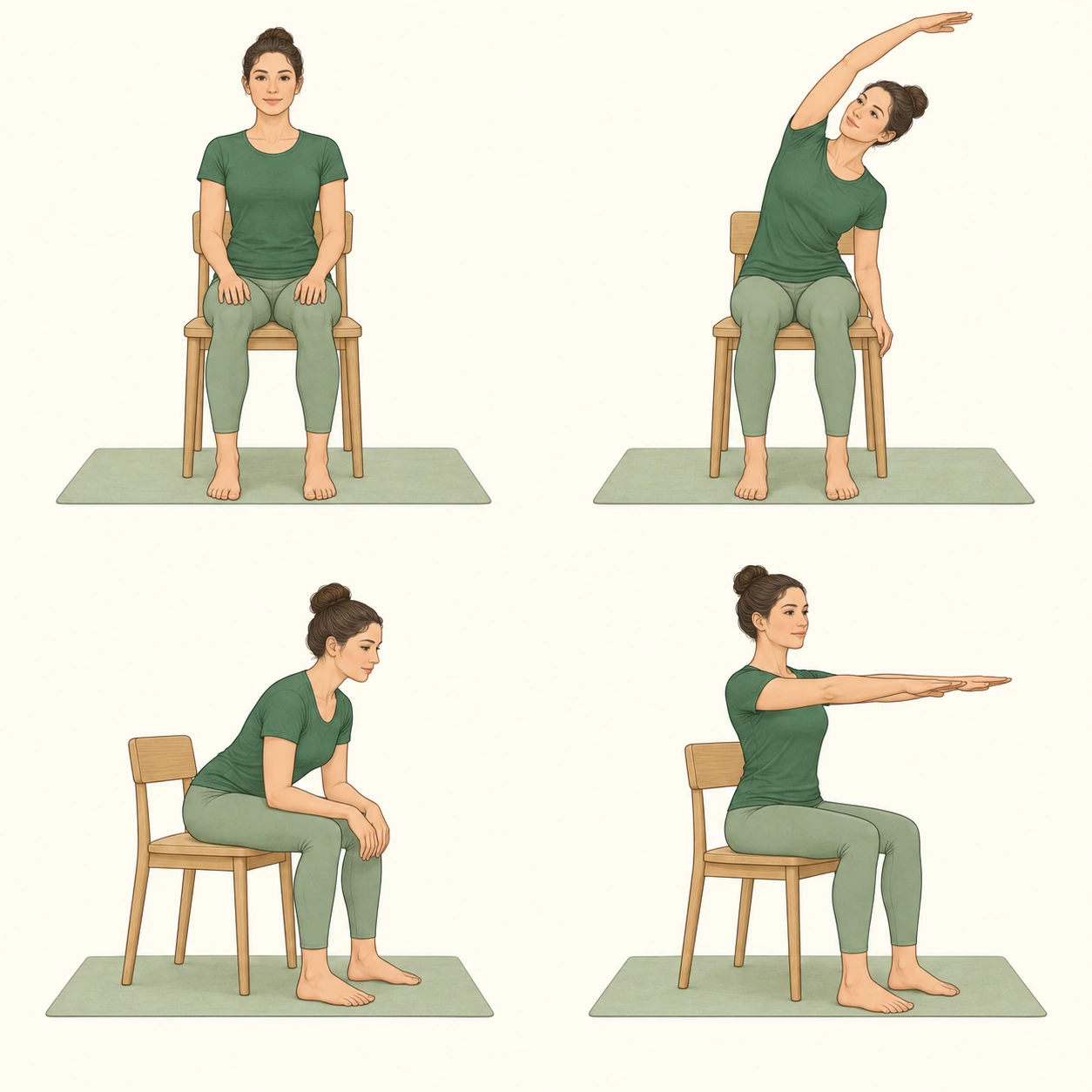
Supported chair seat
No established Sanskrit name
Natural breathing.
- 23 min block
Seated arm reach
No established Sanskrit name
Inhale to reach; exhale to lower.
- 33 min block
Seated chest opening
No established Sanskrit name
Inhale to broaden gently; exhale to release.
- 44 min block
Seated side bend
No established Sanskrit name
Both sides · equal comfortable timeInhale to lengthen; exhale to bend a little.
- 53 min block
Seated forward hinge
No established Sanskrit name
Exhale to hinge; inhale to return.
- 65 min block
Supported chair seat
No established Sanskrit name
Natural breathing.
Original AI illustrations; exact labels, sequence and breath cues are provided as selectable text. Pictures show a moment, not the entire transition. Use the instructions below and your teacher’s adaptations.
On a small screen, scroll the table sideways to read the full instructions and alternatives.
| Step / time | English / Sanskrit / meaning | Breath / sides | Complete instructions | Alternative / boundary |
|---|---|---|---|---|
| 12 min | Supported chair seatNo established Sanskrit nameModern descriptive name; no single established Sanskrit equivalent | Natural breathing.No required right / left sequence. | Arrange your supports and choose a comfortable starting position before beginning. Use a stable chair without wheels, feet on the floor or blocks. Rest hands on thighs. Notice contact with the seat and the room. Adjust whenever needed. | Use back support and a comfortable footrest; do not force an upright position. |
| 23 min | Seated arm reachNo established Sanskrit nameModern descriptive movement | Inhale to reach; exhale to lower.No required right / left sequence. | Release the previous position. Pause in a comfortable neutral position and arrange any support before continuing. Sit supported. Reach arms forward no higher than comfortable shoulder height, then lower slowly. Repeat 4–6 times without lifting the shoulders towards the ears. | Move one arm at a time or keep hands in the lap. |
| 33 min | Seated chest openingNo established Sanskrit nameModern descriptive movement | Inhale to broaden gently; exhale to release.No required right / left sequence. | Release the previous position. Pause in a comfortable neutral position and arrange any support before continuing. Sit with feet supported and hands on thighs. Gently broaden across the collarbones without throwing the head back. Release and repeat 4 times. | Remain neutral and soften unnecessary shoulder effort. |
| 44 min | Seated side bendNo established Sanskrit nameModern descriptive movement | Inhale to lengthen; exhale to bend a little.Right, then left; divide the block equally. For balances, change the standing leg. | Release the previous position. Pause in a comfortable neutral position and arrange any support before continuing. Keep both sitting bones supported. Hold the chair with one hand and reach the other arm as comfortable. Lean a little to the side for 1–2 breaths, return and change sides. Repeat twice. | Keep both hands on thighs and make a smaller side shift. |
| 53 min | Seated forward hingeNo established Sanskrit nameModern descriptive movement | Exhale to hinge; inhale to return.No required right / left sequence. | Release the previous position. Pause in a comfortable neutral position and arrange any support before continuing. With feet grounded, move slightly forward from the hips and rest forearms on thighs. Keep the neck relaxed. Return after 2 breaths. Repeat 3 times with pauses. | Stay upright and simply notice the movement of the breath. |
| 65 min | Supported chair seatNo established Sanskrit nameModern descriptive name; no single established Sanskrit equivalent | Natural breathing.No required right / left sequence. | Release the previous position. Pause in a comfortable neutral position and arrange any support before continuing. Use a stable chair without wheels, feet on the floor or blocks. Rest hands on thighs. Notice contact with the seat and the room. Adjust whenever needed. | Use back support and a comfortable footrest; do not force an upright position. |
Finish or rest early whenever you need. Back to this series.
Accessible / Adaptive Yoga · Session 2 · about 18 minutes
Choose and notice
Every invitation includes permission to remain still.
Guided practice & spoken session →Read left to right, then down. Complete both sides where marked; the image shows one representative side. Select any numbered panel for its full table instructions.
- 13 min block
Supported chair seat
No established Sanskrit name
Natural breathing.
- 23 min block
Seated arm reach
No established Sanskrit name
Inhale to reach; exhale to lower.
- 34 min block
Seated side bend
No established Sanskrit name
Both sides · equal comfortable timeInhale to lengthen; exhale to bend a little.
- 43 min block
Seated chest opening
No established Sanskrit name
Inhale to broaden gently; exhale to release.
- 55 min block
Supported chair seat
No established Sanskrit name
Natural breathing.
Original AI illustrations; exact labels, sequence and breath cues are provided as selectable text. Pictures show a moment, not the entire transition. Use the instructions below and your teacher’s adaptations.
On a small screen, scroll the table sideways to read the full instructions and alternatives.
| Step / time | English / Sanskrit / meaning | Breath / sides | Complete instructions | Alternative / boundary |
|---|---|---|---|---|
| 13 min | Supported chair seatNo established Sanskrit nameModern descriptive name; no single established Sanskrit equivalent | Natural breathing.No required right / left sequence. | Arrange your supports and choose a comfortable starting position before beginning. Use a stable chair without wheels, feet on the floor or blocks. Rest hands on thighs. Notice contact with the seat and the room. Adjust whenever needed. | Use back support and a comfortable footrest; do not force an upright position. |
| 23 min | Seated arm reachNo established Sanskrit nameModern descriptive movement | Inhale to reach; exhale to lower.No required right / left sequence. | Release the previous position. Pause in a comfortable neutral position and arrange any support before continuing. Sit supported. Reach arms forward no higher than comfortable shoulder height, then lower slowly. Repeat 4–6 times without lifting the shoulders towards the ears. You might move, imagine the movement, or remain still. | Move one arm at a time or keep hands in the lap. |
| 34 min | Seated side bendNo established Sanskrit nameModern descriptive movement | Inhale to lengthen; exhale to bend a little.Right, then left; divide the block equally. For balances, change the standing leg. | Release the previous position. Pause in a comfortable neutral position and arrange any support before continuing. Keep both sitting bones supported. Hold the chair with one hand and reach the other arm as comfortable. Lean a little to the side for 1–2 breaths, return and change sides. Repeat twice. Choose either side first and spend equal comfortable time. | Keep both hands on thighs and make a smaller side shift. |
| 43 min | Seated chest openingNo established Sanskrit nameModern descriptive movement | Inhale to broaden gently; exhale to release.No required right / left sequence. | Release the previous position. Pause in a comfortable neutral position and arrange any support before continuing. Sit with feet supported and hands on thighs. Gently broaden across the collarbones without throwing the head back. Release and repeat 4 times. Eyes may remain open and attention may stay with the room. | Remain neutral and soften unnecessary shoulder effort. |
| 55 min | Supported chair seatNo established Sanskrit nameModern descriptive name; no single established Sanskrit equivalent | Natural breathing.No required right / left sequence. | Release the previous position. Pause in a comfortable neutral position and arrange any support before continuing. Use a stable chair without wheels, feet on the floor or blocks. Rest hands on thighs. Notice contact with the seat and the room. Adjust whenever needed. | Use back support and a comfortable footrest; do not force an upright position. |
Finish or rest early whenever you need. Back to this series.
Accessible / Adaptive Yoga · Session 3 · about 25 minutes
A slower seated sequence
Repeat without increasing range; finish with quiet observation.
Guided practice & spoken session →Read left to right, then down. Complete both sides where marked; the image shows one representative side. Select any numbered panel for its full table instructions.
- 13 min block
Supported chair seat
No established Sanskrit name
Natural breathing.
- 24 min block
Seated arm reach
No established Sanskrit name
Inhale to reach; exhale to lower.
- 34 min block
Seated side bend
No established Sanskrit name
Both sides · equal comfortable timeInhale to lengthen; exhale to bend a little.
- 44 min block
Seated chest opening
No established Sanskrit name
Inhale to broaden gently; exhale to release.
- 53 min block
Seated forward hinge
No established Sanskrit name
Exhale to hinge; inhale to return.
- 67 min block
Supported chair seat
No established Sanskrit name
Natural breathing.
Original AI illustrations; exact labels, sequence and breath cues are provided as selectable text. Pictures show a moment, not the entire transition. Use the instructions below and your teacher’s adaptations.
On a small screen, scroll the table sideways to read the full instructions and alternatives.
| Step / time | English / Sanskrit / meaning | Breath / sides | Complete instructions | Alternative / boundary |
|---|---|---|---|---|
| 13 min | Supported chair seatNo established Sanskrit nameModern descriptive name; no single established Sanskrit equivalent | Natural breathing.No required right / left sequence. | Arrange your supports and choose a comfortable starting position before beginning. Use a stable chair without wheels, feet on the floor or blocks. Rest hands on thighs. Notice contact with the seat and the room. Adjust whenever needed. | Use back support and a comfortable footrest; do not force an upright position. |
| 24 min | Seated arm reachNo established Sanskrit nameModern descriptive movement | Inhale to reach; exhale to lower.No required right / left sequence. | Release the previous position. Pause in a comfortable neutral position and arrange any support before continuing. Sit supported. Reach arms forward no higher than comfortable shoulder height, then lower slowly. Repeat 4–6 times without lifting the shoulders towards the ears. | Move one arm at a time or keep hands in the lap. |
| 34 min | Seated side bendNo established Sanskrit nameModern descriptive movement | Inhale to lengthen; exhale to bend a little.Right, then left; divide the block equally. For balances, change the standing leg. | Release the previous position. Pause in a comfortable neutral position and arrange any support before continuing. Keep both sitting bones supported. Hold the chair with one hand and reach the other arm as comfortable. Lean a little to the side for 1–2 breaths, return and change sides. Repeat twice. | Keep both hands on thighs and make a smaller side shift. |
| 44 min | Seated chest openingNo established Sanskrit nameModern descriptive movement | Inhale to broaden gently; exhale to release.No required right / left sequence. | Release the previous position. Pause in a comfortable neutral position and arrange any support before continuing. Sit with feet supported and hands on thighs. Gently broaden across the collarbones without throwing the head back. Release and repeat 4 times. | Remain neutral and soften unnecessary shoulder effort. |
| 53 min | Seated forward hingeNo established Sanskrit nameModern descriptive movement | Exhale to hinge; inhale to return.No required right / left sequence. | Release the previous position. Pause in a comfortable neutral position and arrange any support before continuing. With feet grounded, move slightly forward from the hips and rest forearms on thighs. Keep the neck relaxed. Return after 2 breaths. Repeat 3 times with pauses. | Stay upright and simply notice the movement of the breath. |
| 67 min | Supported chair seatNo established Sanskrit nameModern descriptive name; no single established Sanskrit equivalent | Natural breathing.No required right / left sequence. | Release the previous position. Pause in a comfortable neutral position and arrange any support before continuing. Use a stable chair without wheels, feet on the floor or blocks. Rest hands on thighs. Notice contact with the seat and the room. Adjust whenever needed. | Use back support and a comfortable footrest; do not force an upright position. |
Finish or rest early whenever you need. Back to this series.