 House of AnandaMovement · Stillness · Wisdom · Journey
Lesson 2 of 14 · Yoga & anatomy
Pelvic position & standing poses
Find movement within standing still.
Anterior, posterior and neutral pelvic positions, Tāḍāsana, Samasthitiḥ, raised arms, forward folds and breath cues.
01 · Study
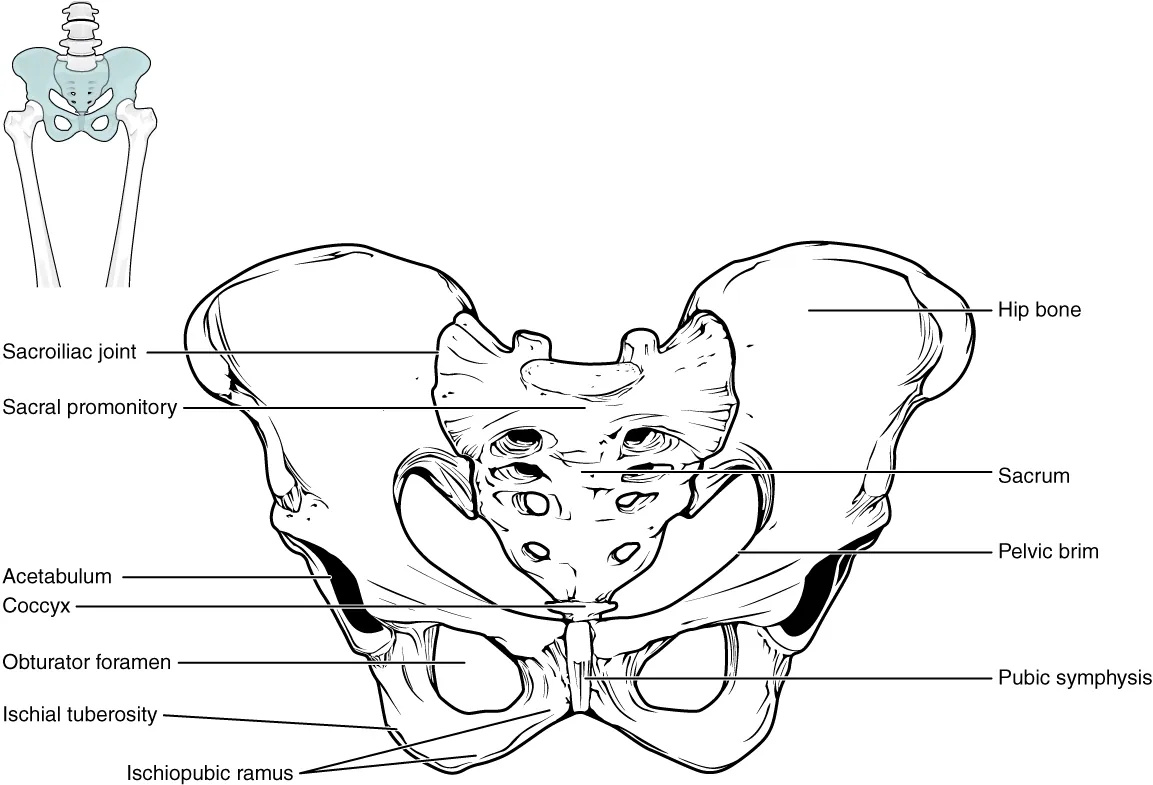
Three descriptions of pelvic position
Anterior and posterior describe directions of movement. Neutral describes a comfortable reference position between them, not a precise angle everyone must hold. A visible pelvic tilt alone is not a diagnosis or proof of pain.
| Term | What moves | What you may notice |
|---|---|---|
| APT · anterior pelvic tilt | The top of the pelvis tips forwards | The lower-back curve may increase. |
| PPT · posterior pelvic tilt | The top of the pelvis tips backwards | The lower-back curve may decrease. |
| Neutral pelvic position | A reference between those directions | You can stand and breathe without forcing an arch or tuck. |
Further reading: South Tees NHS · Pelvic tilt ↗
02 · Study
Tāḍāsana and Samasthitiḥ
The notes translate āsana as pose or position; it can also mean a seat. Tāḍāsana and Samasthitiḥ may look similar, but the terms carry teaching context as well as shape. Samasthitiḥ is associated with Aṣṭāṅga practice; the word is not exclusive to that school.
| Sanskrit | Meaning | Context |
|---|---|---|
| Tāḍāsana | Mountain pose: tāḍa + āsana | A foundational standing posture; details vary by school. |
| Samasthitiḥ | Equal or balanced standing: sama + sthiti | Frequently used in Aṣṭāṅga as a return to steady, attentive standing. |
03 · Study
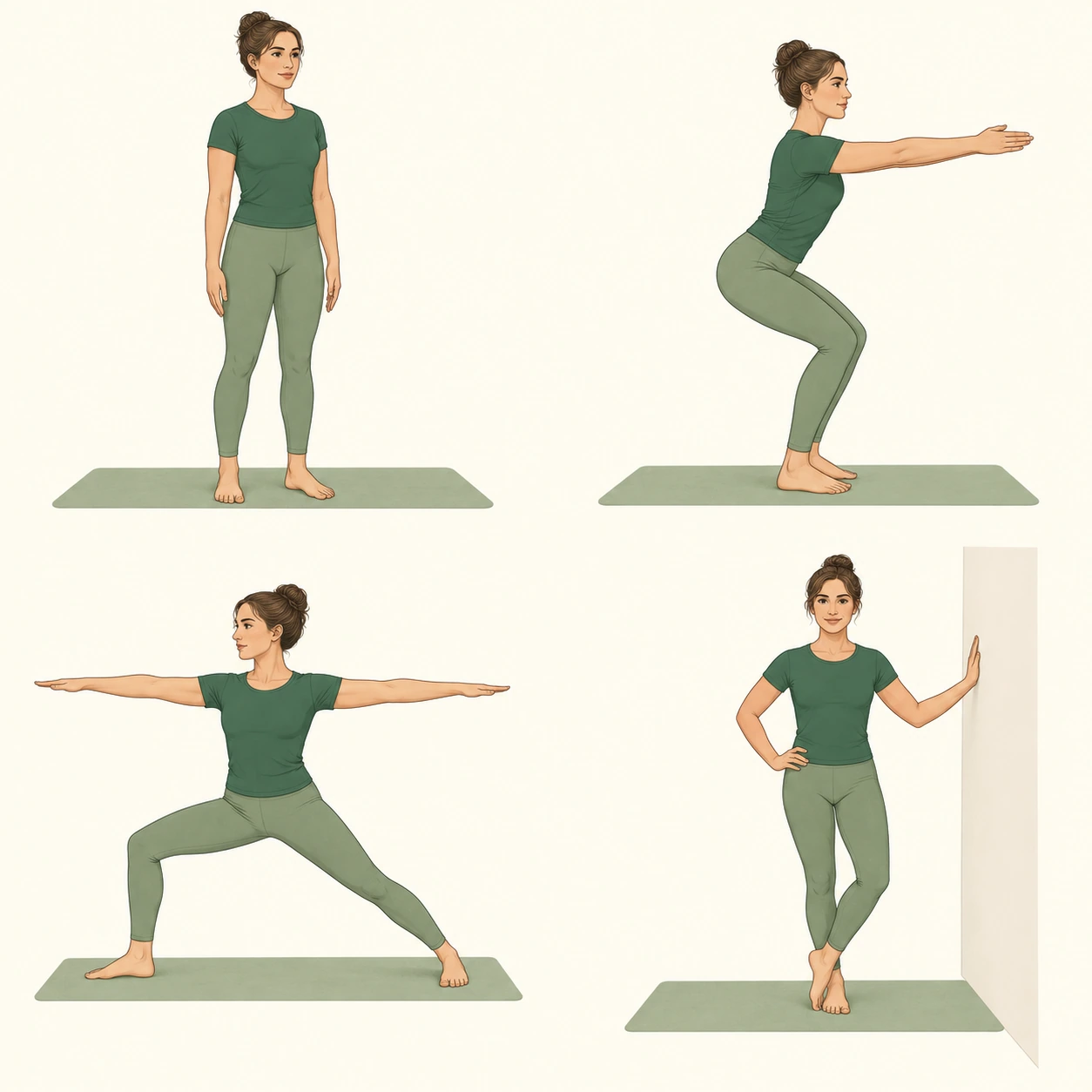
A practical standing check
Your notes mention knee alignment and keeping the shoulders away from the ears. These are cues to explore, not instructions to pin the shoulder blades down. When the arms rise overhead, the shoulder blades need to move with them.
Set the feet a comfortable distance apart; use a wall if balance needs support.
Let the knees remain responsive rather than pushing them backwards.
Find a comfortable relationship between ribs and pelvis without bracing constantly.
Let the arms rest, the jaw soften and the breath continue naturally.
Further reading: NCCIH · Yoga effectiveness and safety ↗
04 · Study
Raised arms and a forward fold
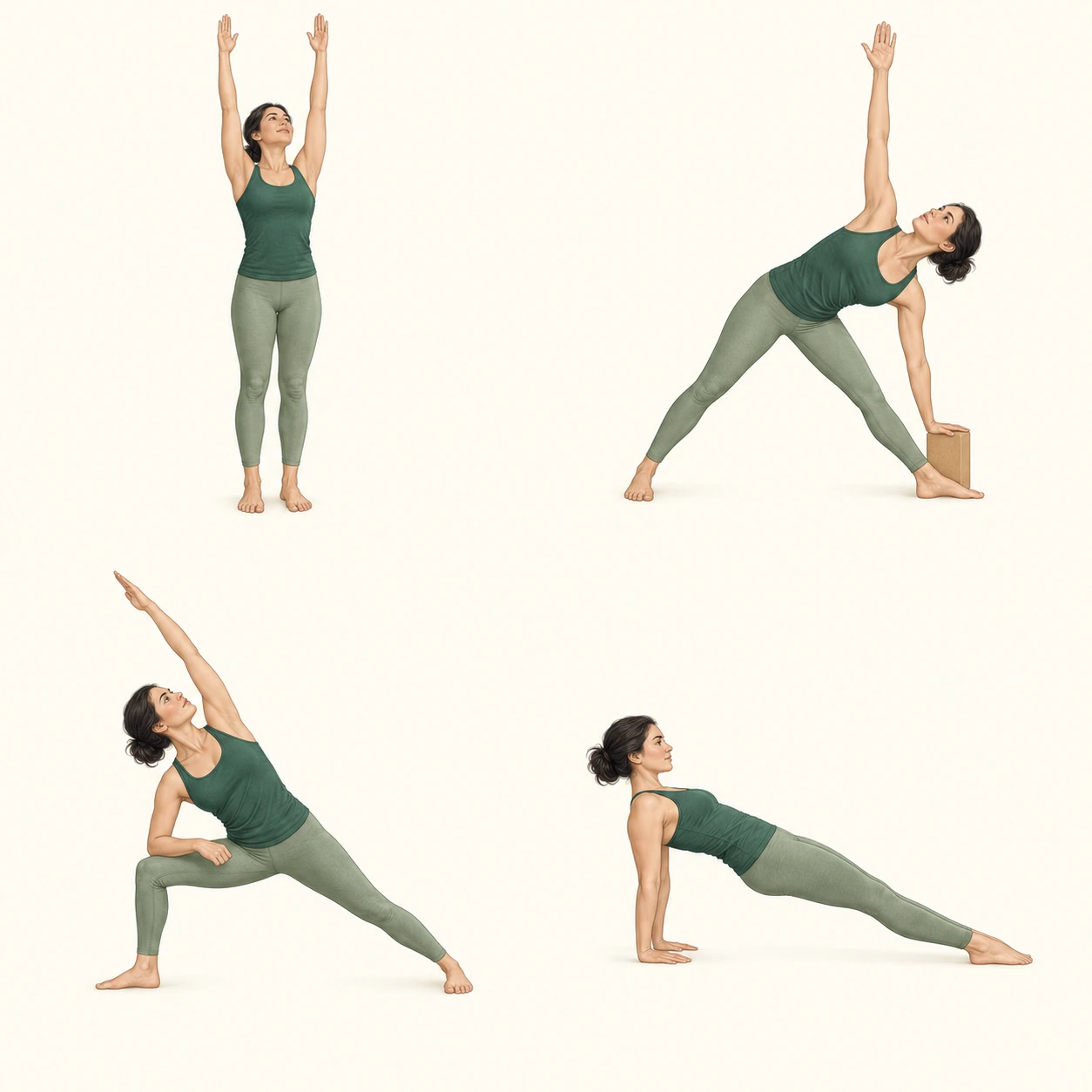
Raise the arms only as far as comfortable without throwing the ribs forwards or forcing the neck back. In the fold, bend the knees and use blocks or a chair for the hands if needed. Reaching the floor with straight legs is not required.
| Name from the notes | Meaning | Practical distinction |
|---|---|---|
| Ūrdhva Namaskārāsana | Upward salutation / upward prayer pose | Usually taught with palms together overhead; naming varies. |
| Ūrdhva Hastāsana | Upward hands / raised-arms pose | Hands may remain apart if that is more comfortable. |
| Uttānāsana | Intense stretch pose / standing forward fold | The name describes a posture, not a request to force an intense stretch. |
05 · Study
Moving with the breath
The notes use the image of inhaling as you rise away from the earth and exhaling as you return towards it. This is a helpful poetic cue for raised arms and a forward fold. It is not a rule governing every upward or downward movement in yoga.
| Movement | Common cue | Adaptation |
|---|---|---|
| Raise the arms | Inhale | Keep the hands apart and the gaze level if preferred. |
| Fold forwards | Exhale | Bend the knees and reduce the depth. |
| Remain in a posture | Continue breathing | Take additional breaths; never rush to fit a count. |
Further reading: NCCIH · Yoga effectiveness and safety ↗
From notebook to page
Drawn from the pelvic-tilt and Friday posture pages. ‘NPT’ is written as ‘natural’; neutral is used here as the clearer anatomical term. The short shoulder-related mistake list is partly ambiguous, so the guidance below is an editorial explanation.
Spelling has been standardised and explanations added. Traditional teaching cues, anatomical facts and uncertain handwriting are distinguished in the text. These pages support learning alongside appropriate teaching.