 House of AnandaMovement · Stillness · Wisdom · Journey
Lesson 3 of 14 · Yoga & anatomy
Body organisation & systems
From a cell to a whole person.
Cells, tissues, organs, body systems, the seven systems in the notes and the spleen’s role.
01 · Study
Five levels in the notebook
For example, heart muscle cells contribute to cardiac muscle tissue, which forms part of the heart; the heart works within the cardiovascular system. Chemistry and molecules sit below the cell level in a fuller account.
Cell · a living structural and functional unit.
Tissue · cells and surrounding material working together.
Organ · a structure containing multiple tissue types.
Organ system · organs cooperating in major functions.
Body / organism · the integrated living person.
Further reading: OpenStax · Levels of organisation ↗
02 · Study
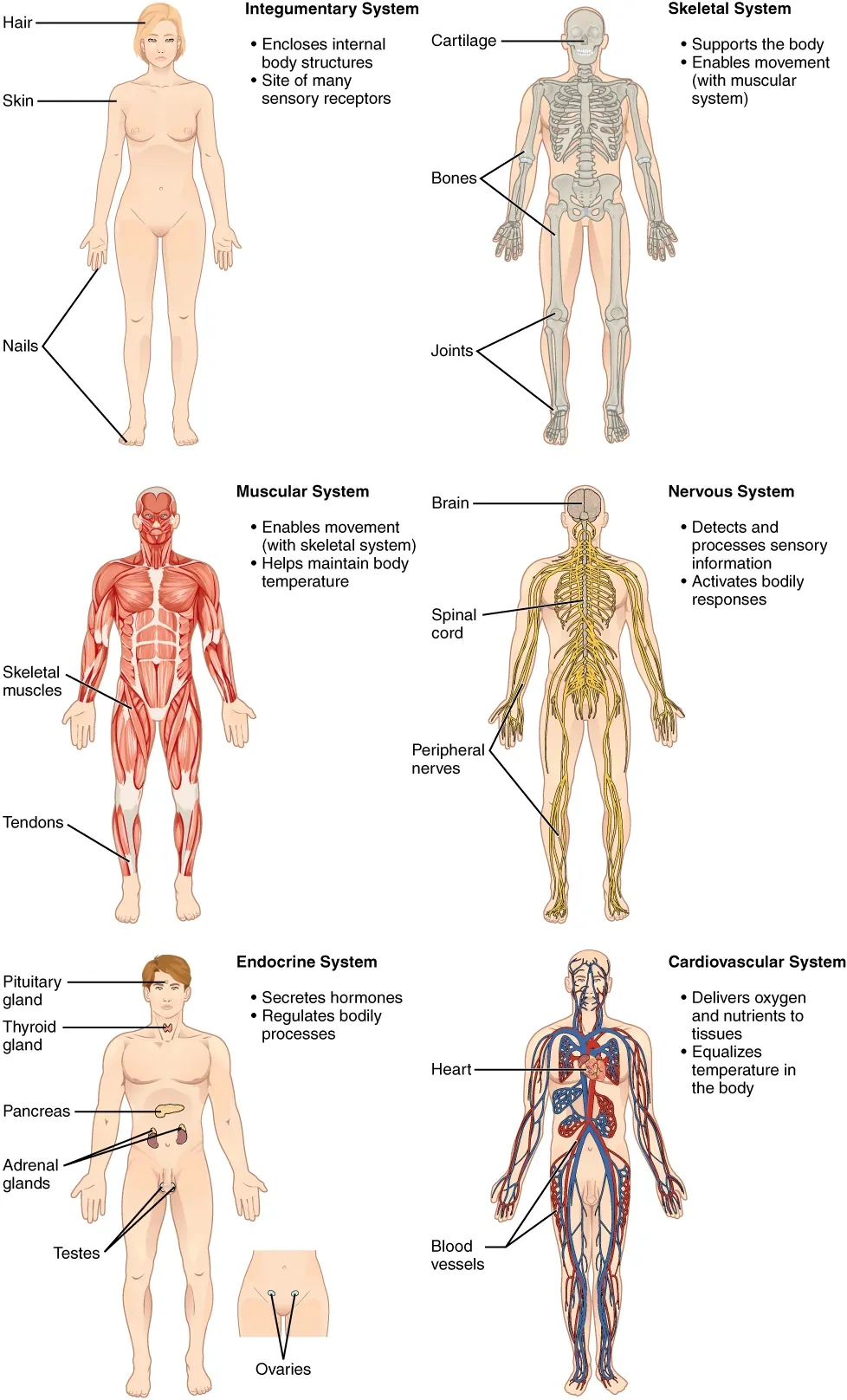
The seven systems you recorded
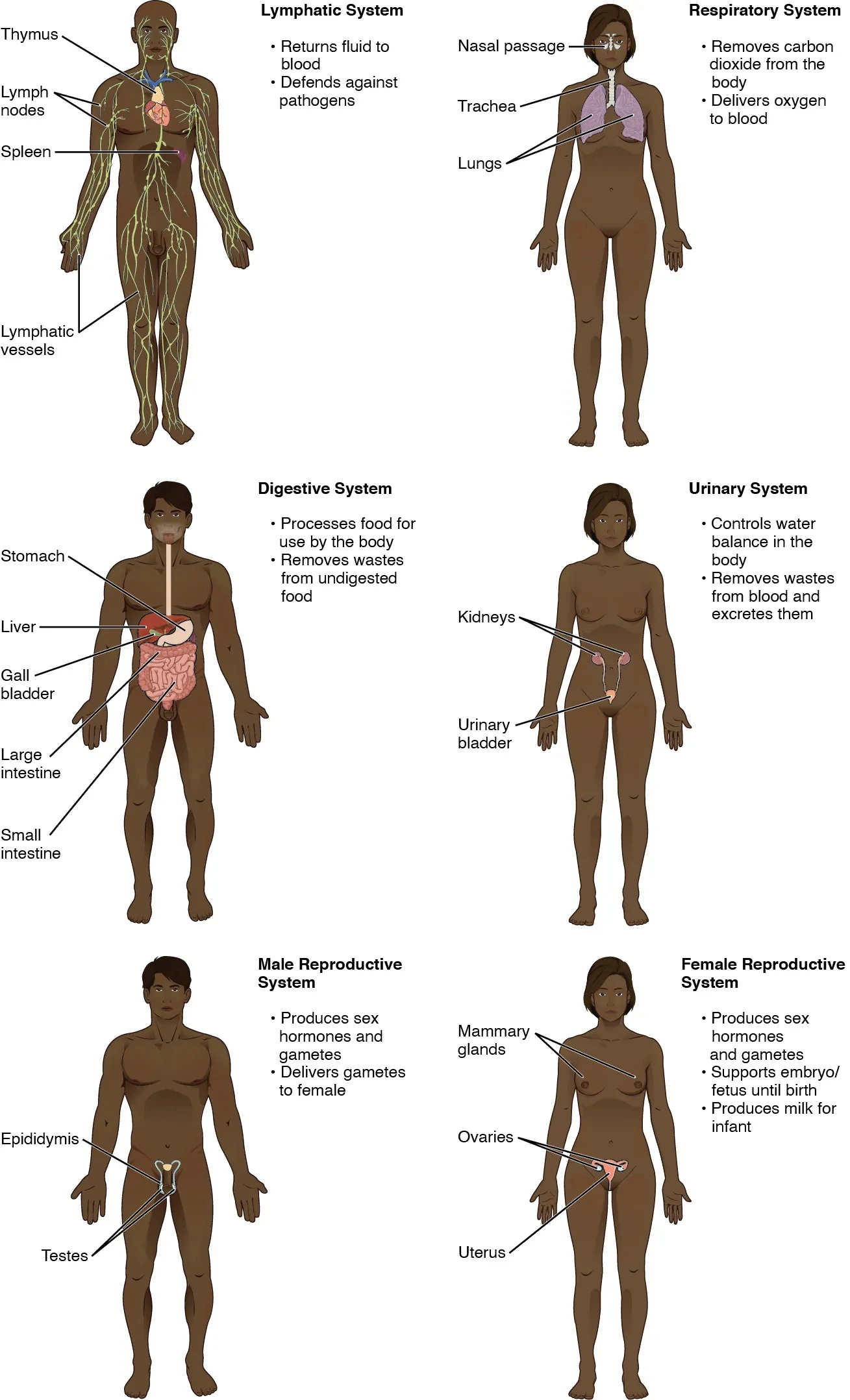
A common eleven-system classification also includes integumentary (skin), lymphatic/immune, urinary and reproductive systems. Systems overlap: a single organ can perform more than one kind of function.
| System | Examples | Main role |
|---|---|---|
| Muscular | Skeletal muscles | Movement and force |
| Skeletal | Bones and cartilage | Support and protection |
| Digestive | Stomach and intestines | Processing food |
| Respiratory | Airways and lungs | Gas exchange |
| Nervous | Brain, spinal cord, nerves | Sensing and coordination |
| Endocrine | Hormone-producing glands | Chemical signalling |
| Cardiovascular | Heart and blood vessels | Circulation |
Further reading: OpenStax · Levels of organisation ↗
03 · Study
How the systems cooperate in yoga
In a standing balance, muscles produce force, the skeleton bears load and the nervous system coordinates adjustments. Breathing and circulation continue supporting the task. A pose is therefore an activity of the whole person, even when the lesson focuses on one region.
Anatomy helps explain movement. It does not mean that a posture can isolate and ‘clean’ an organ, diagnose a disease or guarantee a specific hormonal effect.
04 · Study
The spleen: filter and immune support
The notes call the spleen a ‘blood bank’ and say it ‘kills viruses’ and stores blood. More precisely, the spleen helps filter blood, remove old or damaged red blood cells, regulate blood-cell levels and support immune responses. It is part of the lymphatic/immune system.
‘Kills viruses’ is too simple: the spleen helps the body respond to blood-borne germs through immune cells and related processes. ‘Blood bank’ is a teaching metaphor, not its full function. No yoga pose is known to disinfect the spleen or make it kill a particular infection.
Further reading: NHS · Spleen problems and spleen removal ↗
05 · Study
A quick study check
Can you trace the example from cell to tissue, organ and system without looking back? Then choose a different organ and repeat the exercise. Remember that a system is a useful way of studying the body, not a sealed compartment.
From notebook to page
Drawn from Friday’s anatomy page and the short spleen notes at the top of the following page. The seven listed systems are retained as the class focus, not treated as an exhaustive list.
Spelling has been standardised and explanations added. Traditional teaching cues, anatomical facts and uncertain handwriting are distinguished in the text. These pages support learning alongside appropriate teaching.