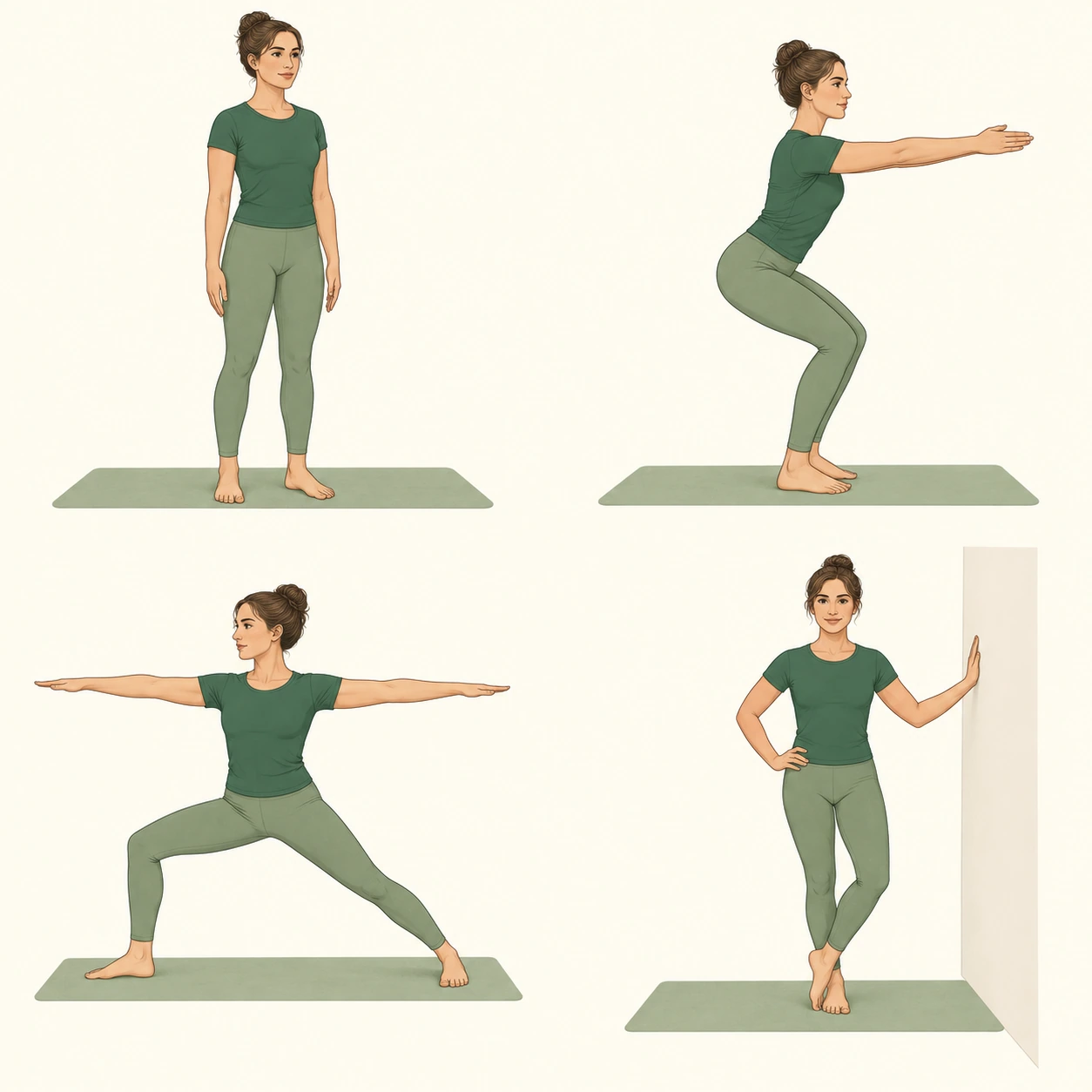
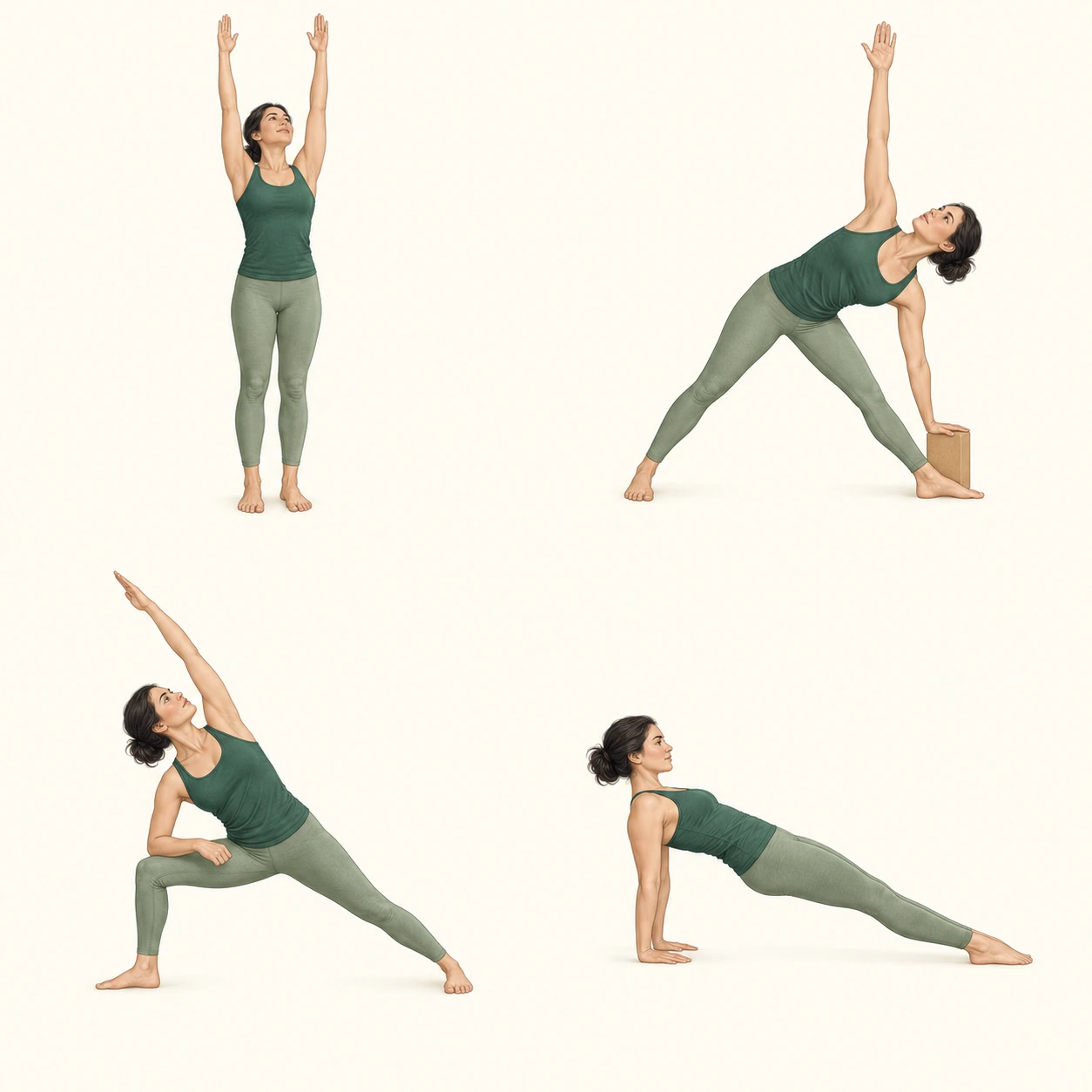
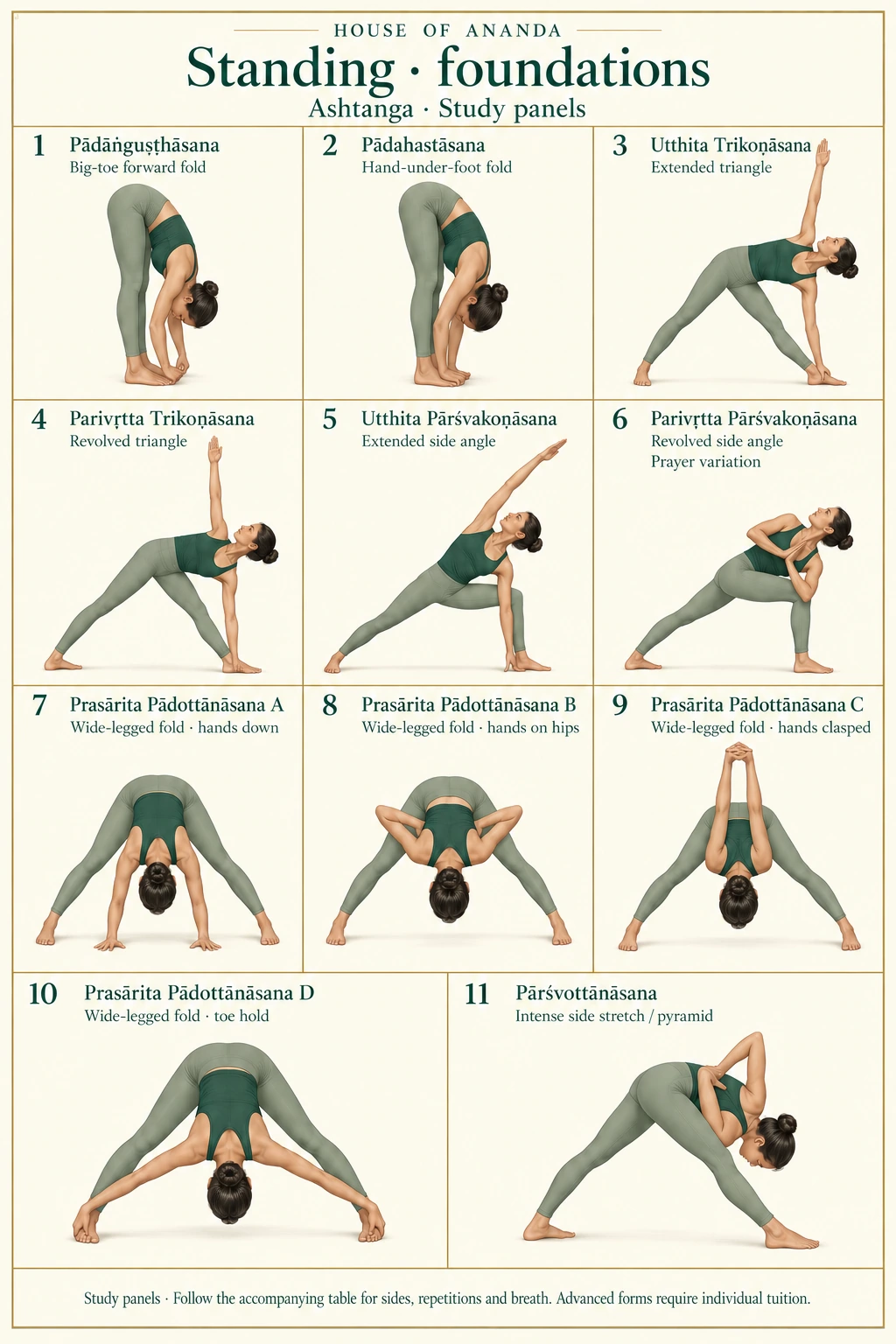
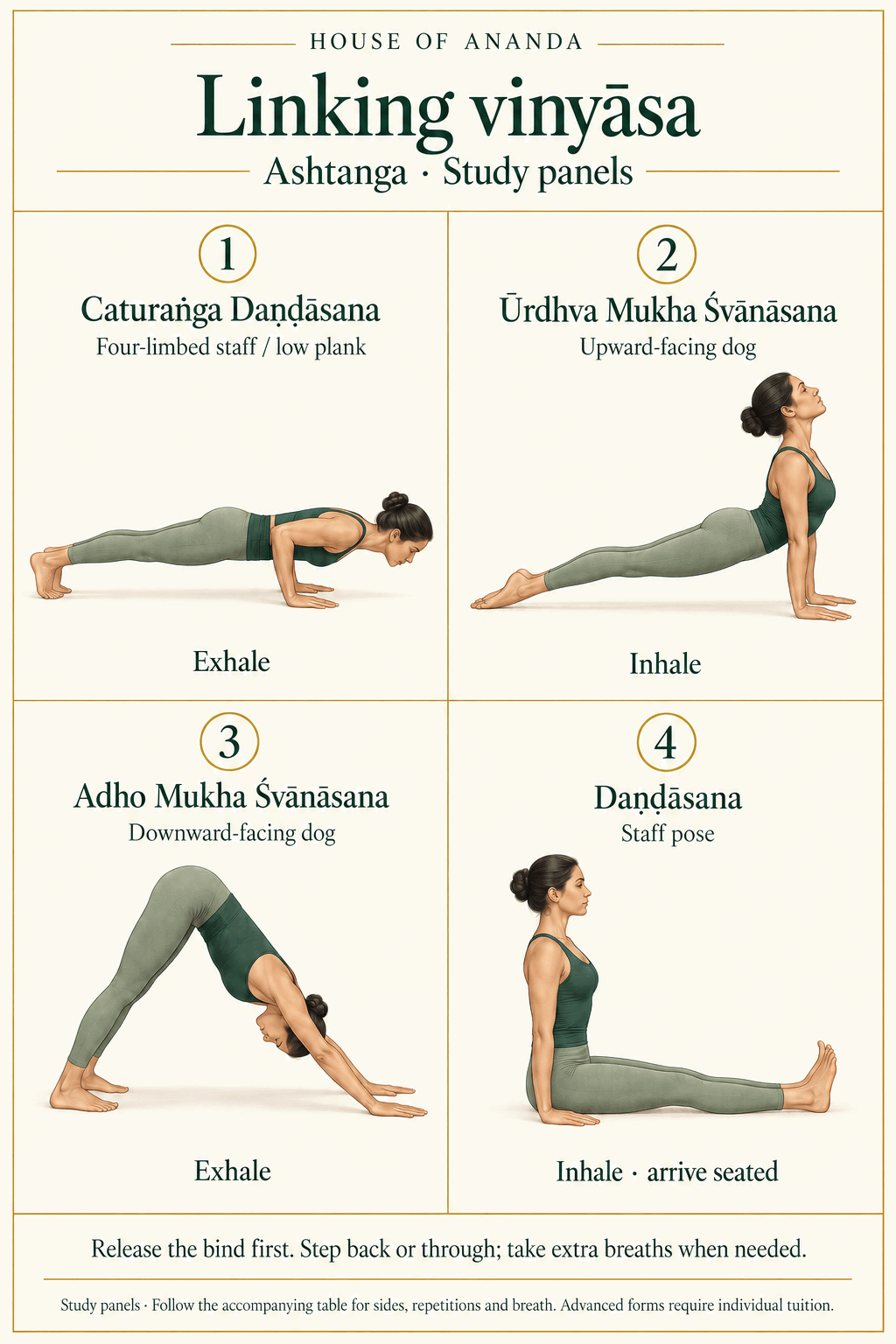
Read the name
Sanskrit pose vocabulary
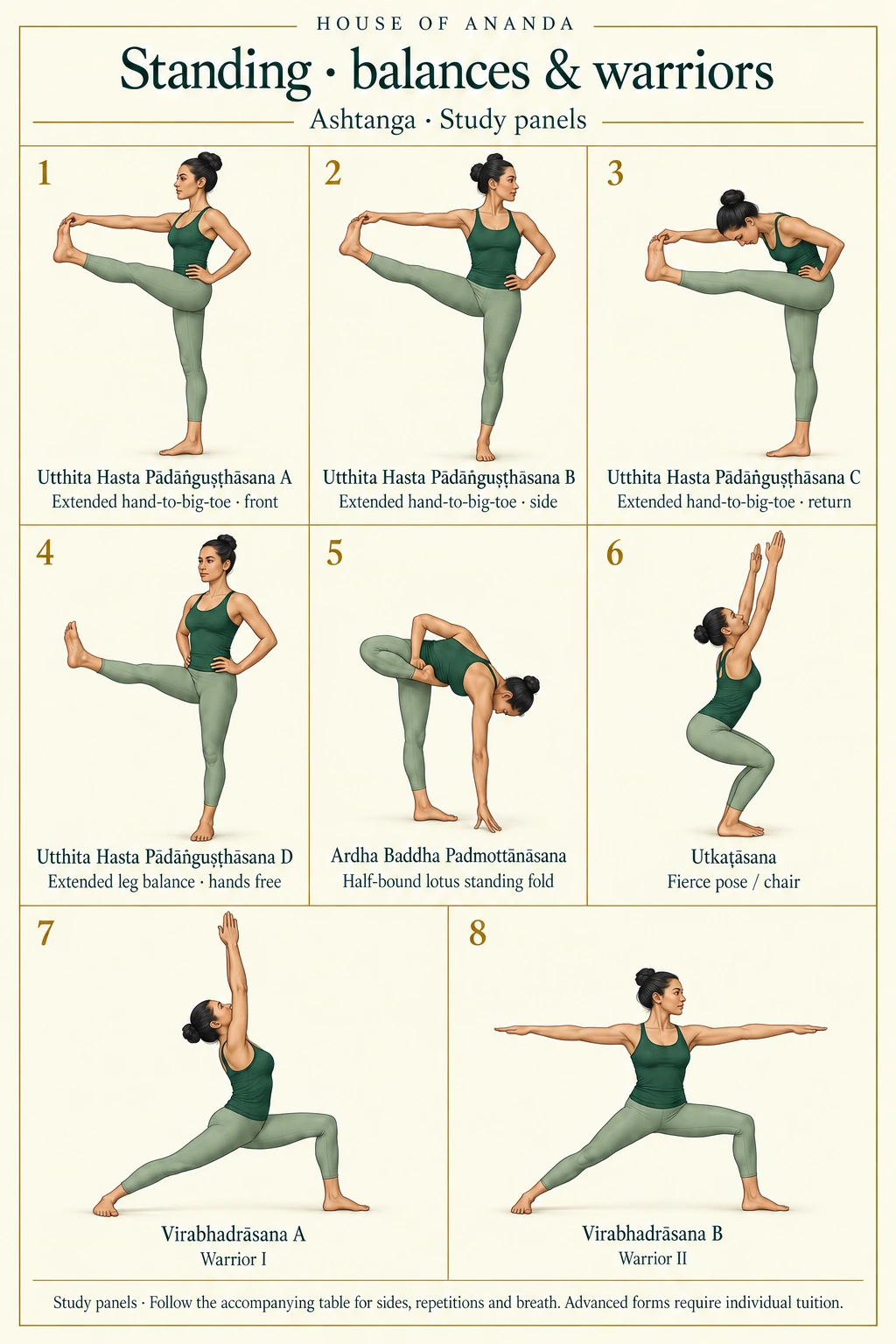
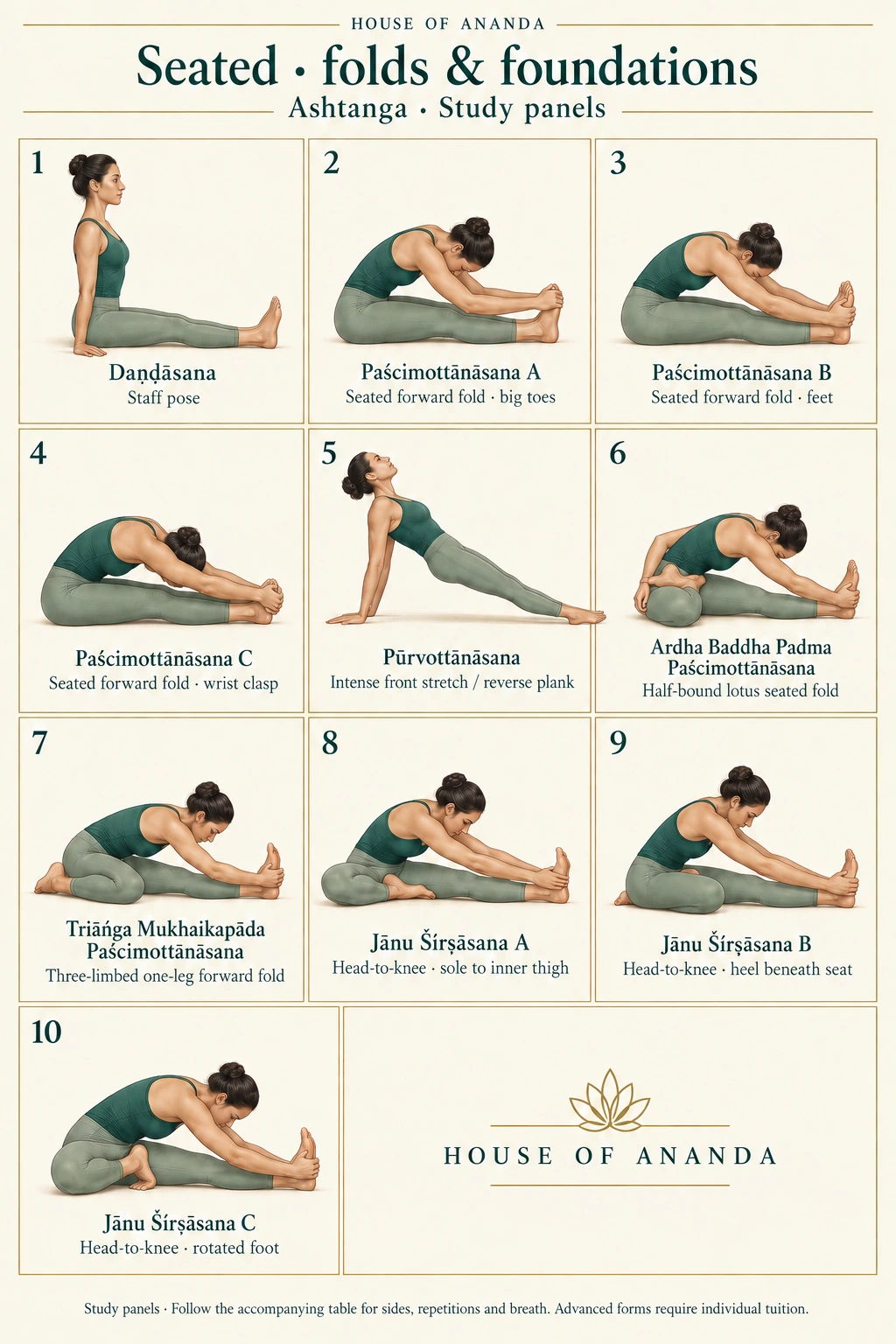
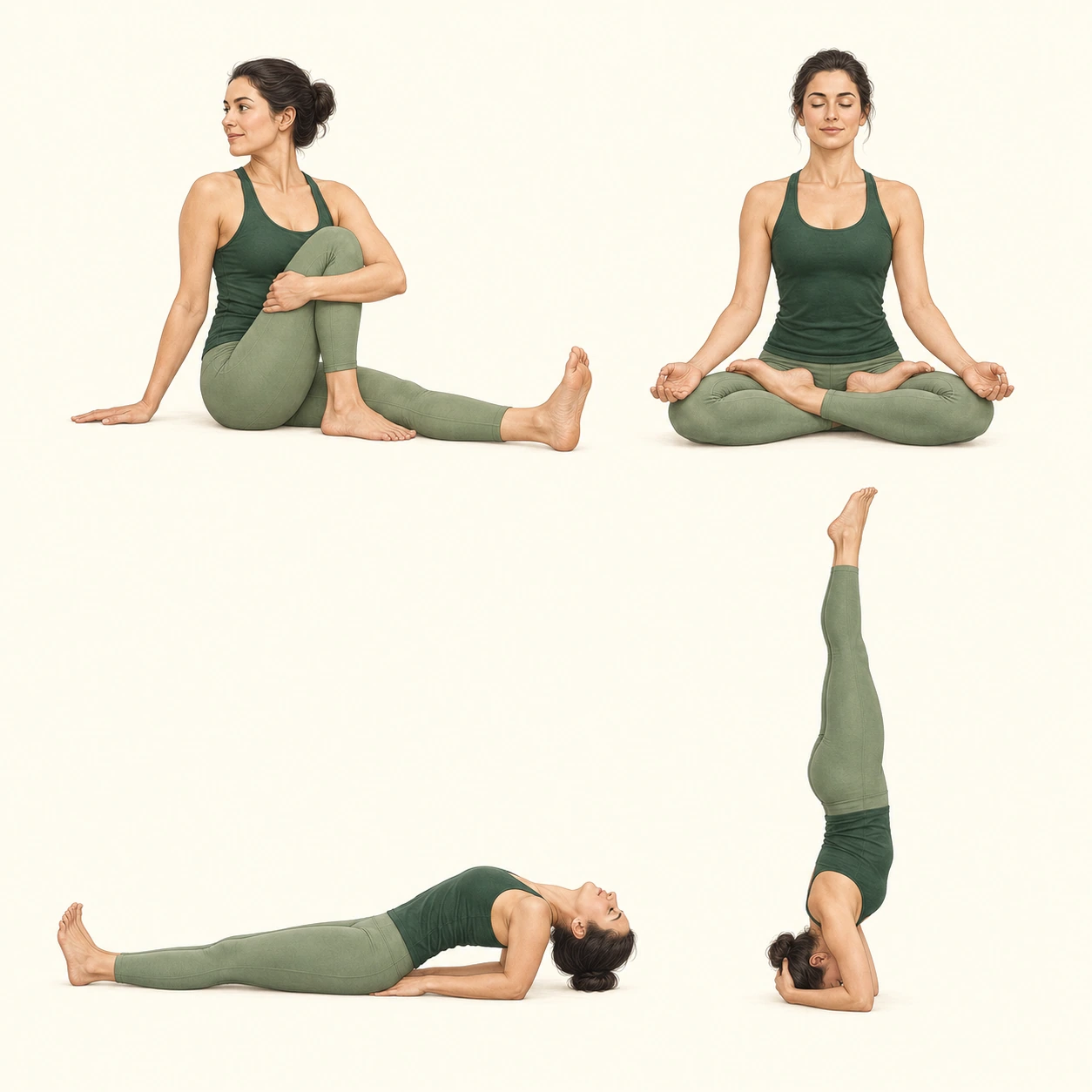
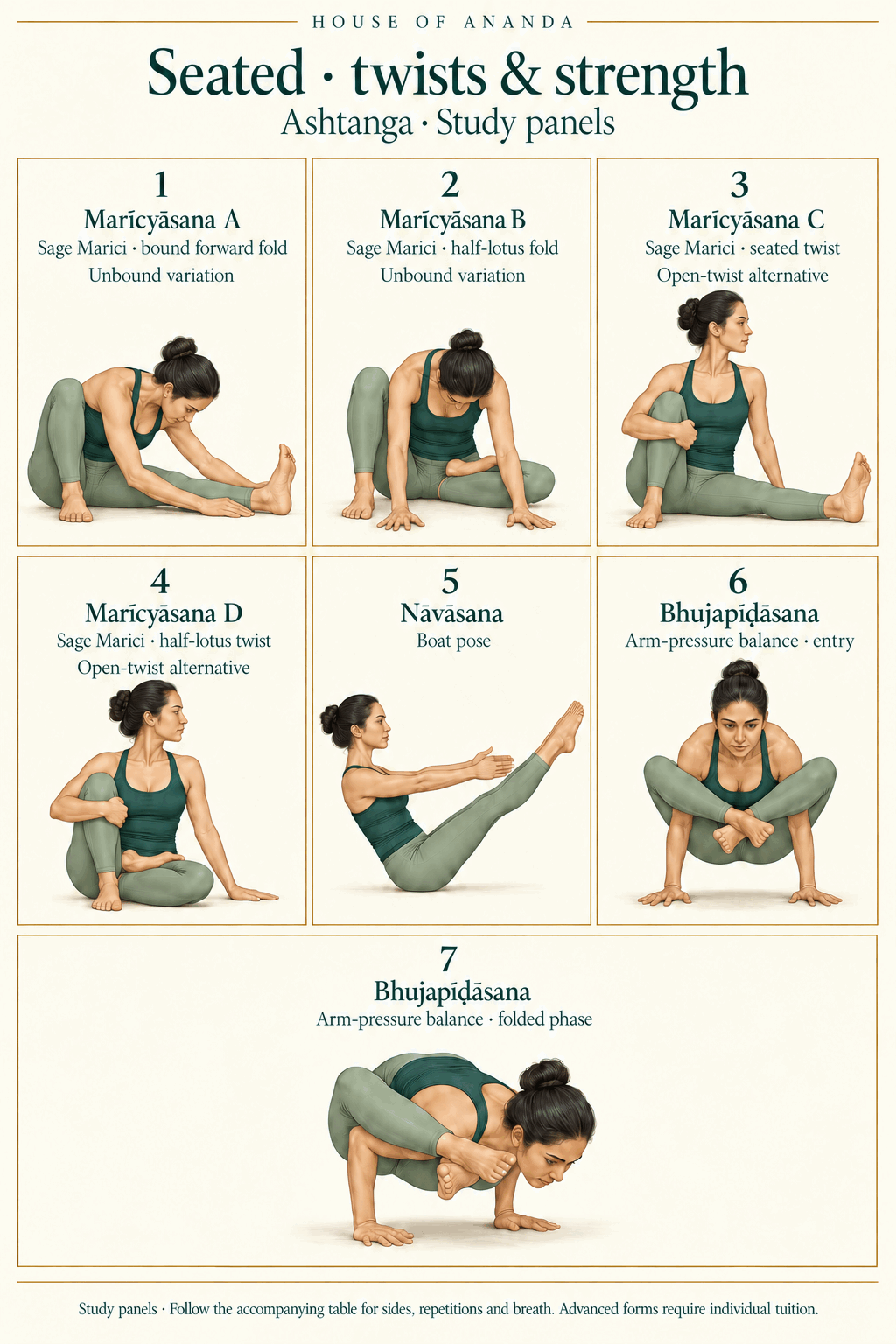
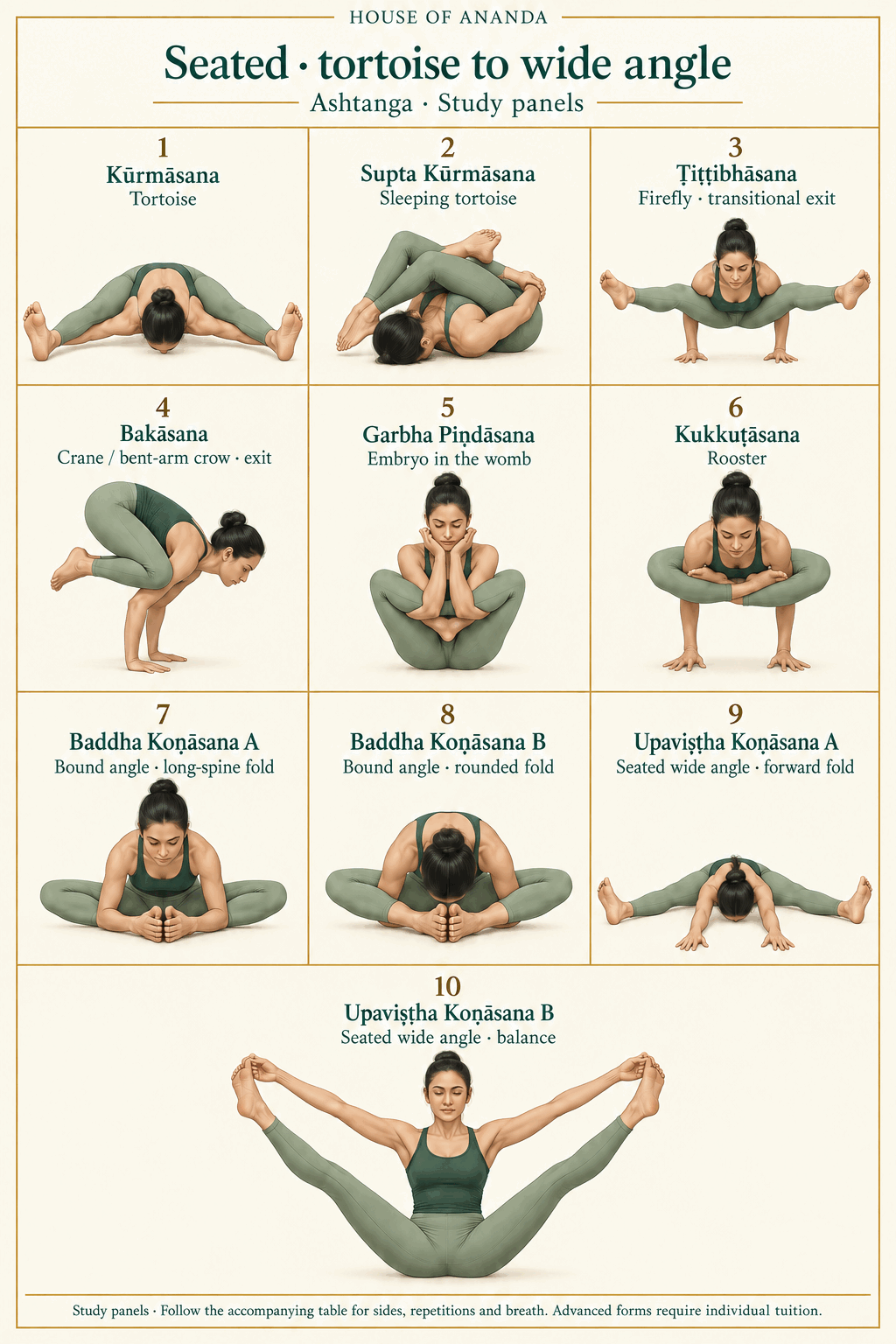
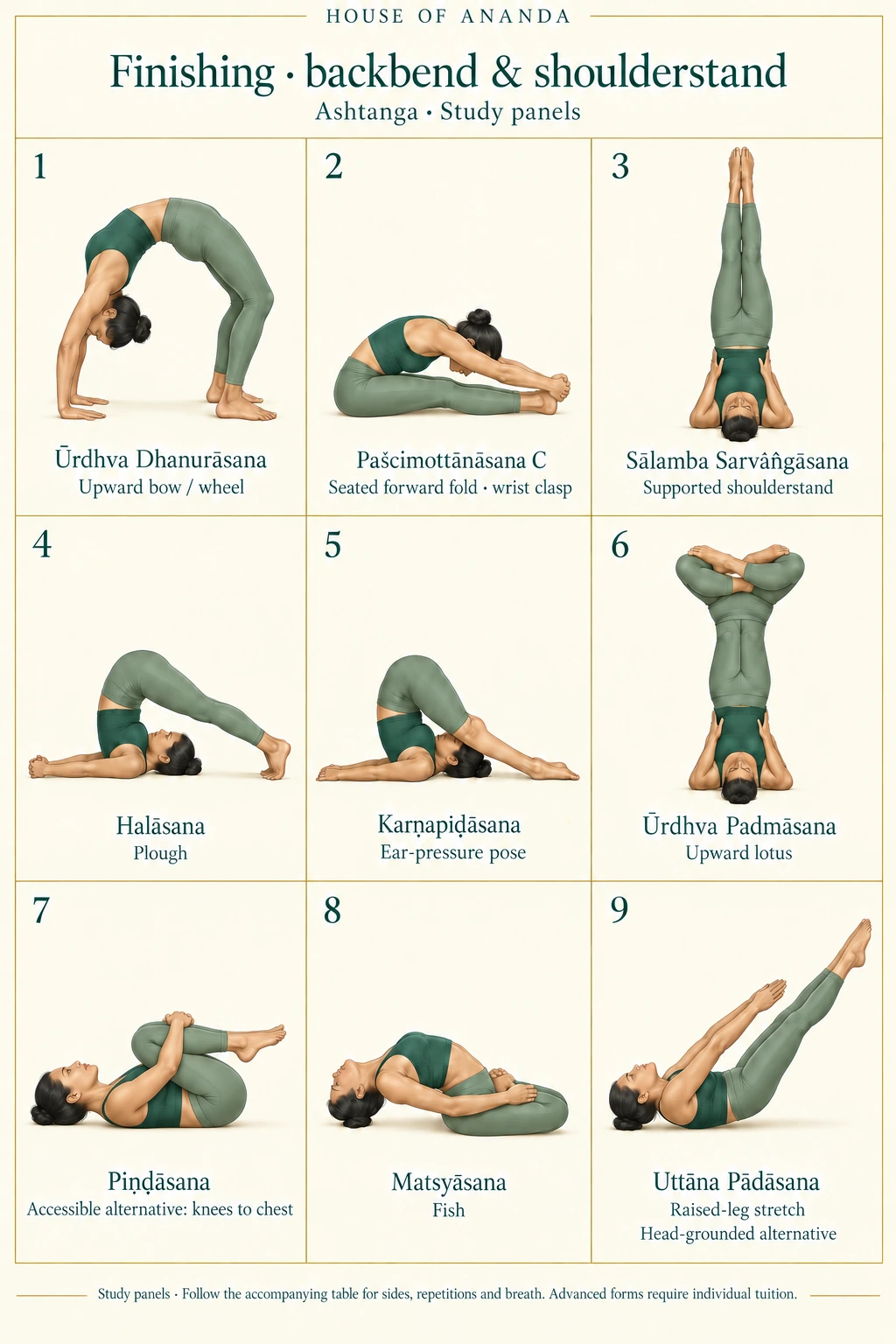
Learn the names of the two dogs, Chair, Warriors, Half Camel and Headstand, with context for the classroom alignment cues.
Explore the pose-name lesson ↗Movement · 32 illustrated references
The pose library.
Explore the shape, where to look, how to breathe and what each pose can develop. Search with or without Sanskrit accents.
Reading the cards
A steady gaze.
An adaptable practice.
Dṛṣṭi means gaze or visual focus. Look softly, without straining the eyes or turning the neck to reach a point. In inversions and Bridge, keep the head still.
The cards pair comfortable gaze options with common Ashtanga conventions. Teachers and traditions vary. The Sun Salutation A and B guides retain the gaze cues from the original study notes. Breath cues here describe individual poses; follow the vinyasas in a sequence when practising a flow.
Benefits in context
Benefits describe the movement skills and opportunities for rest that a pose can offer. They are practice aims, not guaranteed outcomes. Research on complete yoga programmes does not establish the same health effect for every individual pose. Read NCCIH’s evidence and safety overview ↗
Illustrations & teaching context
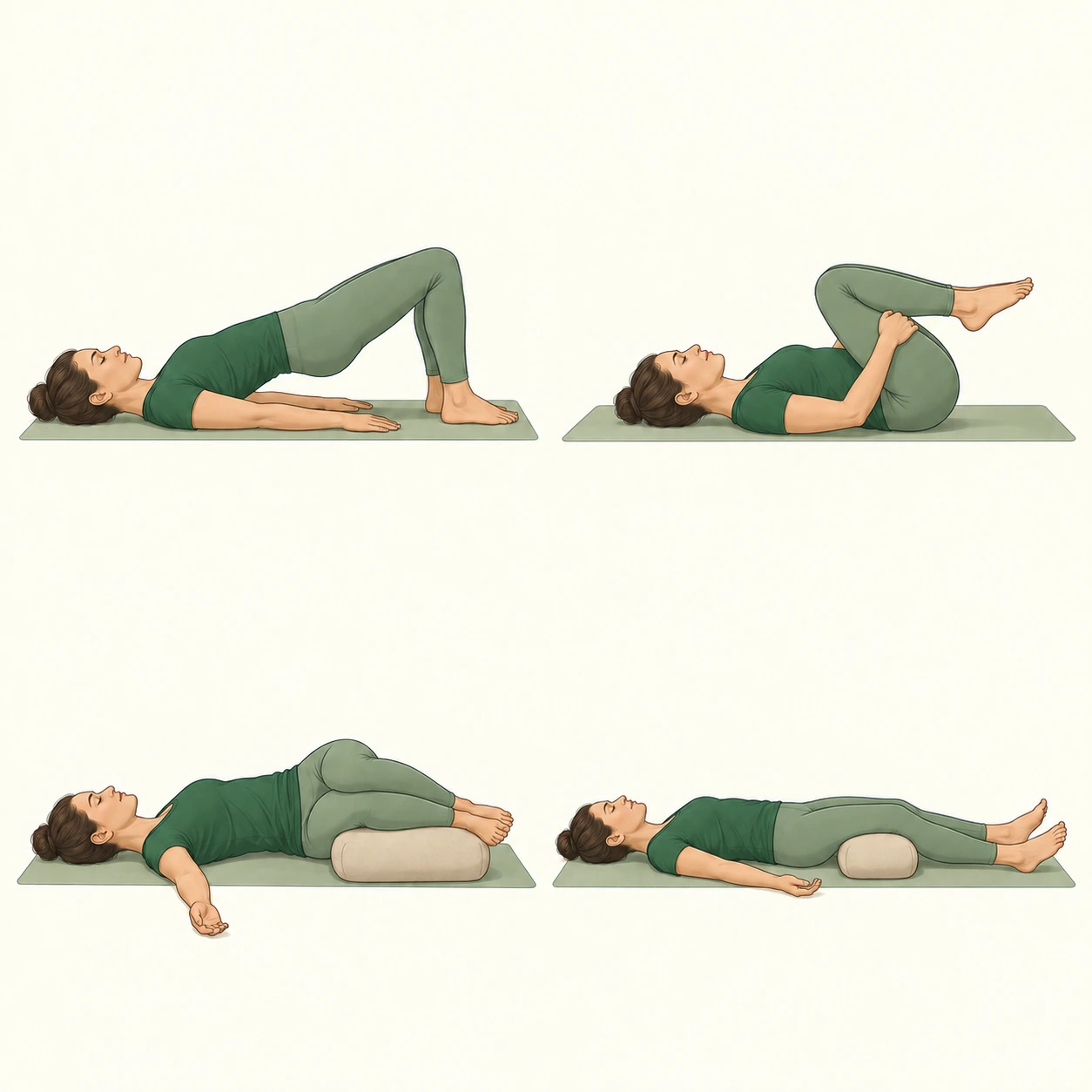
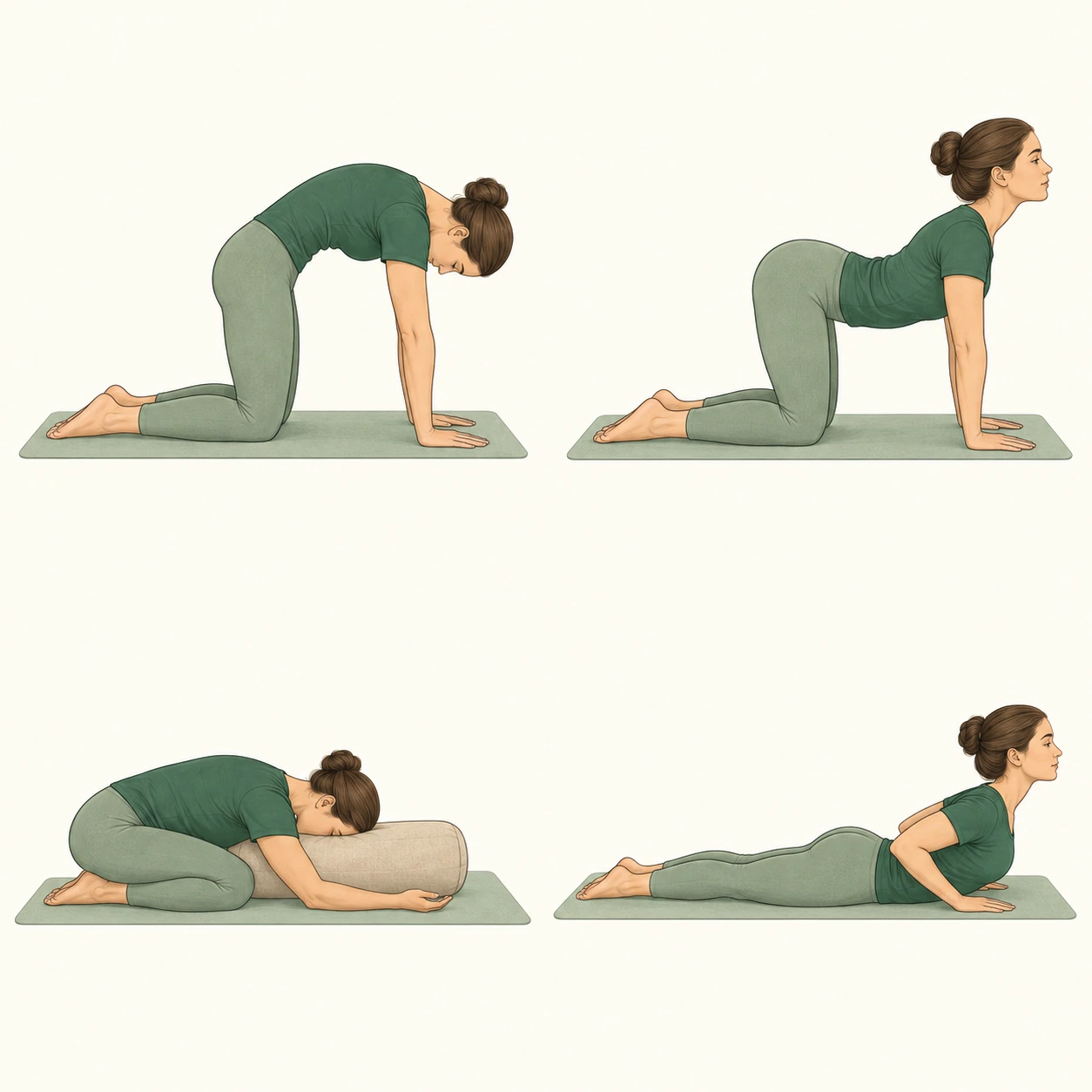
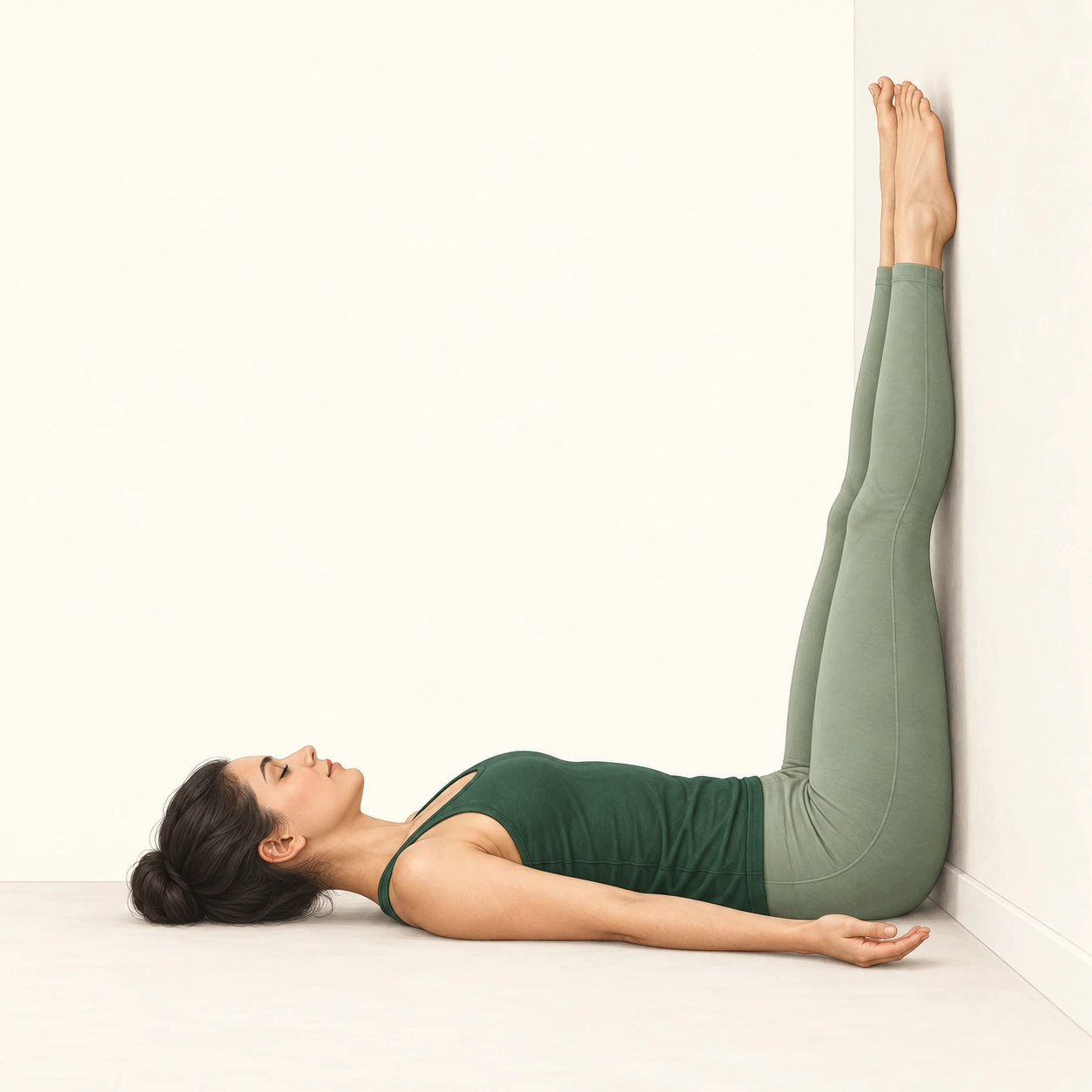
Illustrations show one possible expression, with supported variations and alternatives labelled. Choose a range in which you can breathe freely. Advanced inversions, Lotus and deep backbends need qualified guidance; no pose is essential.
Reference reading: Dr. Ronald Steiner / AYI’s traditional Ashtanga guides, and YogaEasy’s posture teaching. These are sources, not endorsements or reviews of these cards.
Updated 11 September 2026 · Independent teacher review pending. Our review approach ↗
Put knowledge into sequence
From one shape
to a living practice.