House of AnandaMovement · Stillness · Wisdom · Journey

Wisdom / Emotions, Muscles & the Body

House of Ananda · Embodiment studies

Twelve gentle practices

Illustrated instructions, adaptations, a ten-minute menu and space to notice what helps.

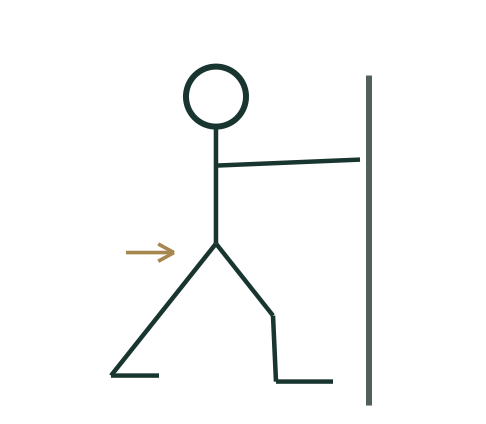
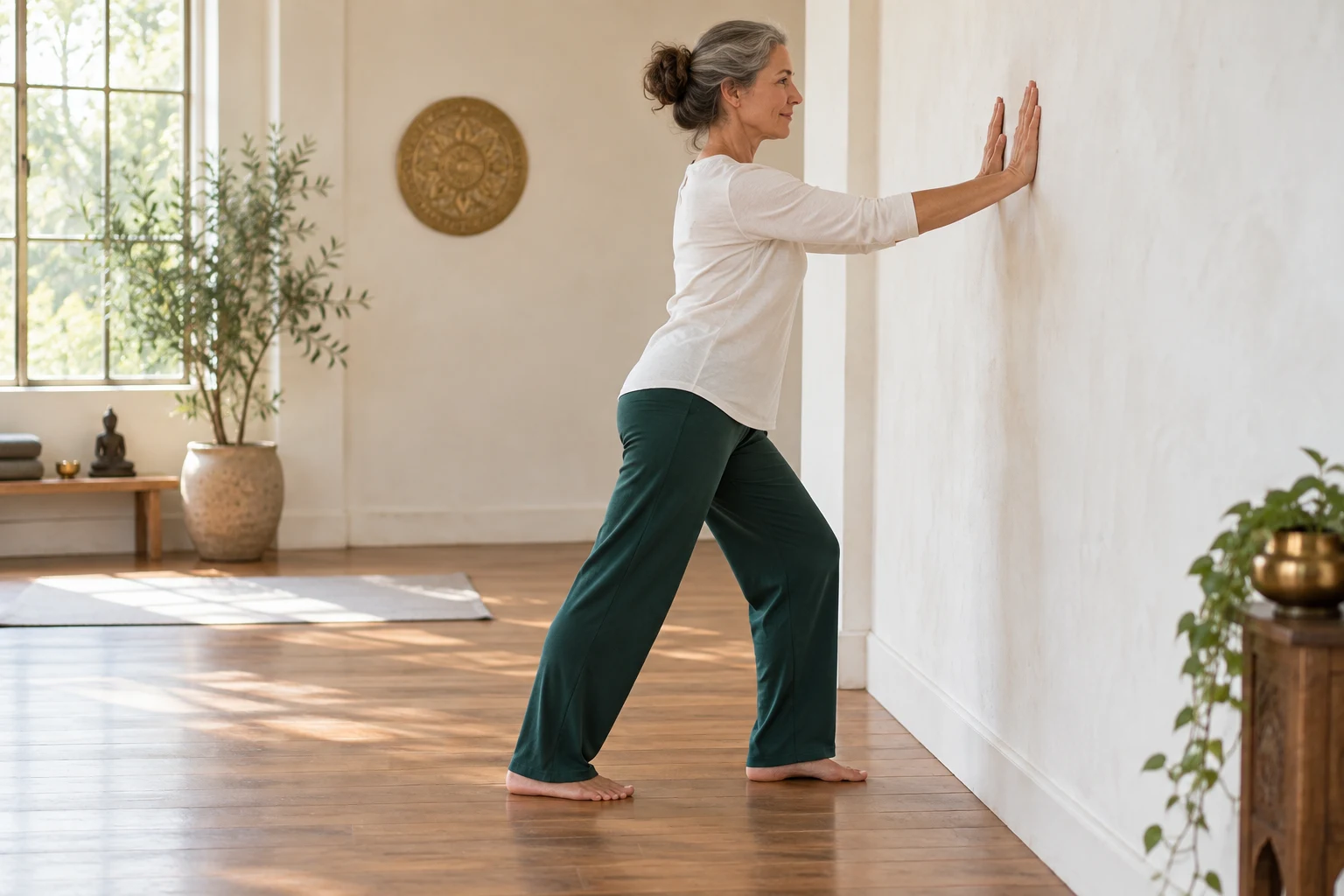
An adult using a wall for support during a gentle calf stretch
Explore a comfortable range. A stronger stretch is not a stronger emotional release. AI-created editorial illustration; not a clinical case.

From the thesis · page 24

22. What “emotional release” can feel like

Tears during a hip stretch

Illustrative scenario: a person cries during a long-held posture while reflective music plays. Possible contributors include emotional association, discomfort, relief, expectation and the permission to pause. The observation is real; the claim that sadness left the psoas is an interpretation. Leave the pose if needed and allow the person to decide whether to talk.

A jaw unclenches after a meeting

Illustrative scenario: someone notices their teeth pressed together before receiving feedback. Afterwards the jaw relaxes and they feel calmer. The change fits reduced effort and changed circumstances. A useful next step may be noticing the habit earlier, taking breaks or seeking dental advice for persistent symptoms. Naming it “anger stored in the jaw” is unnecessary.

Shaking after exertion

Illustrative scenario: the legs tremble after a demanding hold. Fatigue is a plausible explanation. Rest, reduce the demand and see whether it settles. Do not extend the hold to force a “breakthrough.” A practitioner should not declare that shaking proves a past trauma has been discharged.

A painful back during a stressful month

Illustrative scenario: a person is sleeping poorly, sitting longer and worrying about work. Several influences may interact. The response can address movement, workload, sleep, pain and emotional concerns together. Improvement after relaxation does not exclude a physical contributor or establish repressed emotion as the cause.

Nothing dramatic happens

Illustrative scenario: the person simply feels more comfortable and returns to their day. That can be a good outcome. Another person feels no change; that does not imply resistance, failure, “deeper blockage” or unwillingness to heal. The practice can be changed or stopped.

These scenarios are explanatory examples, not patient reports or evidence from clinical trials. An immediate emotional event and durable clinical recovery are different outcomes. Good evaluation asks what changes over days and weeks: function, sleep, distress, participation and agency.

From the thesis · page 25

23. Exercise principles and stop signs

The following twelve practices aim to reduce unnecessary effort, explore comfortable movement and support regulation. They are not treatments that remove specific emotions from specific muscles. The exact sequence and doses are conservative suggestions, not a clinically validated release protocol.

Start small and preserve choice

Choose one or two exercises. Start with about 30-60 seconds and use less range or effort than you think you need. Breathe normally; avoid straining or breath holds. Keep your eyes open if preferred. Stopping, sitting out and noticing little are all acceptable. There is no requirement to cry, shake or remember anything.

Physical adaptations

Use a stable chair or wall if balance is uncertain. With pregnancy, recent surgery, significant injury, osteoporosis or a heart, lung or neurological condition, adapt movements with a qualified clinician. Skip painful areas rather than pushing through. For joint hypermobility, prioritise support and control over larger stretches.

Do not use deep pressure on the front of the neck, the abdomen or an acutely painful area. Avoid forceful hip opening, bouncing, assisted end-range stretching and deliberately fatiguing tremor induction. Persistent jaw locking, pelvic pain or movement limitation merits relevant clinical assessment.

Stop and orient

Stop for sharp or spreading pain, numbness, dizziness, air hunger, escalating panic, flashbacks or feeling unreal or disconnected. Return to an easy position, breathe normally and look at the room. If symptoms persist, seek appropriate help. More distress is not proof of productive release.[17]

New chest pain, fainting, severe breathlessness, sudden weakness or other acute concerning symptoms require urgent medical attention rather than an exercise-based explanation.

Evidence boundary

Relaxation, yoga and massage have condition-specific evidence and limitations. That evidence does not validate each movement below as an isolated treatment. The exercises are practical adaptations informed by anatomy and general self-care; the intended benefits are modest and observable.[17][19][20]

Chapter references [17][19][20]

From the thesis · page 26

24. Exercises: orient, breathe, unclench

01

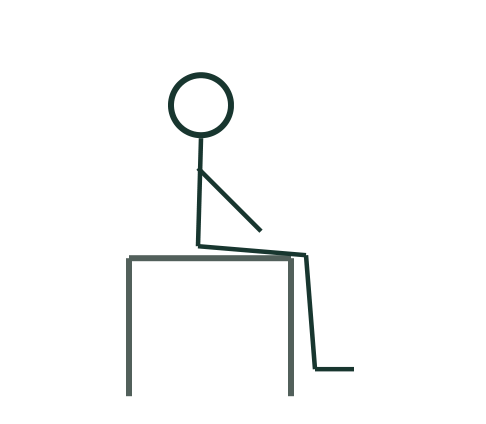
Eyes-open orientation
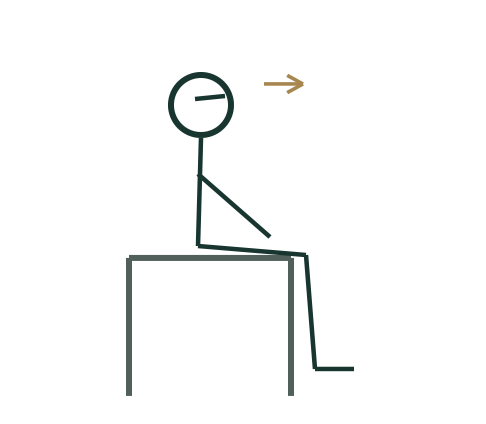
Simplified movement schematic for Eyes-open orientation; follow the adjacent instructions and adaptations
Movement schematic · not to scale

Whole-person attention; no target muscle.

Sit supported. Slowly look around and name three neutral objects. Notice contact with the chair and floor. Let the head turn only comfortably.

Start: 30-60 seconds.

Purpose: Reconnect with the present environment.

Adapt / stop: Use only eye movement if neck turning hurts; choose familiar objects if scanning feels activating.
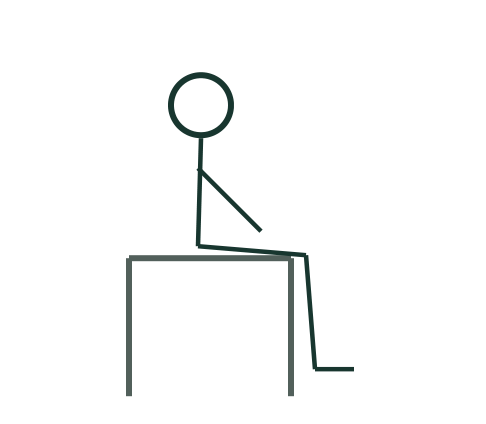
02

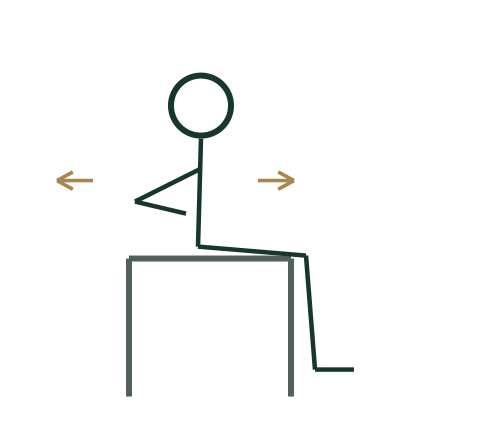
Easy lower-rib breathing

Simplified movement schematic for Easy lower-rib breathing; follow the adjacent instructions and adaptations
Movement schematic · not to scale

Diaphragm and rib movement.

Sit comfortably. Let an ordinary breath arrive, then let it leave without pushing. If easy, allow the exhale to be slightly longer. Avoid deliberately large breaths.

Start: 4-6 comfortable breaths.

Purpose: Explore a less effortful breathing pattern.

Adapt / stop: No holds or forced pace. Stop for dizziness, tingling, air hunger or rising anxiety; resume normal breathing.

03

Resting the jaw

Simplified movement schematic for Resting the jaw; follow the adjacent instructions and adaptations
Movement schematic · not to scale

Masseter and temporalis region.

Sit with the head supported if helpful. Allow the teeth to separate slightly and the tongue to rest comfortably. Do not force the mouth open or press the jaw.

Start: 20-30 seconds, twice.

Purpose: Notice and interrupt unnecessary clenching.

Adapt / stop: Stop if painful. Seek dental advice for persistent pain, locking or difficulty opening.

Chapter references [17][21]

From the thesis · page 27

25. Exercises: shoulders, hands, pushing

04

Gentle shoulder lift and settle

Simplified movement schematic for Gentle shoulder lift and settle; follow the adjacent instructions and adaptations
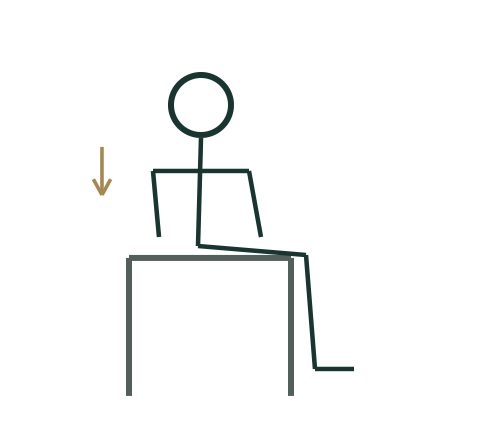
Movement schematic · not to scale

Upper trapezius and shoulder region.

Lift the shoulders a small amount with light effort while breathing. Let them settle without pulling them down. Rest and notice the contrast.

Start: 3-5 slow repetitions.

Purpose: Explore the difference between contraction and less effort.

Adapt / stop: Skip the lift if painful; support the forearms and simply rest instead.

05

Light hand squeeze and open

Simplified movement schematic for Light hand squeeze and open; follow the adjacent instructions and adaptations
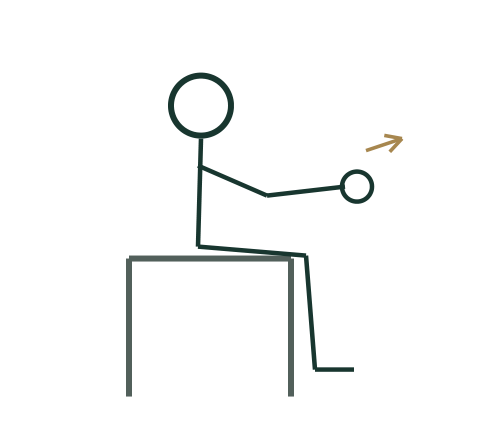
Movement schematic · not to scale

Finger and wrist muscles.

Rest forearms on thighs or a table. Make a very light loose fist, then open the fingers gently. Keep the wrists comfortable and continue breathing.

Start: Squeeze 3 seconds; rest 10 seconds; repeat 3 times.

Purpose: A small progressive-relaxation experiment.

Adapt / stop: Use release-only practice with arthritis, injury or pain. Do not squeeze hard.

06

Light wall press and release

Simplified movement schematic for Light wall press and release; follow the adjacent instructions and adaptations
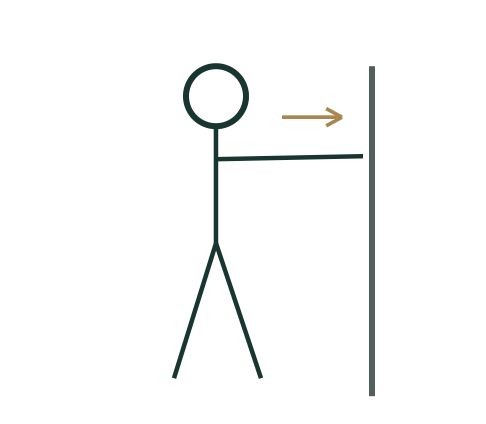
Movement schematic · not to scale

Pectorals, triceps and shoulder control.

Stand near a wall, palms below shoulder height. Apply gentle pressure without leaning heavily, then release. Notice the choice to begin and end the action.

Start: 3 seconds light effort; 10 seconds rest; 3 rounds.

Purpose: Explore controlled action and a sense of agency.

Adapt / stop: Use a seated palm press into a table if balance is uncertain. Skip with painful wrists or shoulders; no breath-holding.

Chapter references [17]

From the thesis · page 28

26. Exercises: spine, hips and rest

07

Small pelvic rocking

Simplified movement schematic for Small pelvic rocking; follow the adjacent instructions and adaptations
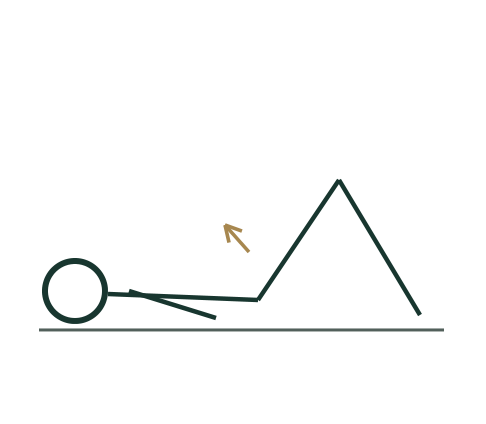
Movement schematic · not to scale

Abdominal and spinal control.

Lie on a comfortable surface with knees bent and feet down. Gently tip the pelvis so the low back changes pressure against the surface, then return to neutral.

Start: 4-6 small repetitions.

Purpose: Explore easy movement without seeking a strong stretch.

Adapt / stop: Use seated rocking if floor access is difficult. Stop if pain spreads, tingling appears or symptoms increase.

08

Supported short split stance

Simplified movement schematic for Supported short split stance; follow the adjacent instructions and adaptations
Movement schematic · not to scale

Hip-flexor region and balance.

Hold a stable support. Place one foot a short distance behind the other. Keep the trunk upright and shift weight slightly forward until the front of the rear hip feels a mild stretch.

Start: 10-15 seconds each side, once or twice.

Purpose: Explore comfortable hip extension.

Adapt / stop: Do not arch the low back or force a long stance. Skip for hip pinching, unsteadiness or pain.

09

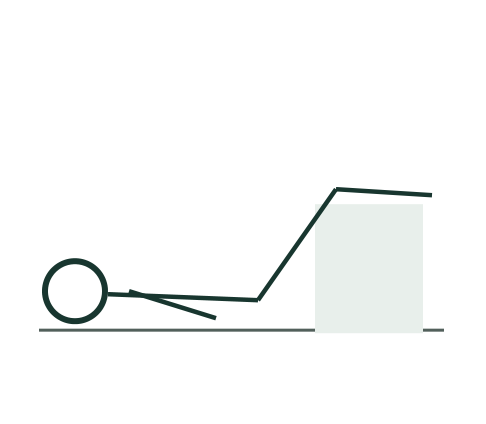
Supported rest

Simplified movement schematic for Supported rest; follow the adjacent instructions and adaptations
Movement schematic · not to scale

General postural effort.

Rest on your back with lower legs on a stable chair if comfortable. Alternatively lie on your side with pillows or sit supported. Let breathing find its own pace.

Start: 1-3 minutes.

Purpose: Reduce the demand to hold the body up.

Adapt / stop: Choose side-lying or sitting when lying flat is unsuitable. Keep eyes open if closing them feels unsafe.

Chapter references [19][27]

From the thesis · page 29

27. Exercises: legs, movement and integration

10

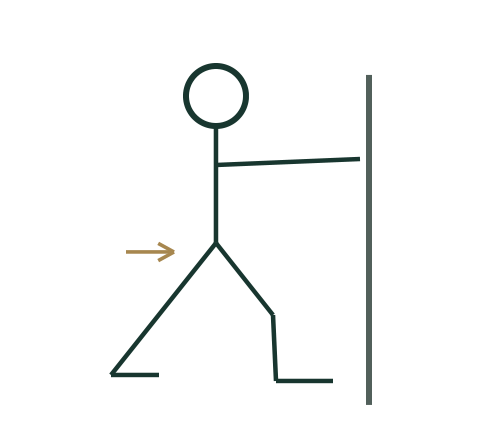
Gentle supported calf stretch

Simplified movement schematic for Gentle supported calf stretch; follow the adjacent instructions and adaptations
Movement schematic · not to scale

Gastrocnemius and ankle movement.

Face a wall with hands supported. Step one foot slightly back, heel down and toes forward. Bend the front knee a little until the rear calf has a mild stretch.

Start: 10-15 seconds each side.

Purpose: Explore ankle comfort without strain.

Adapt / stop: Shorten the stance if balance is uncertain. Stop for sharp pain; do not stretch a newly swollen, hot or painful calf.

11

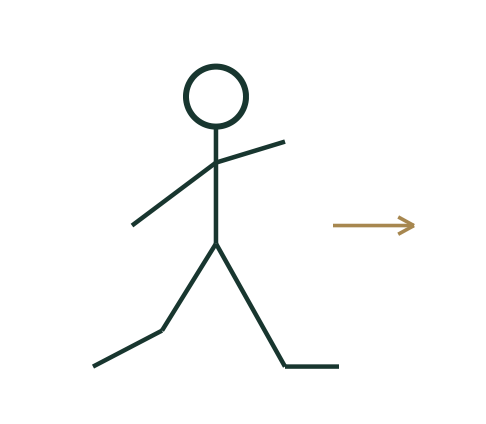
Comfortable walking

Simplified movement schematic for Comfortable walking; follow the adjacent instructions and adaptations
Movement schematic · not to scale

Leg and trunk muscles in coordinated activity.

Walk at an easy pace where you can speak comfortably. Notice the environment and allow natural arm movement. Use an aid if you normally need one.

Start: 2-5 minutes; shorter if needed.

Purpose: Shift from prolonged bracing or stillness into ordinary activity.

Adapt / stop: A seated march or heel lift is an alternative. Stop for dizziness, chest pain or unusual breathlessness.

12

Release-only body check

Simplified movement schematic for Release-only body check; follow the adjacent instructions and adaptations
Movement schematic · not to scale

Any comfortable region; whole-person attention.

Sit supported. Briefly notice hands, shoulders and jaw in turn. Invite a little less effort without forcing relaxation. Finish by naming one ordinary activity you will do next.

Start: 30-60 seconds.

Purpose: Carry a small change into daily life.

Adapt / stop: If internal attention increases distress, look around instead. Do not search the body for hidden memories.

Chapter references [17][19]

From the thesis · page 30

28. A ten-minute practice menu

Use this as a flexible sequence, not an obligation. Skip any step that is uncomfortable and finish earlier if you wish. The timings are suggested practice intervals, not evidence that ten minutes is an optimal therapeutic dose.

  1. 0:00-1:00Orient to the room; sit or stand with support.

    Am I present enough to continue?

  2. 1:00-2:00Easy breathing or ordinary breathing with external attention.

    Is breathing comfortable rather than controlled?

  3. 2:00-4:00Choose jaw rest, shoulder settling or light hand release.

    Is there less unnecessary effort?

  4. 4:00-6:00Choose a small movement: pelvic rocking or comfortable walking.

    Can I move without strain?

  5. 6:00-8:00Supported rest, seated rest or continued easy movement.

    Which position feels most workable?

  6. 8:00-9:00Look around and return to normal movement.

    Do I feel more connected to the room?

  7. 9:00-10:00Write one observation and choose a practical next step.

    What helps me participate in my day?

When the need is emotional

For grief, movement may create room to feel, but connection and mourning may be more relevant than a stretch. For anger, changing a situation or setting a boundary may matter. For loneliness, contact with another person may meet a need that relaxation cannot. The body is part of emotional life, not a replacement for its social meaning.

When the need is physical

A repetitive work task may call for breaks, ergonomic adjustment, conditioning or rehabilitation. A painful jaw may call for dental assessment. Pelvic symptoms may call for a pelvic-health physiotherapist. Choosing the relevant form of help is more useful than assigning each problem a hidden emotion.

When the need is clinical

Frequent flashbacks, substantial avoidance, persistent panic or disrupted functioning warrant professional assessment. A short self-care practice can accompany care, but it does not establish or rule out a diagnosis.

Chapter references [21][22]

From the thesis · page 31

29. Observation sheet

Use a few short notes to learn what helps. This is a reflection sheet, not a validated symptom scale or a test of trauma release. There is no need to search for an explanation while practising.

Before practiceYour observation
Situation / recent activity
Sensation and location, in ordinary words
Comfort or tension, 0-10 if useful
Emotion, if clear; “uncertain” is valid
One practice selected; planned short duration
After practiceYour observation
What changed physically?
What changed emotionally, if anything?
Any pain, dizziness or distress?
What can I do a little more easily?
Next practical action or support needed

How to interpret a pattern

“My shoulders feel easier after a short walk” is an observation. “Walking removed responsibility from my trapezius” is an unsupported causal conclusion. Keep the useful observation without needing the second claim.

Over a week, look for changes in function and comfort rather than chasing a dramatic session. If practices repeatedly increase symptoms, stop that approach and review it with an appropriate professional. Restoring choice includes choosing not to continue.

Keep the complete reference

A study to return to.

36 pages · 12 illustrated practices · 39 source entries

Download the full thesis · PDF ↓