Choose the matching mild-symptom category only when symptoms are familiar and there is no new injury, swelling, nerve symptom or unexplained pain. For severe or rapidly worsening symptoms, seek help rather than searching for a stretch.
Choose your situation before opening movement guidance
You can browse matching topics below. Movement instructions appear after choosing the matching mild-symptom category. If there was an injury, swelling, radiating pain or you are unsure, use the assessment guidance.
Choose the matching mild-symptom category to see movement guidance. Injury or warning symptoms pause instructions. Skip with dizziness, headache after injury, arm symptoms or a painful restriction. This is gentle seated mobility, not a treatment for a neck strain.
Gentle movement option · Neck & shoulders
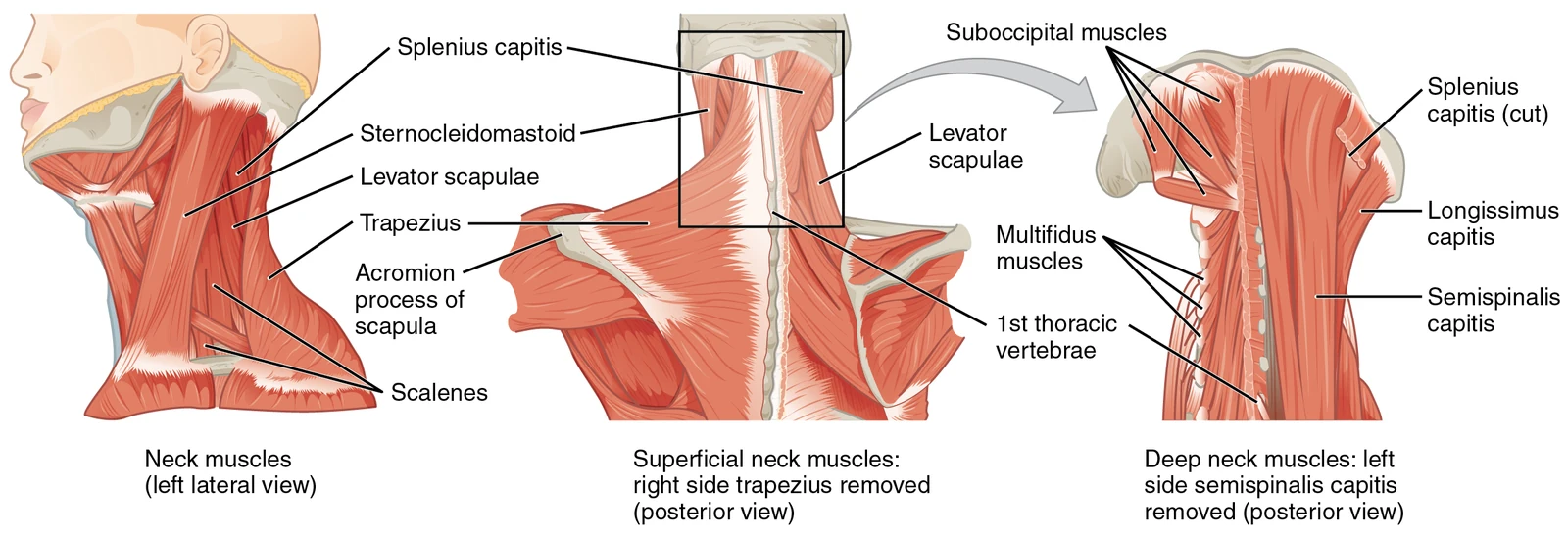
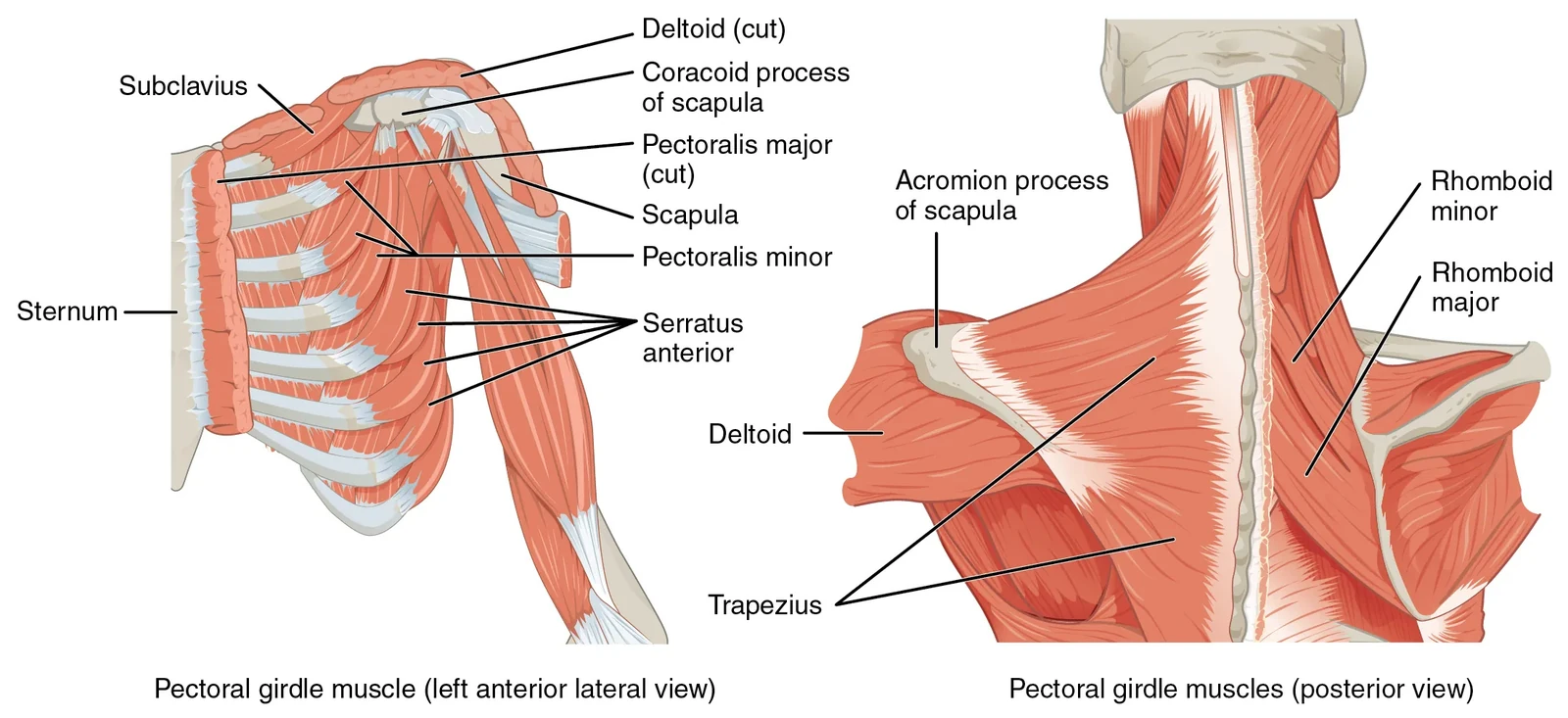
Shoulders stiff after sitting
Shoulder girdle: trapezius, deltoid and surrounding tissues
Explore the labelled anatomy ↗Choose the matching mild-symptom category to see movement guidance. Injury or warning symptoms pause instructions. Do not stretch through a catching or pinching sensation. Sudden severe shoulder pain or inability to lift the arm needs assessment.
Gentle movement option · Chest & upper back
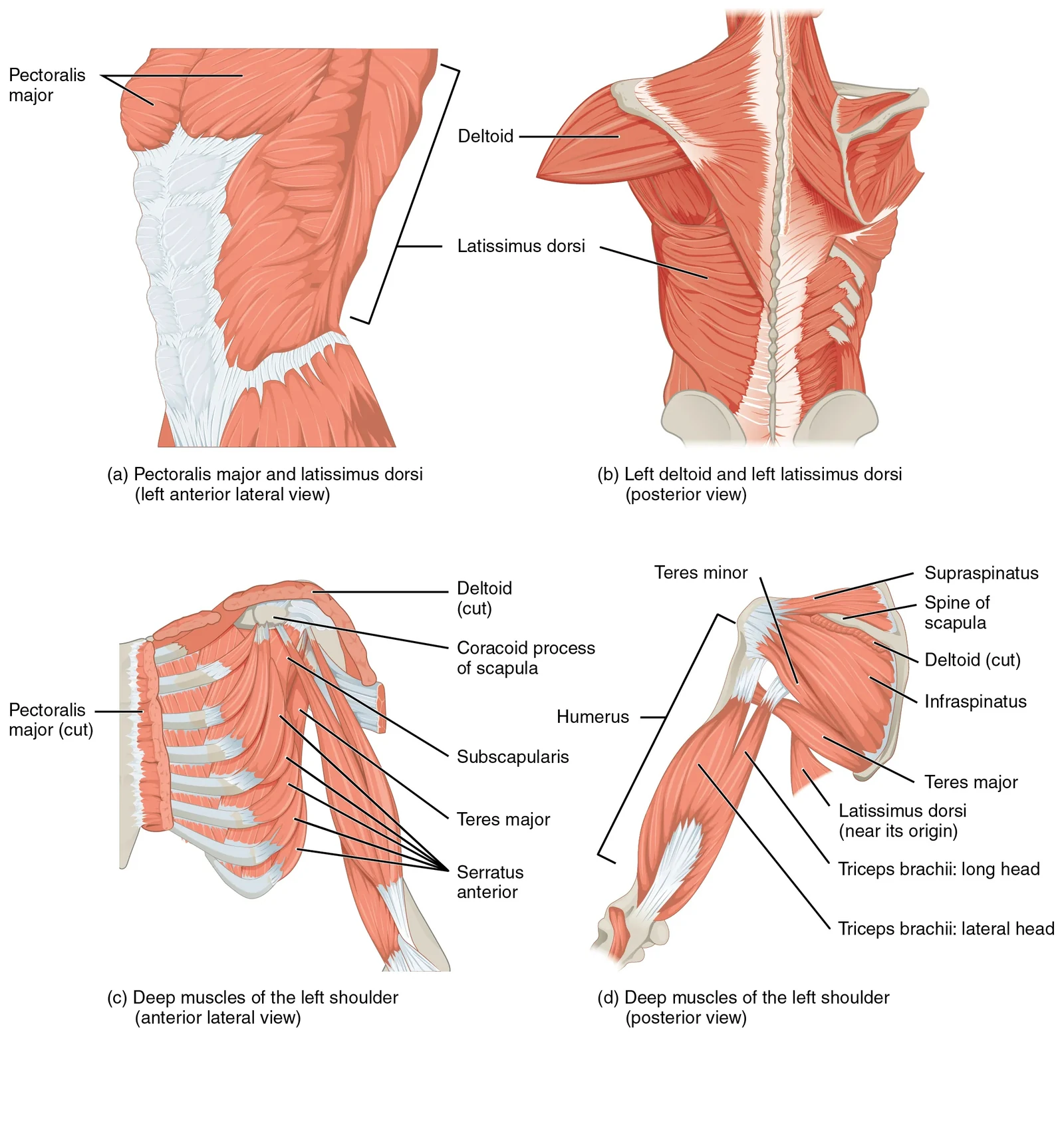
Familiar chest-muscle stiffness
Pectoral muscles across the front of the chest
Explore the labelled anatomy ↗Choose the matching mild-symptom category to see movement guidance. Injury or warning symptoms pause instructions. Only for familiar muscular stiffness. New or unexplained chest pain, pressure or breathlessness is not a stretching problem.
Gentle movement option · Chest & upper back
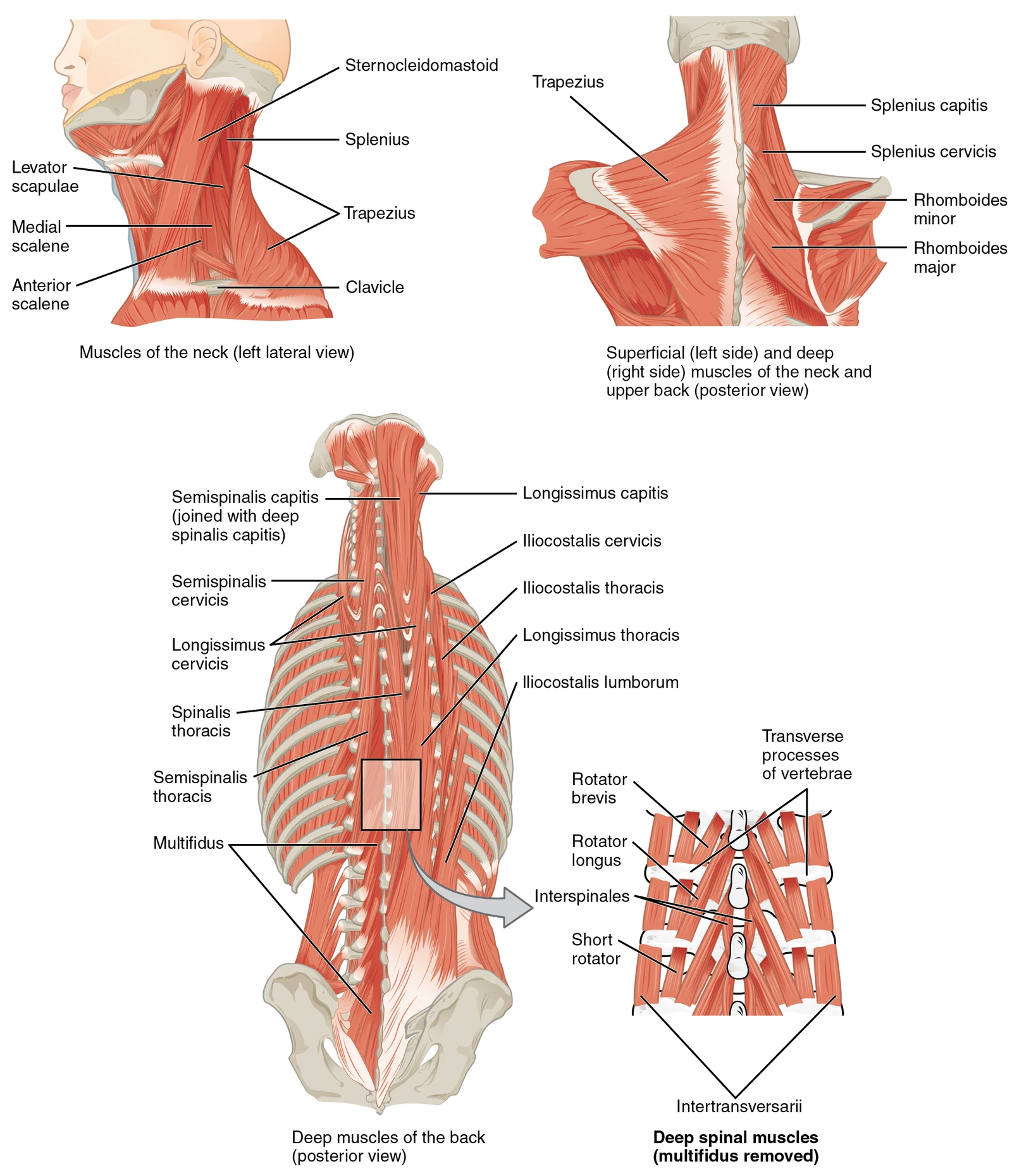
Upper-back stiffness without unexplained pain
Thoracic back muscles and shoulder-blade region
Explore the labelled anatomy ↗Choose the matching mild-symptom category to see movement guidance. Injury or warning symptoms pause instructions. Avoid if this produces shoulder pain, dizziness or radiating symptoms. Unexplained pain between the shoulder blades deserves medical advice.
Gentle movement option · Lower back
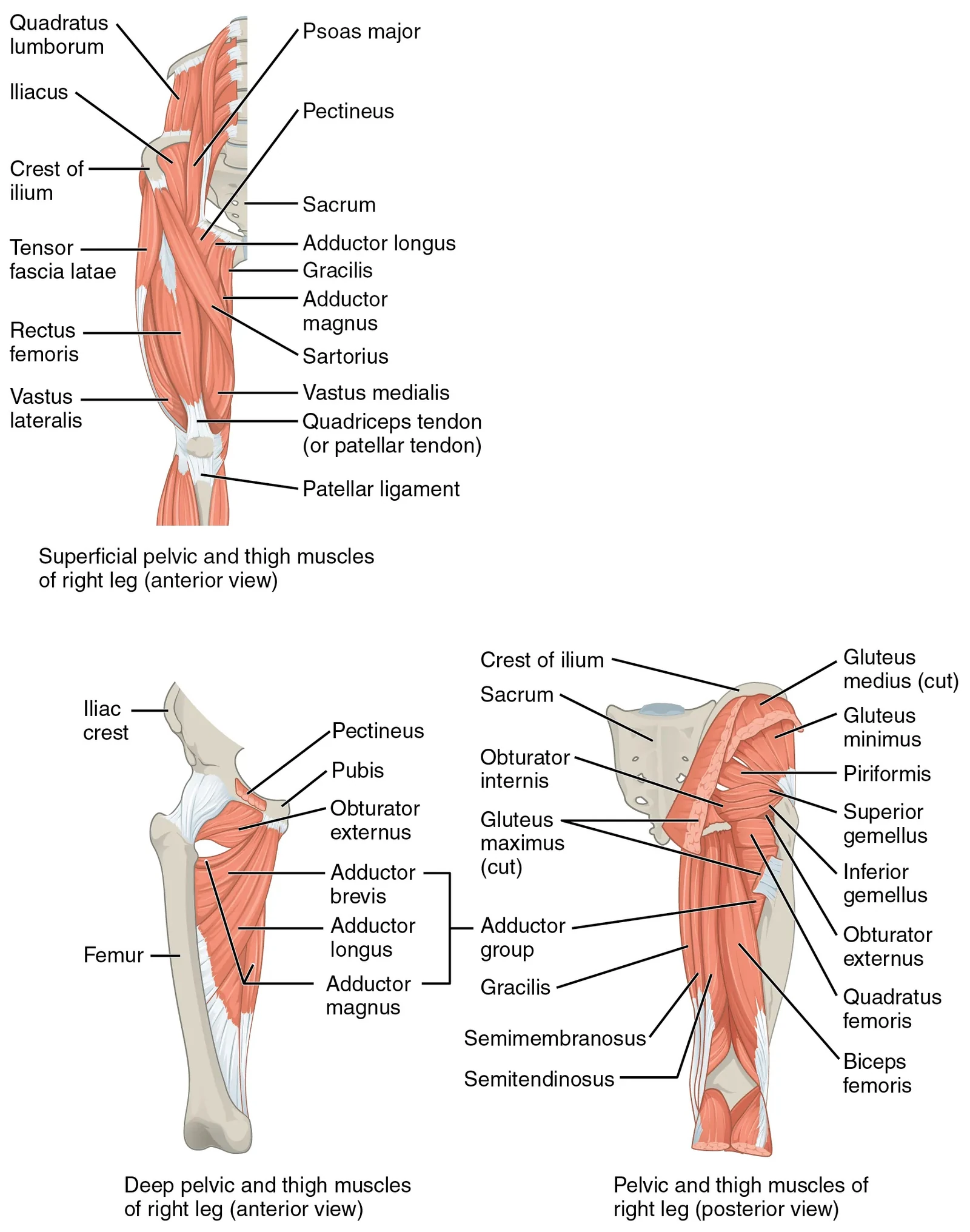
Mild, familiar lower-back stiffness
Lumbar spinal muscles and surrounding trunk tissues
Explore the labelled anatomy ↗Choose the matching mild-symptom category to see movement guidance. Injury or warning symptoms pause instructions. This is a rest position, not a stretch or disc treatment. Stop if leg pain increases. New bladder/bowel changes or numbness around the saddle area need emergency assessment.
Choose the matching mild-symptom category to see movement guidance. Injury or warning symptoms pause instructions. Shorten the stance or skip with groin pinching, hip-joint pain, balance difficulty or a recent hip/thigh injury.
Choose the matching mild-symptom category to see movement guidance. Injury or warning symptoms pause instructions. Skip for a recent pull or bruising. Burning, electric pain or tingling can involve nerves and should not be stretched through.
Choose the matching mild-symptom category to see movement guidance. Injury or warning symptoms pause instructions. Avoid with a groin pull, knee pain or hip pinching. A higher seat or a chair may be more suitable.
Choose the matching mild-symptom category to see movement guidance. Injury or warning symptoms pause instructions. This option is unloading rather than a piriformis stretch. Shooting leg pain or numbness requires assessment, not a deeper hip stretch.
Gentle movement option · Calves & Achilles
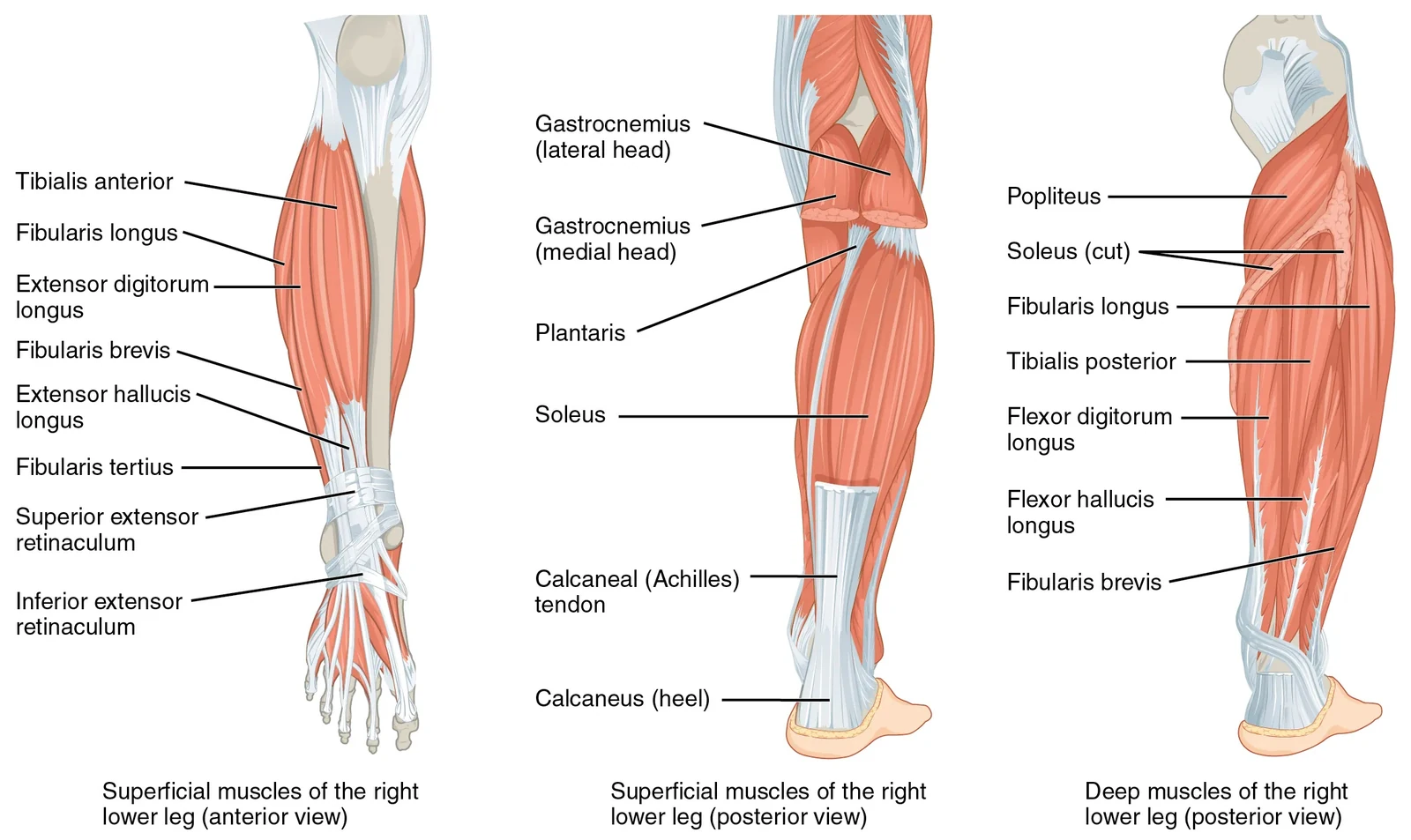
Upper-calf tightness · gastrocnemius focus
Gastrocnemius crosses both knee and ankle
Explore the labelled anatomy ↗Choose the matching mild-symptom category to see movement guidance. Injury or warning symptoms pause instructions. Do not stretch a recently strained calf. One-sided pain with swelling, warmth or colour change needs urgent assessment for possible DVT.
Gentle movement option · Calves & Achilles
Lower-calf tightness · soleus focus
Soleus lies beneath gastrocnemius and works across the ankle
Explore the labelled anatomy ↗Choose the matching mild-symptom category to see movement guidance. Injury or warning symptoms pause instructions. Skip after a calf pull or with Achilles pain. Swelling, warmth or colour change in one painful leg requires urgent assessment.
Assessment guide · Calves & Achilles
Recurring brief calf cramps
An involuntary calf-muscle contraction; the cause is not always clear
Explore the labelled anatomy ↗What to do next
Regular gentle calf stretching between episodes may help reduce cramps. Do not assume a persistently painful or swollen calf is cramp. Seek advice if cramps last more than 10 minutes, disturb sleep, or occur with numbness or swelling. Use the calf options only after an episode has settled and walking feels normal.
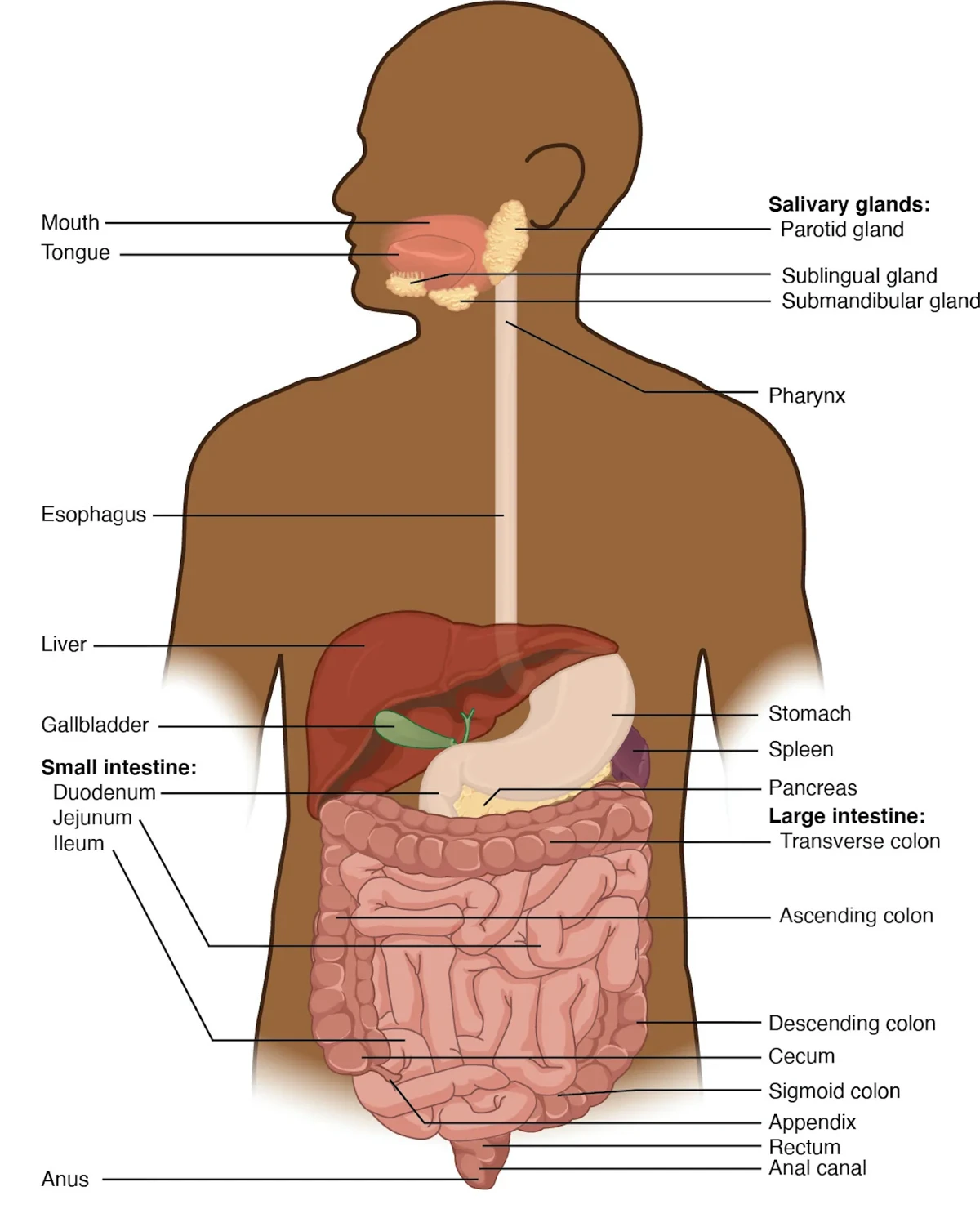
Digestive comfort option · Digestive system
Mild, familiar bloating or trapped wind
Gas and fullness in the digestive tract; this is not a tight skeletal muscle
Explore the labelled anatomy ↗Choose the matching mild-symptom category to see movement guidance. Injury or warning symptoms pause instructions. This is a comfort option, not a proven gas-removing pose. Get advice for recurrent or persistent bloating. Bloating with pain, vomiting, constipation, fever or inability to pass gas needs urgent advice.
Digestive comfort option · Digestive system
Familiar mild constipation without pain or bloating
Bowel function depends on gut movement, stool consistency and coordinated emptying
Explore the labelled anatomy ↗Choose the matching mild-symptom category to see movement guidance. Injury or warning symptoms pause instructions. Walking is a general bowel-health habit, not an immediate cure. Seek advice for new or recurring changes, blood in stool or weight loss. Pain, bloating, vomiting or inability to pass gas needs assessment before exercise.
Assessment guide · Digestive system
Heartburn, acid reflux or indigestion
Acid can travel from the stomach towards the oesophagus.
Explore the labelled anatomy ↗What to do next
Stay upright after eating and avoid poses that worsen symptoms, especially deep folds or inversions after meals. Frequent symptoms or difficulty swallowing need medical advice. New chest pain must not be assumed to be reflux.
Assessment guide · Digestive system
IBS or recurring digestive symptoms
IBS is a clinical diagnosis; bloating or abdominal cramps alone do not establish it.
Explore the labelled anatomy ↗What to do next
Use an individual care plan. Gentle movement and relaxation may support wellbeing, but a pose cannot diagnose or cure IBS. Get assessed for new symptoms, bleeding, weight loss or a persistent change in bowel habit.
Assessment guide · Digestive system
Diarrhoea, nausea or vomiting
Digestive illness can cause fluid loss and make exercise inappropriate.
Explore the labelled anatomy ↗What to do next
Pause yoga while unwell and prioritise fluids and appropriate advice. Seek prompt help for dehydration, persistent vomiting, blood or severe pain. Do not use twists or abdominal exercises to try to clear an infection.
Assessment guide · Digestive system
Unexplained abdominal pain
Abdominal pain can come from many organs and should not be treated as a muscle to stretch.
Explore the labelled anatomy ↗What to do next
Seek urgent advice for worsening or persistent pain. Sudden severe pain, vomiting blood, black tarry stool, collapse or inability to pass stool or gas with pain needs emergency assessment.
Choose the matching mild-symptom category to see movement guidance. Injury or warning symptoms pause instructions. Avoid with a new ankle sprain, swelling, sudden Achilles pain or inability to bear weight.
Choose the matching mild-symptom category to see movement guidance. Injury or warning symptoms pause instructions. Stop for numbness, tingling, swelling or pain. Avoid Plank and Downward Dog while weight-bearing through the wrist hurts.
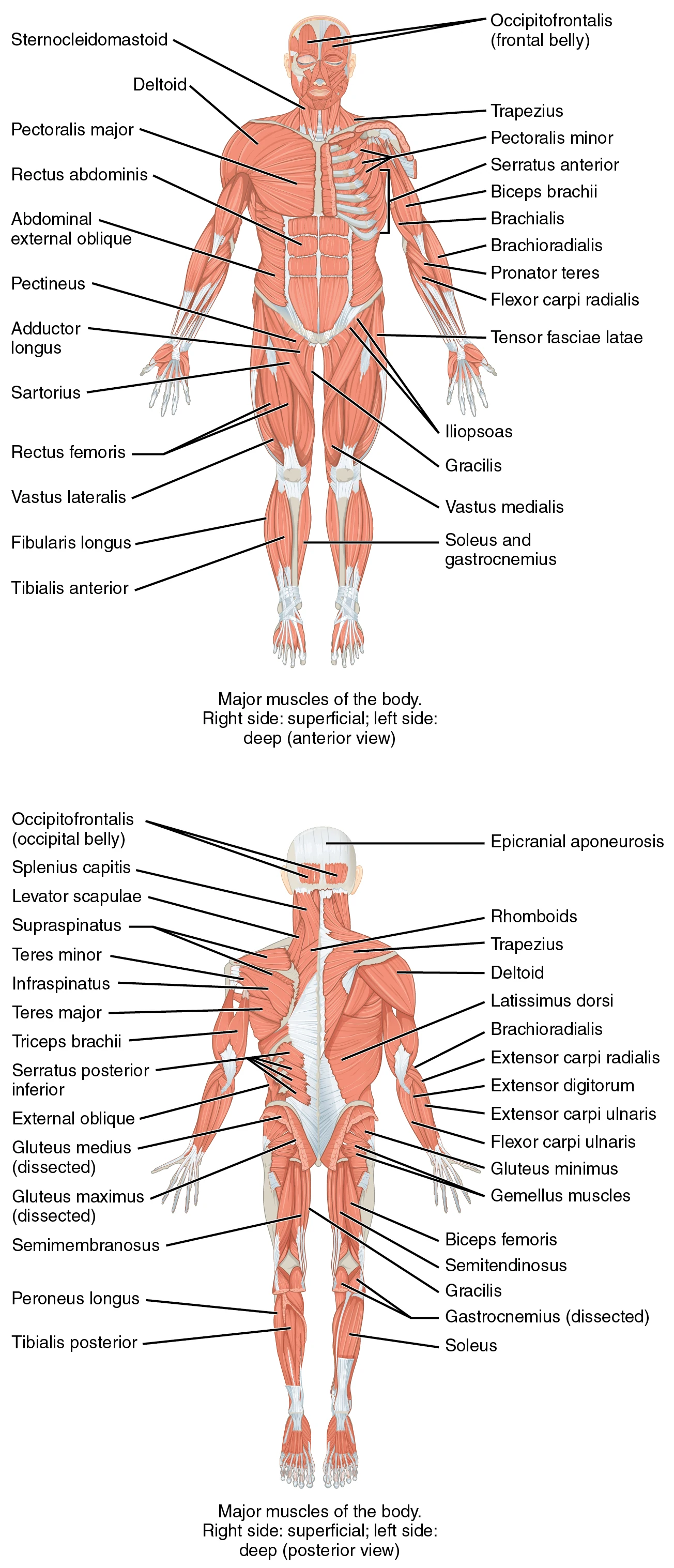
Assessment guide · Any region
Recent muscle pull or tear
A muscle strain can involve overstretched or torn fibres. A sprain affects a ligament. Symptoms alone cannot establish the diagnosis.
Explore the labelled anatomy ↗What to do next
Protect the area from painful loading and seek advice if pain, swelling or difficulty using it is significant. Do not use a deep yoga stretch as immediate injury treatment.
Assessment guide · Any region
Shooting pain, tingling or numbness
Radiating symptoms can involve nerves rather than a short or tight muscle.
Explore the labelled anatomy ↗What to do next
Pause stretches that reproduce symptoms and arrange assessment. New or progressive weakness needs urgent advice.
Assessment guide · Neck & shoulders
Painful shoulder or suspected tendon injury
Pain when lifting the arm can have several causes, including tendon or joint problems.
Explore the labelled anatomy ↗What to do next
A tailored rehabilitation plan may include progressive strengthening; a generic stretch is not a substitute. Seek urgent advice for sudden severe pain or inability to move the arm.
Assessment guide · Arms & hands
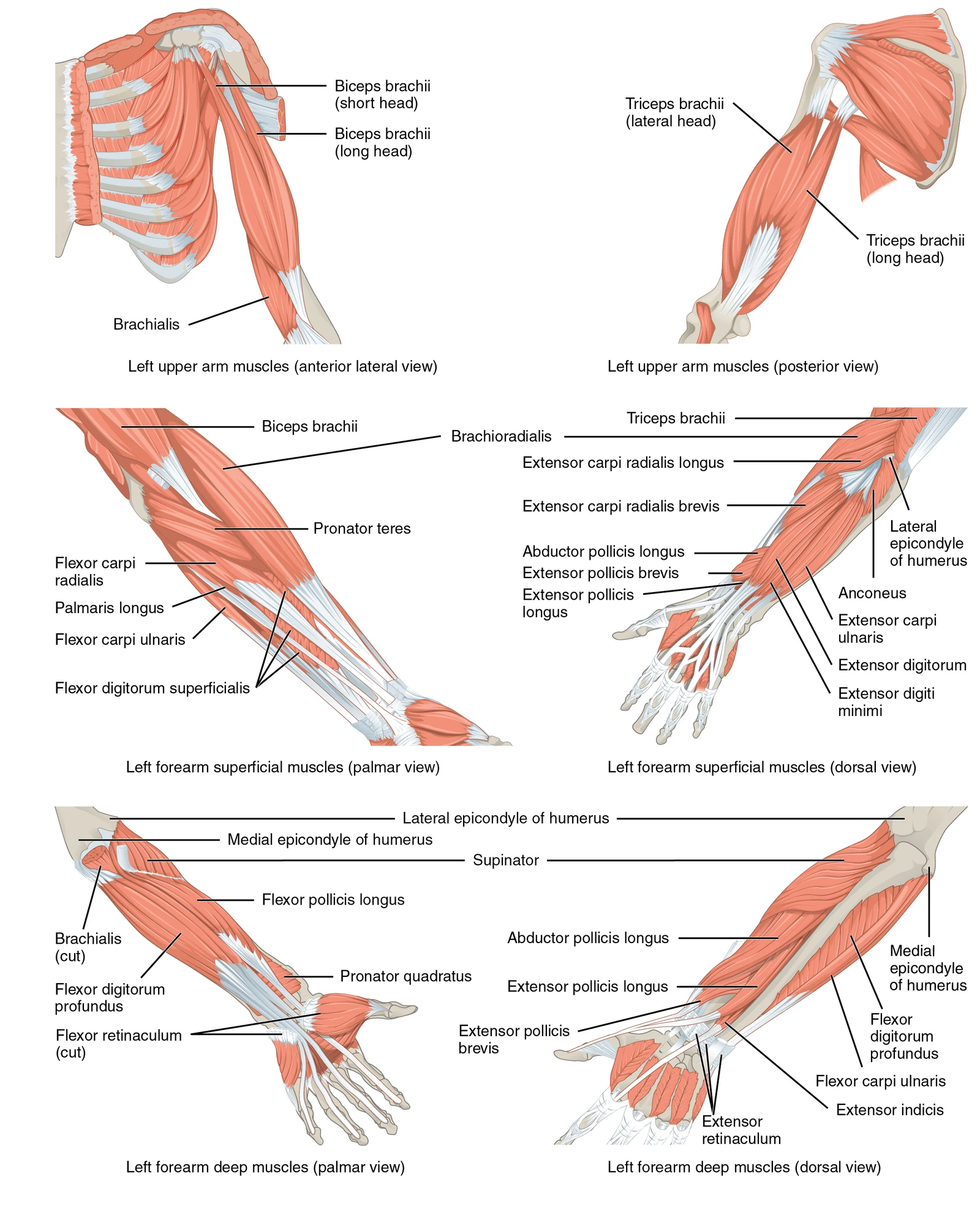
Elbow pain or a suspected overuse injury
Elbow pain can involve tendons, joints or nerves, and is not always a muscle strain.
Explore the labelled anatomy ↗What to do next
Reduce activities that provoke symptoms. Avoid painful weight-bearing poses and forceful wrist stretches. Arrange assessment for persistent pain; significant weakness or a new injury needs prompt advice.
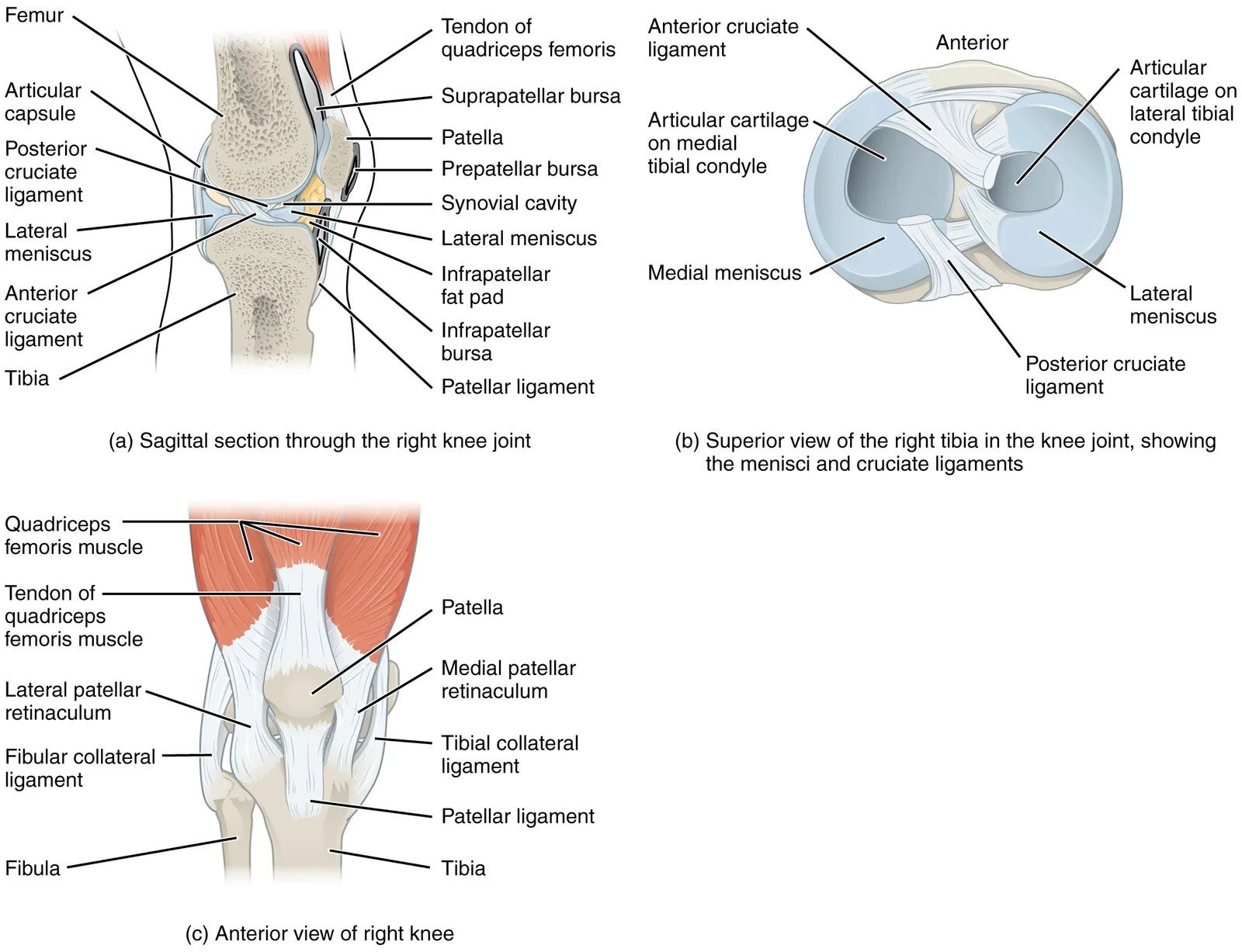
Assessment guide · Knees
Knee pain, swelling or instability
Knee symptoms do not reliably identify a particular muscle injury.
Explore the labelled anatomy ↗What to do next
Avoid deep kneeling, Lotus and forceful folds while painful. Get urgent advice if the knee locks, gives way, is badly swollen or cannot bear weight.
Assessment guide · Calves & Achilles
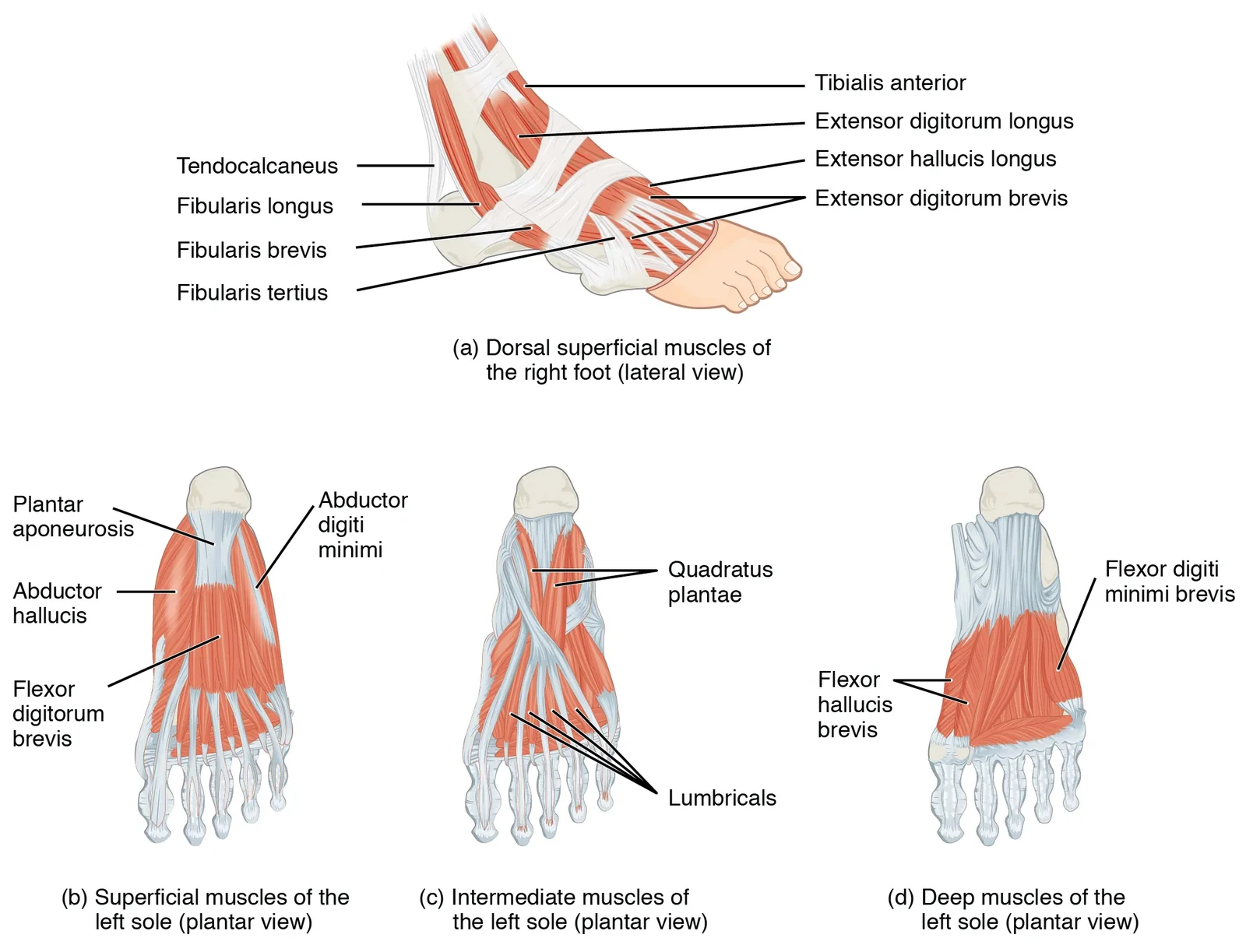
Achilles or heel pain
Heel or tendon pain needs a different approach from general calf tightness.
Explore the labelled anatomy ↗What to do next
Avoid forcing the heel down or using a deep calf stretch as a default treatment. Sudden pain with a snap or difficulty walking needs urgent assessment.
Assessment guide · Calves & Achilles
One-sided calf pain with swelling
A painful swollen leg can signal a blood clot and should not be treated as a muscle knot.
Explore the labelled anatomy ↗What to do next
Seek urgent medical advice now. If there is also chest pain or breathlessness, call emergency services. Do not massage or stretch the leg.