Temples & sacred art. Image as presence, place as practice.
Understand darśana, mūrti, ritual installation, temple architecture, pilgrimage and the historical lives of sacred objects.
Begin with context
A temple is not only a decorated building, and a mūrti is not only sculpture. Consecration, daily service, procession, festival, gift, music, food, architecture and the reciprocal act of seeing and being seen make a sacred world.
01
Darśana and mūrti
Darśana means seeing, viewing or an auspicious encounter. In temple devotion, the worshipper beholds the deity and is beheld in return. A mūrti may be carved, cast, painted, temporary, aniconic or naturally manifested; ritual installation and continuing service distinguish a living sacred presence from a museum display.
Do not photograph where a temple prohibits it.
Ask before photographing worshippers, ritual or private shrines.
Museum labels describe provenance, but cannot reproduce a temple relationship.
02
Temple forms
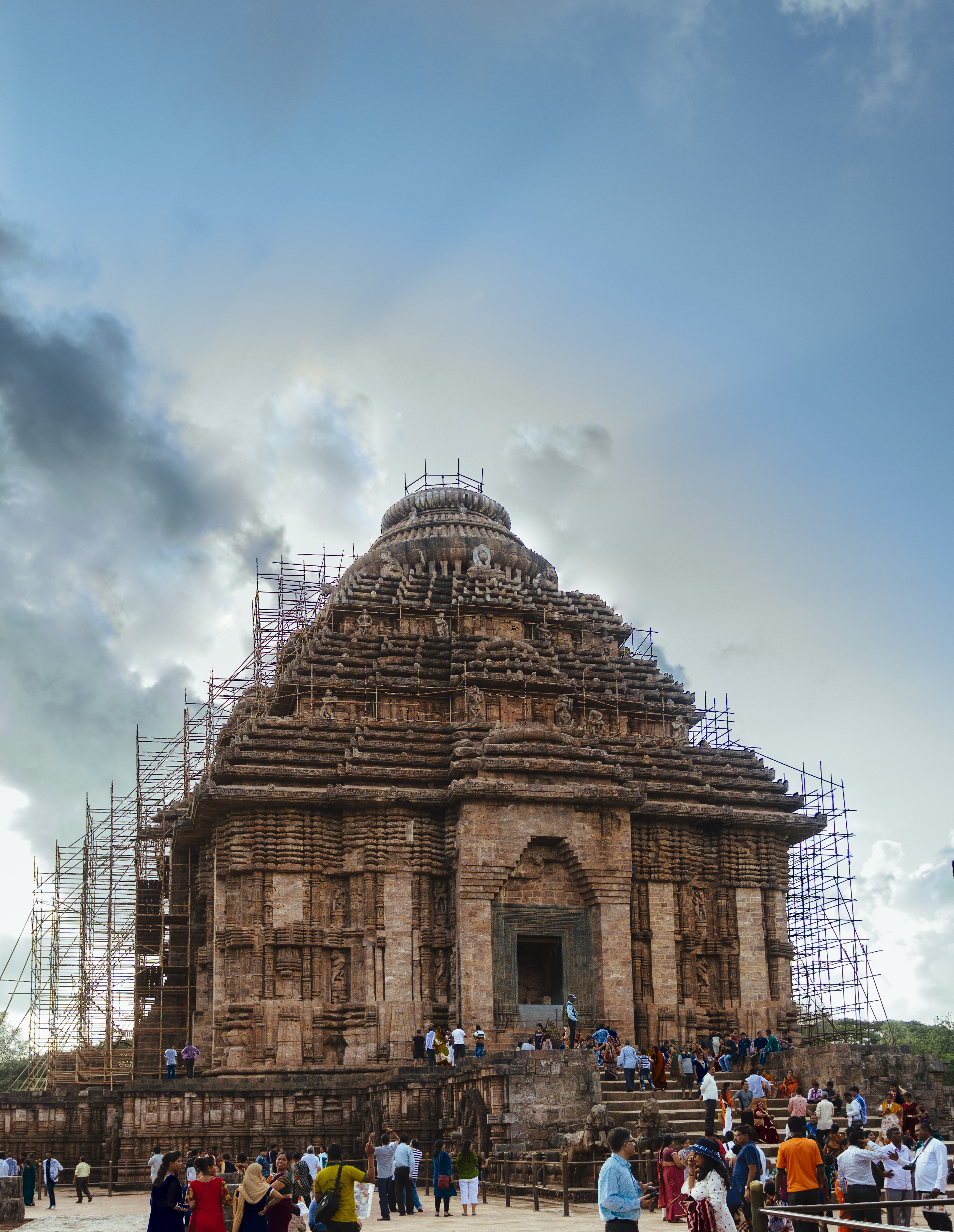
Architectural vocabularies vary by region, period and scholarly system. North Indian temples often foreground a curving śikhara above the sanctum; southern complexes may combine towered sanctums with monumental gopurams; Deccan forms cross and reinvent categories sometimes labelled Vesara.
The garbhagṛha is the inner sanctum or ‘womb chamber’.
Maṇḍapa names a pillared hall in many temple plans.
Circumambulation, procession routes, tanks and landscape shape embodied experience.
03
Making sacred form
Texts and hereditary workshops transmit systems of measure, gesture and attribute, while artists also respond to material, patron, place and regional style. Chola bronzes, Pāla stone, Odisha temples, Kerala murals, Rajasthani painting and village terracottas belong to different visual worlds.
Iconography identifies; style and material locate historically.
Multiple arms and heads visualise power, time or omnidirectionality.
A damaged or displaced object carries a history that captions should name.
04
Ethics of looking
Sacred objects in museums may have moved through colonial collecting, excavation, sale, gift, theft or later restitution. Responsible display names the collecting history when known, links back to the holding institution and avoids treating living communities as scenery.
Credit maker, community, date, place, collection and photographer where known.
State when a work is contemporary interpretation rather than consecrated imagery.
Use public-domain and openly licensed images according to their terms.
The visual gallery · 14 works
Look slowly. Read the caption.
Each work is presented with subject, historical setting, holding collection and rights information. Museum objects are shown as historical sacred art; contemporary House of Ananda pieces are clearly identified as interpretation.
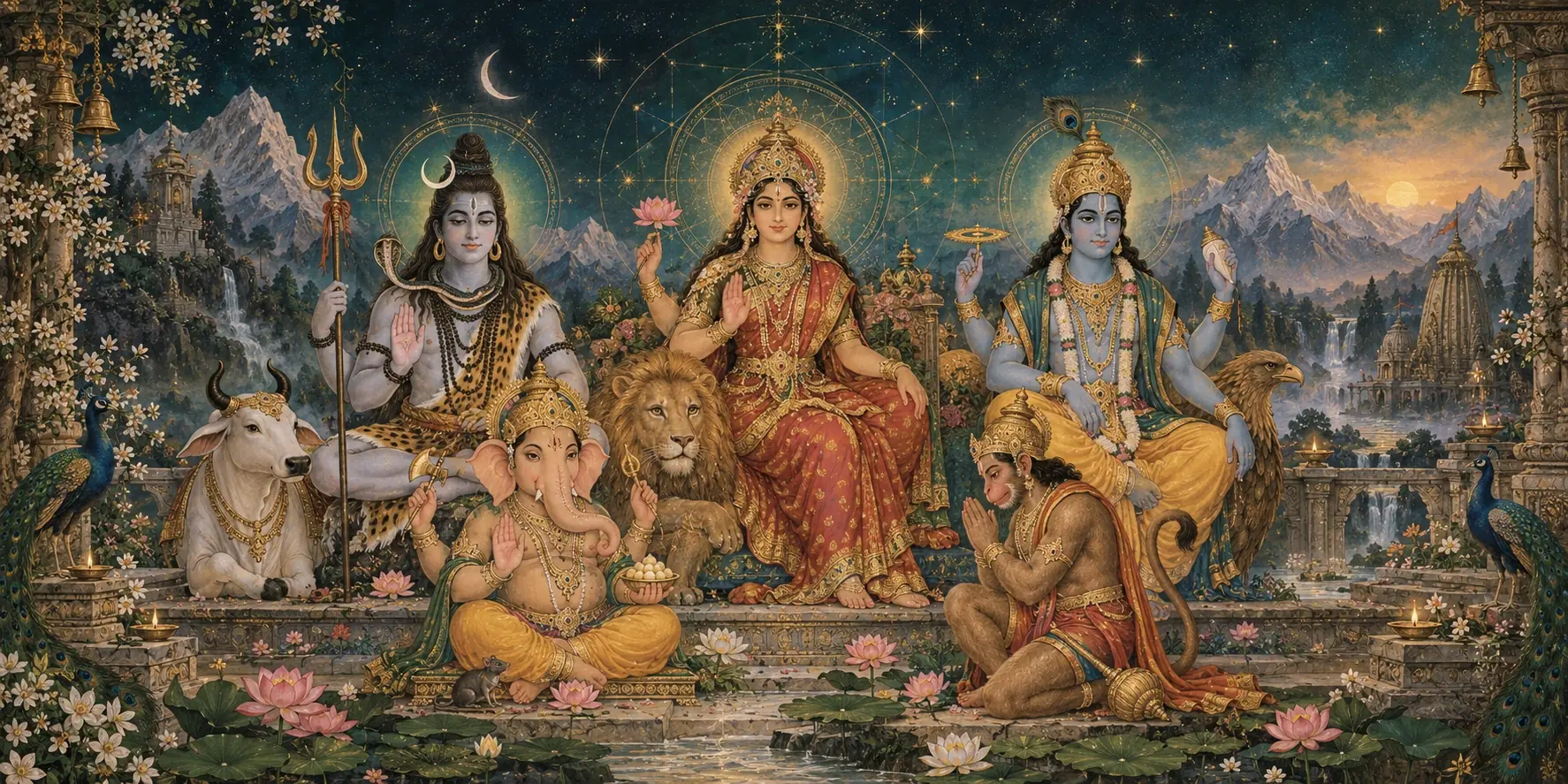
Contemporary editorial artwork · House of Ananda
Divine Assembly
Interpretive artwork; not a consecrated image.
Tamil Nadu · Chola period · 11th century
Śiva as Naṭarāja
Cleveland Museum of Art · CC0
Northeast India or Bangladesh · Pāla dynasty · 11th century
Gaṇeśa, Lord of Obstacles
Daderot · Portland Art Museum · public domain
Bangladesh or eastern India · Pāla period · 10th–12th century
Viṣṇu with Lakṣmī and Sarasvatī
Art Institute of Chicago · CC0
Central Java · 9th century · andesite
Durgā Mahiṣāsuramardinī
National Museum of Asian Art, Smithsonian · CC0
Attributed to Miskin · Mughal India · c. 1590–95
Kṛṣṇa lifts Govardhana
The Metropolitan Museum of Art, 28.63.1 · public domain
Indian watercolour · date and artist unrecorded
Hanumān before Rāma and Sītā
Wellcome Collection, V0044990 · CC BY 4.0
North India · 19th century · paper
Bhagavad Gītā manuscript
Library of Congress, Southern Asian Collection · public domain
Kashmir · before 14th century · Śāradā script
Ṛgveda palm-leaf fragment
Ms Sarah Welch · Bhandarkar Oriental Research Institute · CC0
Thanjavur, Tamil Nadu · Chola-period living temple
Bṛhadīśvara Temple
Matthew T Rader · CC BY-SA 4.0
Odisha · Eastern Ganga period · 13th century
Konark Sun Temple
Subhrajyoti07 · CC BY-SA 4.0
Madurai, Tamil Nadu · historic living temple complex
Mīnākṣī Temple gopuram
Vyacheslav Argenberg · CC BY 4.0
Modern copper relief · geometric sacred form
Śrī Yantra
Ms Sarah Welch · CC BY-SA 4.0
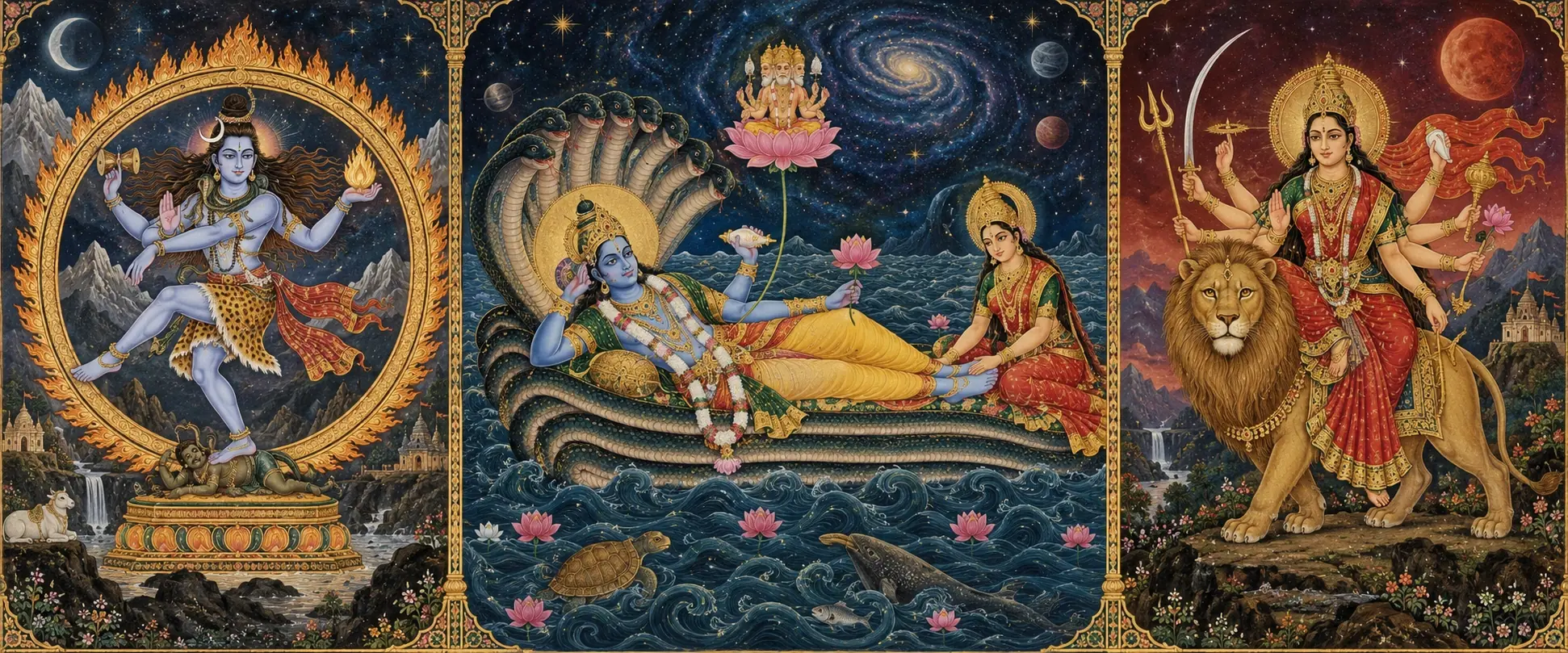
Śaiva · Vaiṣṇava · Śākta
Three Traditions
Contemporary House of Ananda editorial artwork; not a consecrated image.
Study further
Sources and reading paths.
These introductions are educational orientations. Dates, translations and interpretations remain debated; follow the linked institutions and compare more than one scholarly and community perspective.